
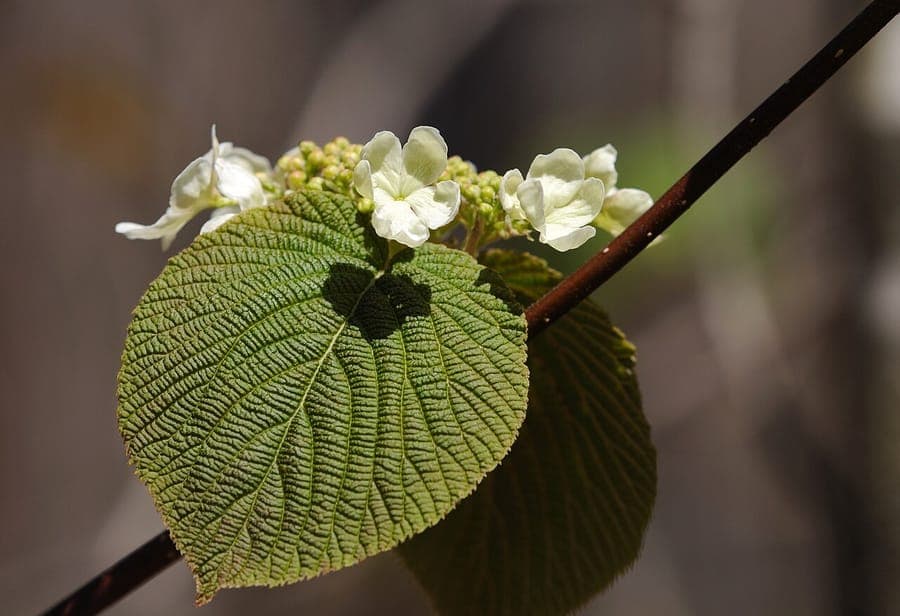
Wladyslaw / CC BY-SA 3.0, via Wikimedia Commons
Hobblebush: complete guide
Viburnum lantanoides
¿Quieres ver Hobblebush: complete guide en tu jardín?
1 minuto, sin tarjeta de crédito
Overview
Viburnum lantanoides, also called hobblebush, is an outstanding North American shrub native to the forested areas of Eastern Canada and Eastern America. This impressive shrub is known for its beautiful white flowers, fragrant flower clusters and highly attractive bright red berries providing bird food. With its well-maintained form, fall color and ecological importance, it is a valuable addition to any garden. The plant offers year-round visual interest with different growth stages and colors.
Appearance and bloom
Viburnum lantanoides grows as a spreading, rounded shrub normally reaching 1.5 to 3 meters high. The leaves are large, wrinkled, with deep parallel veins, giving the plant a distinctive appearance. They turn beautifully red to purplish-red in fall, creating a spectacular show. Late May through early June large, flat clusters of small white flowers with reddish tinge appear, strongly sweetly scented. This fragrance attracts many pollinators. The flowers are followed by brilliant round berries that are first green, then red, finally black when fully ripe. This color change happens over many weeks, enhancing visual appeal.
Ideal location
Viburnum lantanoides grows best in full sun to half-shade. In hot climates, some summer shade is welcome. The plant prefers protected locations where it doesn't experience direct strong winds. Plant at the edge of wooded areas, in dappled shade under larger trees, or in protected borders where it can serve as a background plant. This is an ideal plant for bird gardens because of the many butterfly and bird visitors.
Soil
Requires well-draining, moist, rich soil. Viburnum lantanoides grows best on acidic to neutral soils. A mixture of garden soil with plenty of organic matter works excellently. Mulch the base in winter with leaves or gravel. The plant adapts to various soil types as long as drainage and moisture are acceptable. Rich soil promotes blooming and fruit production.
Diseño gratis
¿Quieres ver Hobblebush: complete guide en tu jardín? Crea un diseño gratis ahora.
Watering
Newly planted, the shrub needs regular water until well-established, approximately two years. Once established it tolerates moderate drought, though regular watering promotes blooming and berry set. In very dry summers, supplemental water can be beneficial. Avoid excessive watering in winter to prevent root problems. Consistently moist is the goal, not waterlogged.
Pruning
Minimal pruning is usually needed, since Viburnum lantanoides naturally assumes a beautiful form. You can remove older branches after flowering to keep the plant vital. Shape can be gently adjusted after blooming without limiting next season's bloom. Avoid heavy pruning, as it may limit next season's bloom.
Maintenance calendar
In early spring new growth breaks. April through May is the blooming period with fragrance. June through September the berries develop and change color slowly. September through October red to black. October through November fall color with purple tints. December through March is dormancy with possible snow cover.
Winter hardiness
Viburnum lantanoides is very winter-hardy and can tolerate temperatures down to -25C. The plant is very robust in cold climates. No specific protection needed. Snow can damage heavy branches, so carefully remove. The plant naturally grows in forests where snow occurs frequently.
Companion plants
Viburnum lantanoides combines nicely with other North American shrubs and perennials. Try together with other Viburnum species, American Wahoo, American Maple, Serviceberry and woodland shrubs. Also looks beautiful with panicle hydrangeas, oakleaf hydrangeas and late butterfly shrubs. Group plants for maximum effect.
Closing remarks
Viburnum lantanoides is a true bird magnet and ecological jewel. The fragrant flowers, colorful berries and beautiful fall color make it a valuable season extension. For those who love birds and native plants, this is essential. Available from many garden centers or native plant nurseries, also online via gardenworld.app. Plant in groups or as a standalone specimen. A true delight for any garden!
¿Quieres ver Hobblebush: complete guide en tu jardín? Crea un diseño gratis ahora.
Sube una foto, elige un estilo y obtén un diseño fotorrealista con lista de plantas en menos de un minuto.
Más de 10.000 jardines diseñados
Sin tarjeta de crédito


Plantas similares
Squashberry: complete guide
Viburnum edule
Grow mooseberry (Viburnum edule): ultra-hardy North American shrub with fragrant white flowers and red autumn berries. Perfect for boreal gardens. Zone 3.
Witherod: complete guide to this elegant North American shrub
Viburnum cassinoides
Discover Viburnum cassinoides: an elegant North American shrub with white flowers, yellow fall foliage, and blue berries. Perfect for temperate garden zones.
Buddlejaleaf viburnum: complete guide
Viburnum buddleifolium
Elegant evergreen shrub with delicate foliage and white spring flowers. Perfect for sheltered borders in temperate gardens.