
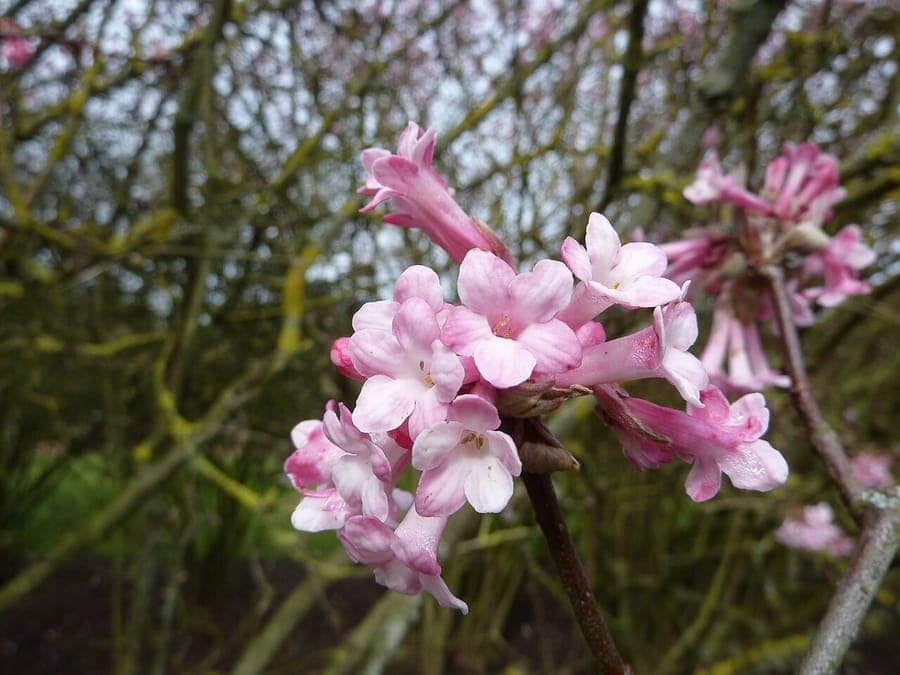
Magnus Manske / CC BY-SA 3.0, via Wikimedia Commons
Himalayan viburnum: complete guide
Viburnum grandiflorum
¿Quieres ver Himalayan viburnum: complete guide en tu jardín?
1 minuto, sin tarjeta de crédito
Overview
Viburnum grandiflorum, known as Himalayan viburnum or large-flowered viburnum, is a magnificent winter-flowering shrub native to the Himalayan mountains from Pakistan through Tibet to Assam. This species belongs to the Viburnaceae family and distinguishes itself through highly fragrant, large flower balls appearing from November through March.
This is one of the most fragrant viburnums cultivable in temperate gardens. The plant provides essential winter interest through its remarkable flowering period in mild climates. This makes it an invaluable choice for gardeners who appreciate winter beauty and fragrance. Few plants offer such rewarding winter performance.
Appearance and bloom cycle
Viburnum grandiflorum grows as a compact, upright shrub reaching 1.5-2 metres high and roughly equivalent width. Leaves are oblong-elliptic, slightly wrinkled, dark green with pronounced veining. Foliage remains evergreen to semi-deciduous, depending on winter severity.
Flowers are the most spectacular feature: large, fragrant flower balls measuring 5-8 cm across, with individual florets white-pink in colour. The flowering period extends from November through March, depending on local climate. Fragrance is intense, sweet, and pleasant, especially on warm days and in evenings.
Following flowering, small red fruits develop, later turning dark blue-black. These berries are less conspicuous than in many other viburnums.
Ideal location
Viburnum grandiflorum thrives in partial shade: two to four hours of gentle, filtered sunlight daily. It tolerates full shade, although flowering may be less prolific. Shelter from cold winds and frost danger is essential.
Ideal applications include:
- Sheltered borders along warm walls
- Japanese-style gardens
- Formal, temperate gardens
- Winter gardens with other fragrant plantings
- Small gardens where winter fragrance is valued
- Pathways where fragrance can be enjoyed
Explore gardenworld.app for combination ideas with other winter-flowering plants.
Soil requirements
Viburnum grandiflorum prefers heavy, moisture-retentive soils with good organic matter content. It thrives in moister conditions than many drought-tolerant viburnums. Good drainage is necessary to prevent root rot in rainy periods.
Ideal soil parameters:
- pH: 6.0-7.0 (slightly acidic to neutral)
- Moisture: moderate to moist
- Organic matter: high
- Texture: heavy loam preference
- Drainage: good to excellent
At planting, incorporate at least 30% peat compost or leaf mould.
Diseño gratis
¿Quieres ver Himalayan viburnum: complete guide en tu jardín? Crea un diseño gratis ahora.
Watering
Viburnum grandiflorum requires consistent watering, particularly as a young plant and through the first growing season. Once established, it tolerates some drought but performs better with regular moisture.
Watering schedule:
- Young plants: maintain even moisture during first year
- Established plants: water when surface feels dry
- During dry periods: regular water essential
- Mulch application helps retain soil moisture
Water particularly in October-November before flowering begins.
Pruning
Viburnum grandiflorum requires minimal pruning. Natural form is attractive, and pruning can hinder flowering.
Pruning schedule:
- April (after flowering): Light pruning only to maintain shape
- July-August: Remove dead or damaged wood
- October-March: No pruning (flowering period)
Heavy pruning is not recommended.
Maintenance calendar
August-September: Flowering preparation, increased watering October-November: Watering support, flower observation December-January: Fragrance enjoyment, bird watching February-March: Final flowering observation, gentle pruning April: Post-flowering pruning, nutrient application May-July: Regular care, drainage monitoring
Winter hardiness
Viburnum grandiflorum is hardy to USDA zone 7a-7b (minimum temperature -14 to -12 degrees Celsius). In northern Netherlands and Belgium, frost protection is essential. In milder southern regions, it may overwinter with protective planting.
Overwintering strategies:
- Zone 7-7b: Plant against heat-reflecting wall, burlap protection
- Zone 6-7: Consider container cultivation with winter shelter
- Colder zones: Indoor cultivation recommended
- Anti-transpirant sprays help prevent frost damage
Companion plants
Viburnum grandiflorum pairs beautifully with:
- Winter jasmine (Jasminum nudiflorum)
- Sarcococca (Sarcococca hookeriana, S. ruscifolia)
- Winter-flowering heather (Erica carnea, E. x darleyensis)
- Mahonia (Mahonia x media)
- Hellebore (Helleborus niger, H. foetidus)
- Winter-flowering iris (Iris reticulata, I. unguicularis)
- Holly (Ilex crenata, I. aquifolium)
- Dogwood (Cornus alba 'Sibirica')
- Boxwood (Buxus sempervirens)
Explore gardenworld.app for winter garden combinations.
Final thoughts
Viburnum grandiflorum is indispensable for gardeners who appreciate winter fragrance and beauty. Large, fragrant flowers from November through March enliven the quiet winter months. Source plants from specialized tree nurseries. Consult gardenworld.app for winter garden design inspiration.
¿Quieres ver Himalayan viburnum: complete guide en tu jardín? Crea un diseño gratis ahora.
Sube una foto, elige un estilo y obtén un diseño fotorrealista con lista de plantas en menos de un minuto.
Más de 10.000 jardines diseñados
Sin tarjeta de crédito

