
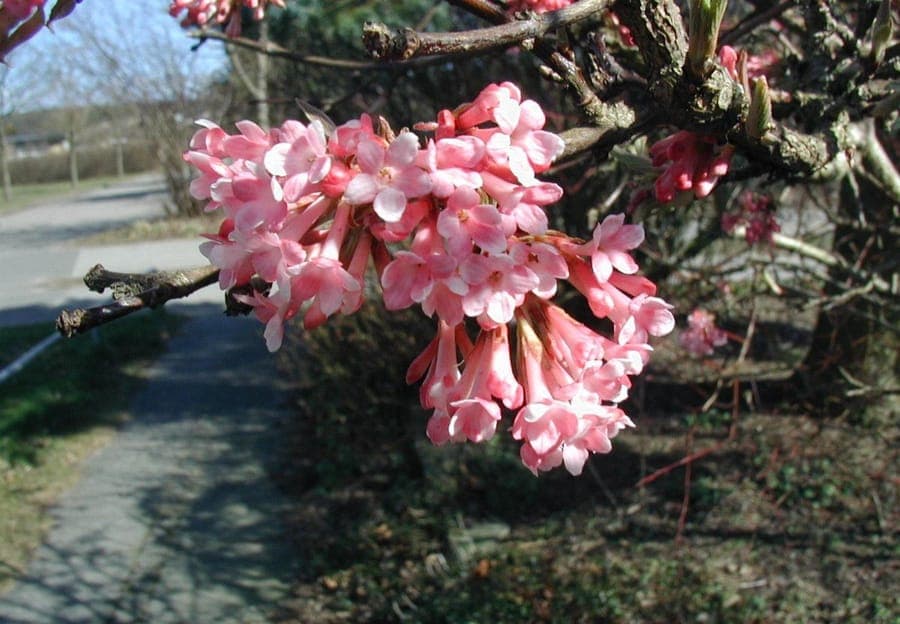
Sten Porse / CC BY-SA 3.0, via Wikimedia Commons
Viburnum farreri: complete guide
Viburnum farreri
¿Quieres ver Viburnum farreri: complete guide en tu jardín?
1 minuto, sin tarjeta de crédito
Overview
Viburnum farreri, commonly known as Farrer's Viburnum or Fragrant Viburnum, is a stunning winter-flowering ornamental shrub native to the mountainous regions of China. Renowned for its intensely fragrant, delicate white flowers that appear early in the season when much of nature lies dormant, this compact-growing plant offers year-round interest and exceptional winter color. It's an essential choice for gardeners seeking to maintain visual and aromatic appeal during the coldest months.
Appearance & Bloom
This viburnum grows as a compact, upright shrub with a naturally rounded form reaching 2 to 4 meters in height. The lanceolate leaves are deep green, providing an attractive backdrop for the delicate blossoms. The real showstopper, however, comes from the flowers: small, star-shaped white to pale pink blooms arranged in dense clusters along the branches. These appear from November through January and release a subtle yet unmistakable sweet fragrance that will perfume your entire garden. Some flowers may even persist into February in milder climates.
Ideal Location
Viburnum farreri thrives best in full sun to partial shade, requiring at least 4-6 hours of direct sunlight daily for optimal flowering. In warmer regions, some afternoon shade is beneficial. Plant it where you pass by regularly to fully appreciate the winter fragrance. This shrub also makes an excellent choice for entry gardens or wildlife gardens where birds and insects can frequent.
Soil
This viburnum prefers nutrient-rich, well-draining soil. The plant tolerates both acidic and neutral soil types but performs best on ground with a pH of 5.5 to 7. Amend the planting hole with mature compost or peat to improve drainage and water retention. Avoid waterlogged conditions, particularly during winter months, as this can lead to root rot and fungal issues.
Watering
Water regularly after planting until the plant becomes established, which typically takes the first growing season. Once mature, Viburnum farreri is fairly drought-tolerant. Water deeply but infrequently - providing deep watering once weekly is better than shallow daily watering. In very wet areas, ensure proper drainage to prevent root problems.
Diseño gratis
¿Quieres ver Viburnum farreri: complete guide en tu jardín? Crea un diseño gratis ahora.
Pruning
This shrub requires minimal pruning. After flowering (around February-March), prune lightly to maintain shape and remove any excessive growth. Remove all dead or damaged branches. Avoid pruning in autumn or winter, as this will remove next season's flower buds. Light formative pruning during the plant's youth creates a more desirable shape.
Maintenance Calendar
Spring: Inspect plant for winter damage; apply mature compost as topdressing. Early Summer: Apply balanced fertilizer as growth begins. Summer: Water regularly during dry periods. Fall: No pruning needed; prepare for flowering season. Winter: Enjoy the flowers! Remove any diseased or damaged wood.
Winter Hardiness
Viburnum farreri is exceptionally hardy in temperate to cold climates, tolerating winter temperatures down to -15 degrees Celsius without serious damage. This makes it perfect for Northern European gardens. In zones with temperatures below -20 degrees Celsius, protecting young plants with mulch provides extra insurance.
Companion Plants
Combining Viburnum farreri with other winter bloomers creates a sanctuary for wildlife. Plant alongside Hamamelis (witch hazel) for extended flowering, or with Mahonia for yellow blooms and fragrance. The reddish winter foliage of Photinia or red-twig dogwood adds textural contrast. For ground-level interest, plant snowdrops (Galanthus) beneath the shrub for successive waves of winter color.
Closing
Viburnum farreri is an excellent choice for anyone wishing to inject winter interest into their garden. The fragrance, early blooms, and attraction to insects and birds make this an invaluable addition to any landscape. You can find this plant at reputable garden centers in the UK and Northern Europe. With minimal maintenance and maximum impact, this winter-blooming jewel is certainly worth investing in for your gardenworld.app design!
¿Quieres ver Viburnum farreri: complete guide en tu jardín? Crea un diseño gratis ahora.
Sube una foto, elige un estilo y obtén un diseño fotorrealista con lista de plantas en menos de un minuto.
Más de 10.000 jardines diseñados
Sin tarjeta de crédito


Plantas similares
Squashberry: complete guide
Viburnum edule
Grow mooseberry (Viburnum edule): ultra-hardy North American shrub with fragrant white flowers and red autumn berries. Perfect for boreal gardens. Zone 3.
Witherod: complete guide to this elegant North American shrub
Viburnum cassinoides
Discover Viburnum cassinoides: an elegant North American shrub with white flowers, yellow fall foliage, and blue berries. Perfect for temperate garden zones.
Buddlejaleaf viburnum: complete guide
Viburnum buddleifolium
Elegant evergreen shrub with delicate foliage and white spring flowers. Perfect for sheltered borders in temperate gardens.