
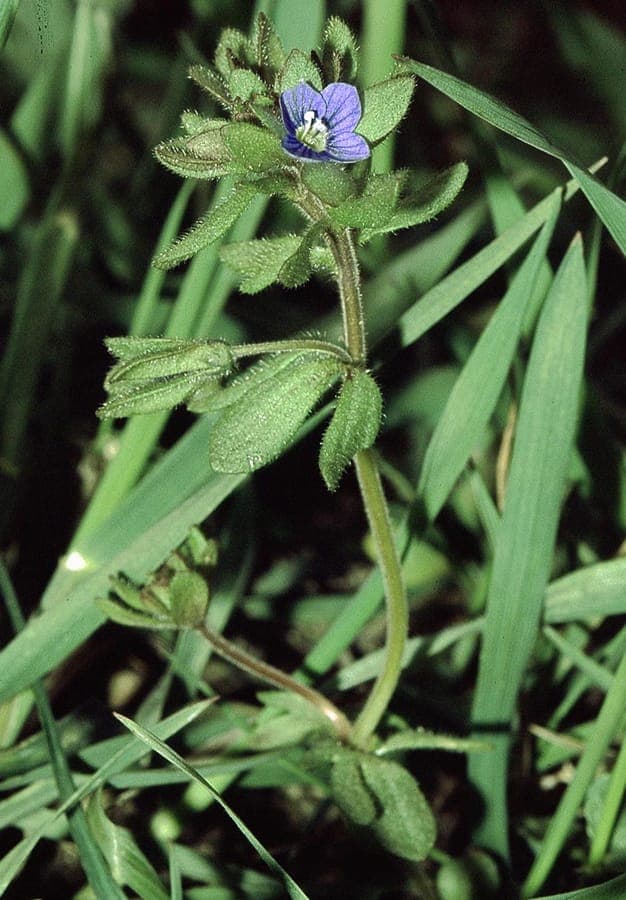
Wikimedia Commons / CC BY-SA 3.0, via Wikimedia Commons
Finger Speedwell: complete guide
Veronica triphyllos
¿Quieres ver Finger Speedwell: complete guide en tu jardín?
1 minuto, sin tarjeta de crédito
Overview
Finger Speedwell (Veronica triphyllos) is an attractive spring-flowering plant from the Plantaginaceae family. This compact herbaceous plant hails from Europe through Central Asia and North Africa. Finger Speedwell is known for its deep blue flowers and characteristic lobed leaves resembling tiny hands. This is a perfect plant for rock gardens, borders, and wildflower meadows.
Appearance and Bloom
Finger Speedwell reaches approximately 10-30 centimeters in height and forms a low, densely growing mound. The leaves are characteristically divided into three to five segments, distinguishing the Veronica genus. The flowers are small, about 0.5 centimeters in diameter, and display a deep blue color with a white center. Blooming extends from March to May, making this plant essential for early spring flowers.
Ideal Location
Finger Speedwell thrives in full sun to partial shade. The plant needs at least four hours of direct sunlight for optimal blooming. In warm climates, partial shade benefits the plant, especially in the afternoon. The plant tolerates shade but will grow sparsely and produce fewer flowers.
Soil
This plant prefers well-draining soil. Heavier soils should be improved with sand, gravel, and peat. The plant grows on neutral to slightly acidic soil with a pH of 6.0-7.0. Waterlogging must be avoided, as it leads to rapid root rot. For container cultivation, use a mixture of garden soil and sand.
Diseño gratis
¿Quieres ver Finger Speedwell: complete guide en tu jardín? Crea un diseño gratis ahora.
Watering
After planting, water the plant regularly until well established. Adult plants are fairly drought-tolerant. Water especially during dry periods and never to the point of waterlogging. In winter, watering can be almost stopped for planted specimens.
Pruning
Finger Speedwell requires minimal pruning. After blooming, you may remove spent flowers to prevent unsightliness, though this is not strictly necessary. In spring, remove dead plant parts. Regular pruning is not recommended for this small plant.
Maintenance Calendar
Spring (March): Check for winter damage and remove dead parts. Late Spring (April-May): Enjoy blooming and water regularly. Summer: Reduce watering as plant goes dormant. Autumn: Prepare plant for winter. Winter: Minimal maintenance; protect against extreme cold.
Winter Hardiness
Finger Speedwell is fairly hardy to about -15 degrees Celsius. In very cold regions (below -20 degrees), protection with mulch or a protective frame is recommended. The plant can also be grown in pots and kept indoors during winter.
Companion Plants
Finger Speedwell grows beautifully alongside other small alpine plants such as Saxifraga, Sedums, and small Campanula species. In wildflower borders, plant carefully alongside other Veronica species. The plant is also suitable for container gardening on terraces.
Closing Remarks
Finger Speedwell is a charming small plant that brings much color to spring borders and rock gardens. The early blooming and attractive leaf form make it a special addition to any garden. Available at garden centers online at gardenworld.app/en and gardenworld.app/nl.
¿Quieres ver Finger Speedwell: complete guide en tu jardín? Crea un diseño gratis ahora.
Sube una foto, elige un estilo y obtén un diseño fotorrealista con lista de plantas en menos de un minuto.
Más de 10.000 jardines diseñados
Sin tarjeta de crédito


Plantas similares
White Beardtongue: complete guide
Penstemon albidus
Discover white beardtongue (Penstemon albidus) - elegant perennial with white to cream flowers. Drought-resistant, perfect for prairie and dry gardens.
Longsepal Beardtongue: complete guide
Penstemon calycosus
Discover longsepal beardtongue (Penstemon calycosus) - beautiful perennial with lilac-blue flowers. For partial shade and moist soil. Ideal for naturalized.
Penstemon cusickii: complete guide
Penstemon cusickii
Discover Cusick's beardtongue, a compact alpine flowering plant with violet-pink blooms. Perfect choice for rock gardens and water-wise landscaping.