
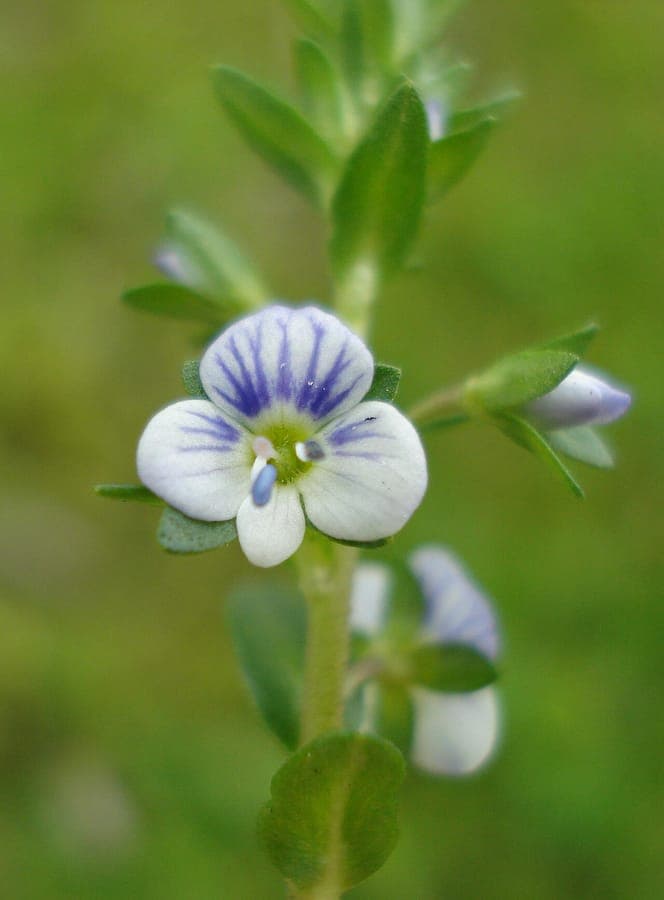
Fornax / CC BY-SA 3.0, via Wikimedia Commons
Thyme Speedwell: complete guide
Veronica serpyllifolia
¿Quieres ver Thyme Speedwell: complete guide en tu jardín?
1 minuto, sin tarjeta de crédito
Overview
Thyme Speedwell (Veronica serpyllifolia) is a compact, low-growing plant from the Plantaginaceae family, originating from temperate regions of Eurasia, North Africa, and Uganda. The plant is renowned for its thyme-like foliage, hence its common name. This is a hardy plant that thrives in many different growing conditions, from rock gardens to lawn edges. With its small, elegant blue flowers and compact growth habit, Thyme Speedwell offers a beautiful addition to many garden styles.
Thyme Speedwell grows low, typically 10-15 centimeters tall, and naturally forms solid clumps. The plant blooms from April through September with numerous small blue flowers. This article provides everything you need to know to successfully cultivate and maintain Thyme Speedwell.
Appearance and Bloom Cycle
Thyme Speedwell gets its name from its leaves which strongly resemble those of thyme. The leaves are small, round to oblong, and form dense mats. The plant grows low and naturally forms compact clumps of 10-20 centimeters diameter. The stems are thin and upright, giving the plant an airy appearance.
Blue flowers appear in April and bloom through September. Each flower measures just 4-6 millimeters across with four blue petals, sometimes with white or pink tints. The flowers group in loose clusters at the tops of stems, creating an elegant effect.
Ideal Location
Plant Thyme Speedwell in locations receiving abundant sunlight. The plant thrives best in spots with at least 5-6 hours of direct sunlight daily. In very hot climates, light afternoon shade can be beneficial. The plant is, however, quite shade-tolerant and can grow under light tree canopy.
Thyme Speedwell is perfect for rock gardens, alpine beds, scree areas, and as an edging plant in borders and pathways. Due to its compact growth, it is also suitable for small retaining walls and on stone walls. Plant it densely for full effects.
Soil Requirements
Thyme Speedwell thrives best on well-draining, not overly fertile soil. The plant grows well on slightly acidic to neutral soils with a pH of 6.5 to 7.5. Waterlogging must be absolutely avoided as this causes problems. Improve heavy soils with sand and gravel to enhance drainage.
When planting, add some compost, but not excessively. In containers, use a mixture of 50% alpine soil and 50% perlite or coarse sand. Always ensure good drainage by providing holes in the bottom of pots.
Diseño gratis
¿Quieres ver Thyme Speedwell: complete guide en tu jardín? Crea un diseño gratis ahora.
Watering
Water Thyme Speedwell moderately. The plant tolerates drought well and does not thrive in wet conditions. Water only when the soil surface feels dry to the touch. During the growing season, water regularly but allow excess water to drain.
Avoid water stagnation. In winter, watering can be significantly reduced. For potted plants, regularly check that the soil neither dries out nor becomes waterlogged. Provide consistent watering without creating wet spots.
Pruning
Thyme Speedwell requires minimal pruning. Remove spent flowers regularly to extend the blooming period. This deadheading practice helps the plant direct energy toward flower production rather than seed formation.
After the blooming season, you can lightly cut back to maintain the compact form. Be careful to preserve the plant's natural form, which should be low and spreading.
Maintenance Calendar
- March: Preparation, check soil and drainage.
- April: Blooming period begins, water regularly.
- May-June: Peak bloom, deadhead spent flowers.
- July-August: Continuous blooming, water regularly.
- September: Bloom begins to decline.
- October-November: Bloom ends, reduce watering.
- December-February: Dormancy period, minimal watering.
Winter Hardiness
Thyme Speedwell is hardy to approximately -15 degrees Celsius, making it suitable for temperate climates (USDA zones 5-8). The plant can withstand severe winters well, especially with good drainage. Wet winters are more problematic than cold.
In very wet conditions, the plant can suffer from leaf rot. In such cases, ensuring good soil drainage helps. Potted plants can better be placed under shelter in winter.
Companion Plants
Combine Thyme Speedwell with other low-growing alpine plants. Good combinations include:
- Phlox subulata - contrasting pink flowers
- Saxifraga - variety in height and form
- Sedum species - texture contrast
- Sempervivum - interesting leaf form
- Dianthus alpinus - pink flowers beside blue
Plant these combinations closely together. Ensure all plants have similar watering needs. Visit gardenworld.app for more ideas.
Closing
Thyme Speedwell is an ideal plant for gardeners seeking low, long-blooming plants. With its thyme-like foliage and blue flowers, it brings years of pleasure with minimal maintenance. Plant it everywhere you want low-growing flowers.
Visit your local garden centres for quality plant material. Discover more plant options on gardenworld.app. With proper care, you will enjoy the long-lasting beauty of Thyme Speedwell.
¿Quieres ver Thyme Speedwell: complete guide en tu jardín? Crea un diseño gratis ahora.
Sube una foto, elige un estilo y obtén un diseño fotorrealista con lista de plantas en menos de un minuto.
Más de 10.000 jardines diseñados
Sin tarjeta de crédito


Plantas similares
White Beardtongue: complete guide
Penstemon albidus
Discover white beardtongue (Penstemon albidus) - elegant perennial with white to cream flowers. Drought-resistant, perfect for prairie and dry gardens.
Longsepal Beardtongue: complete guide
Penstemon calycosus
Discover longsepal beardtongue (Penstemon calycosus) - beautiful perennial with lilac-blue flowers. For partial shade and moist soil. Ideal for naturalized.
Penstemon cusickii: complete guide
Penstemon cusickii
Discover Cusick's beardtongue, a compact alpine flowering plant with violet-pink blooms. Perfect choice for rock gardens and water-wise landscaping.