
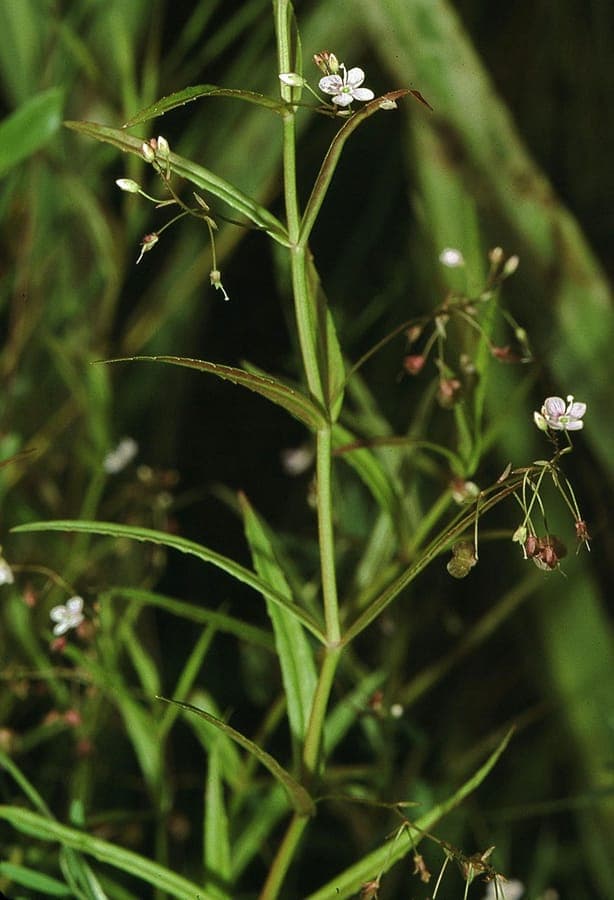
Wikimedia Commons / CC BY-SA 3.0, via Wikimedia Commons
Veronica scutellata: complete guide
Veronica scutellata
¿Quieres ver Veronica scutellata: complete guide en tu jardín?
1 minuto, sin tarjeta de crédito
Overview
Veronica scutellata, the marsh speedwell, is a striking water plant from the Plantaginaceae family. This elegant plant grows naturally in temperate regions of the Northern Hemisphere and North Africa. With its upright growth and delicate pink-white flowers, it's a favorite for ponds, water gardens, and wetland margins. The name "scutellata" refers to shield-shaped seed pods, a botanical detail experienced gardeners always notice.
This is genuinely a fascinating plant for those wanting to integrate water into their garden design. Water is one of the most beautiful elements in garden design, and this plant makes water use easy and effective. It combines perfectly with other aquatic plants and water elements.
Appearance and bloom cycle
Veronica scutellata grows upright, typically 20-40 cm tall with slender, branched stems that grow elegantly upright. Leaves are narrow and linear, giving the plant a very graceful appearance. The foliage is fresh and glossy green, remaining attractive even without flowers.
Flowers are delicate pink or pale-blue blooms, often with fine pink streaks. They appear from June to September in long, slender flower spikes that extend above the foliage. The plant blooms continuously throughout the summer, ensuring months of color. The flowers are particularly popular with butterflies and other pollinators.
Ideal location
This plant loves moist to wet sites. Perfect along water surfaces, in wetlands, or boggy soils. Full sun to light shade: minimum four hours daily. In full shade, blooming becomes less abundant.
The plant is ideal for pond margins, in plant containers permanently in water, or in naturally wet terrain. Many wildlife gardeners use it for natural pond margins. This creates authentic natural aspects in gardens.
Soil requirements
Veronica scutellata wants moisture-retaining soil, ideally rich in organic material. A mix of garden soil and sand works well. The plant accepts virtually any pH but prefers neutral to slightly acidic. This is not a picky plant.
Rich, nutrient-rich soil is actually beneficial: the plant grows better and flowers more abundantly. This isn't a spartan plant wanting poor substrate. It appreciates feeding and grows gratefully on it. This is in contrast to many other speedwell species.
Diseño gratis
¿Quieres ver Veronica scutellata: complete guide en tu jardín? Crea un diseño gratis ahora.
Watering
Here's the key: this plant ALWAYS wants moist soil. In virtually every case, don't let it dry out. Consistent daily moisture is essential. This is actually the entire secret.
Ideally, plant it in containers permanently in water, or directly beside a pond. Even for normal borders, water generously. In hot summers, water daily. This is a plant that suffers much more from water loss than other species.
Pruning
Pruning is optional. After flowering (October), you can cut the plant back to 10-15 cm. This stimulates early-summer growth next spring. This helps with regrowth.
You can remove spent flower spikes, but it's not necessary: many gardeners leave them for seed formation. This is essential for wild bird nutrition.
Maintenance calendar
April-May: Growth resumes after winter dormancy. June-September: Full flowering period, water consistently. This is the peak season. October: Flowering ends gradually. November-February: Winter dormancy, plant may die back in very cold winters. March: Prepare for new growing season.
Winter hardiness
Veronica scutellata is hardy in temperate climates. However, without consistent water, frost damage can occur. Ensure it remains moist, even in winter. This is essential.
In severe winters, protection (blanket of leaves or organic material) helps. But usually it survives without. This is moderately winter hardy.
Companion plants
Combine with other moisture lovers: irises, astilbes, Primula japonica, water mint. This combination creates an airy, natural water garden aspect. Together they form a cohesive water planting.
For water garden ideas, gardenworld.app offers more inspiration and combinations.
Closing
Veronica scutellata is perfect for gardeners wanting to integrate water into garden design. It's not difficult, as long as you understand it's moisture-loving above all. Plant it beside your pond, in wetlands, along water channels. The reward is a graceful plant with long-lasting flowers that attracts birds. Order via gardenworld.app and create your own water paradise.
¿Quieres ver Veronica scutellata: complete guide en tu jardín? Crea un diseño gratis ahora.
Sube una foto, elige un estilo y obtén un diseño fotorrealista con lista de plantas en menos de un minuto.
Más de 10.000 jardines diseñados
Sin tarjeta de crédito


Plantas similares
White Beardtongue: complete guide
Penstemon albidus
Discover white beardtongue (Penstemon albidus) - elegant perennial with white to cream flowers. Drought-resistant, perfect for prairie and dry gardens.
Longsepal Beardtongue: complete guide
Penstemon calycosus
Discover longsepal beardtongue (Penstemon calycosus) - beautiful perennial with lilac-blue flowers. For partial shade and moist soil. Ideal for naturalized.
Penstemon cusickii: complete guide
Penstemon cusickii
Discover Cusick's beardtongue, a compact alpine flowering plant with violet-pink blooms. Perfect choice for rock gardens and water-wise landscaping.