
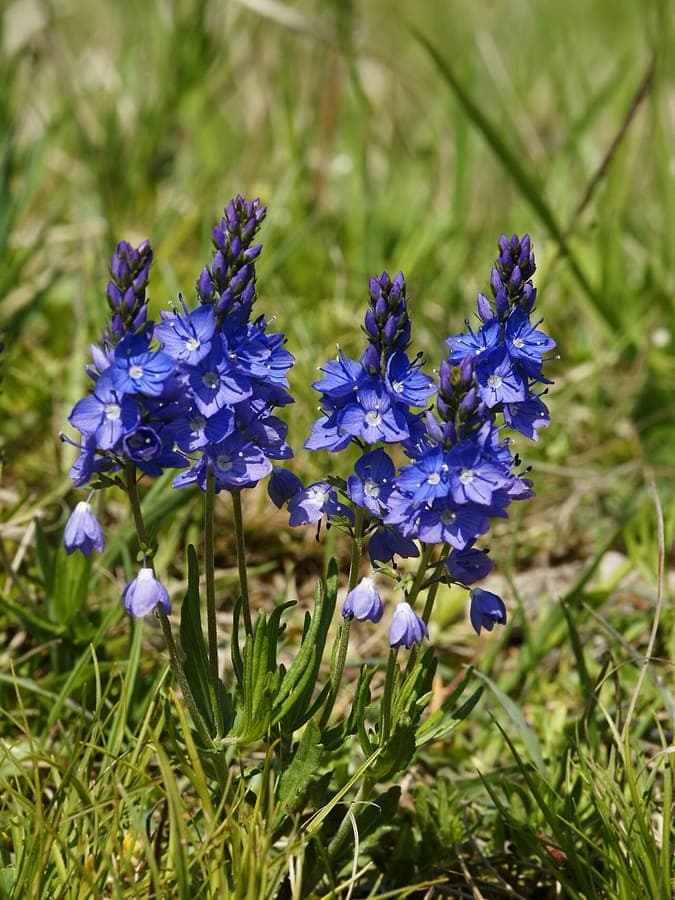
Hans Hillewaert / CC BY-SA 3.0, via Wikimedia Commons
Veronica prostrata: complete guide
Veronica prostrata
¿Quieres ver Veronica prostrata: complete guide en tu jardín?
1 minuto, sin tarjeta de crédito
Overview
Veronica prostrata, the prostrate speedwell, is a low, attractive spreading plant from the Plantaginaceae family. This ground-hugging speedwell grows from Europe to Siberia and naturally forms elegant compact mats of fine, green foliage with abundant blooms. With its rich blue flowers, it's essential for rock gardens, borders, and anywhere you want low-growing color with structure.
The name "prostrata" - lying down, spread out - perfectly describes how this plant grows: it forms compact, green carpets barely exceeding 10 cm height, yet spreading several meters wide. This makes it ideal for creating depth and movement in confined spaces. It's a plant that deserves much wider recognition.
Appearance and bloom cycle
Veronica prostrata typically grows only 5-10 cm tall but spreads sideways to 30-50 cm wide, often more under ideal conditions. Stems partially lie against the ground, hence the name. This makes it exceptionally suitable for sloped terrain and difficult locations.
Leaves are small, fine, and opposite, creating a delicate, attractive texture. The plant is evergreen, remaining attractive year-round. Flowers appear April to June: tiny, sky-blue blooms with white eyes that literally cover the plant. This is truly a floral feast for the eyes.
Ideal location
Full sun is best, though the plant flowers even in light shade. Four to six hours daily ensures dense flowering. In shadier gardens it grows, but becomes thinner and blooms less abundantly. This is essential for full flowering capability.
Veronica prostrata is perfect for rock gardens, borders, walls, and as foreground planting in rock features. It can also grow beautifully between stepping stones (though avoid treading on it). Many gardeners use it on slopes where traditional groundcovers struggle. This makes it particularly valuable.
Soil requirements
The plant prefers well-drained, non-waterlogged soil. Clay must be amended with sand or gravel. Perfect for rock gardens with poor substrate. It accepts neutral to slightly acidic pH. This is an undemanding plant regarding soil conditions.
Heavy fertilization is unnecessary and undesirable - it promotes foliage at the expense of flowers. Modest preparation suffices. The plant essentially asks very little. This is a plant for lazy gardeners that thrives anyway.
Diseño gratis
¿Quieres ver Veronica prostrata: complete guide en tu jardín? Crea un diseño gratis ahora.
Watering
Once established, Veronica prostrata is remarkably drought-tolerant. That said: during growth and flowering (April-June), regular moisture is preferred. Water when the top cm feels dry. This promotes fuller blooming.
In summer, especially during hot dry spells, slightly moister soils benefit from occasional watering. In winter, practically no watering is needed: in most climates, rainfall suffices. This is a very economical plant.
Pruning
Pruning is barely necessary. After flowering (July), you can lightly trim the plant (5 cm) to keep it compact and neat. This also encourages denser growth. It's optional but worthwhile.
Remove dead or damaged material. Otherwise, this is a virtually maintenance-free plant that largely cares for itself. This is ideal for busy gardeners.
Maintenance calendar
March: Preparation, check for winter damage. April-June: Full flowering period, water regularly in dry spells. This is the peak season. July: After flowering lightly trim back (optional). August-September: Standard care. October: Check drainage is functioning well. November-February: Winter dormancy, plant remains green.
Winter hardiness
Veronica prostrata is very hardy to at least -20 degrees Celsius. In most temperate zones it grows without protection. The plant remains largely evergreen, so you'll never face a dead plant situation. This is a very reliable choice.
Ensure it doesn't sit in stagnant water. In wet winters, rot can occur. Good drainage is essential and critical. This is the only real requirement.
Companion plants
Combine with other low, evergreen groundcovers: small euphorbias, Armeria, Dianthus, small Sedum species. For rock garden ideas, gardenworld.app offers abundant inspiration. This combination creates texture and movement in your borders.
These work together for a full, attractive, effective garden impact.
Closing
Veronica prostrata is honestly an underrated plant. It's reliable, hardy, evergreen, and flowers abundantly. Plant it in groups and let it grow: it will thank you with years of blooming. Perfect for gardeners seeking low-growing, low-maintenance beauty. Order via gardenworld.app and enjoy one of the finest low groundcovers available.
¿Quieres ver Veronica prostrata: complete guide en tu jardín? Crea un diseño gratis ahora.
Sube una foto, elige un estilo y obtén un diseño fotorrealista con lista de plantas en menos de un minuto.
Más de 10.000 jardines diseñados
Sin tarjeta de crédito


Plantas similares
White Beardtongue: complete guide
Penstemon albidus
Discover white beardtongue (Penstemon albidus) - elegant perennial with white to cream flowers. Drought-resistant, perfect for prairie and dry gardens.
Longsepal Beardtongue: complete guide
Penstemon calycosus
Discover longsepal beardtongue (Penstemon calycosus) - beautiful perennial with lilac-blue flowers. For partial shade and moist soil. Ideal for naturalized.
Penstemon cusickii: complete guide
Penstemon cusickii
Discover Cusick's beardtongue, a compact alpine flowering plant with violet-pink blooms. Perfect choice for rock gardens and water-wise landscaping.