
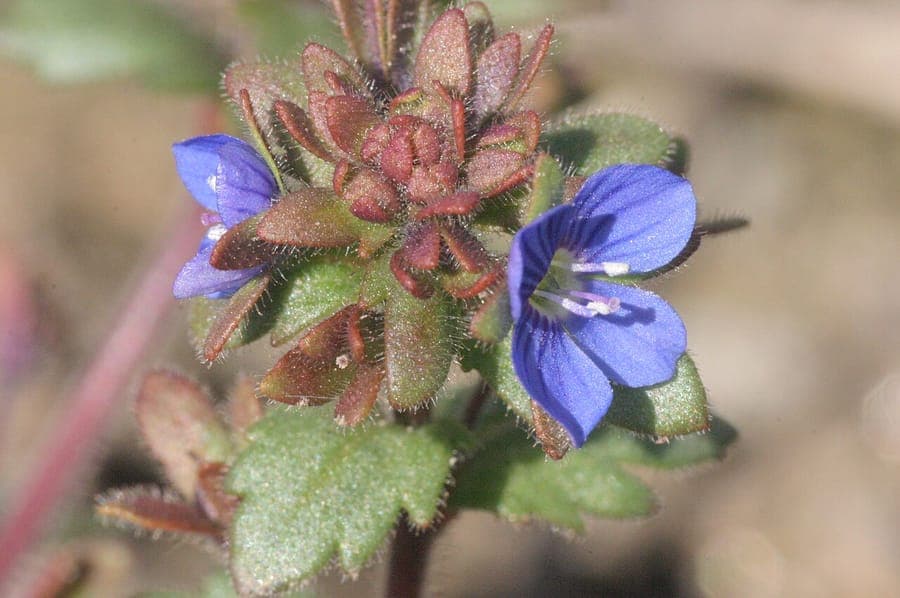
HermannSchachner / CC0, via Wikimedia Commons
Veronica praecox: complete guide
Veronica praecox
¿Quieres ver Veronica praecox: complete guide en tu jardín?
1 minuto, sin tarjeta de crédito
Overview
Veronica praecox, known as Breckland speedwell, is a compact perennial plant from the Plantaginaceae family. Its defining characteristic is early flowering: while most gardens remain sleepy, this plant displays beautiful blue flowers. Distributed naturally from Europe to the Caucasus and North Africa, this speedwell is utterly reliable and beloved by early-season gardeners.
The Breckland speedwell excels through dependability and predictability. Year after year it returns (provided you leave it untouched) and blooms earlier than almost every other plant nearby. This makes it essential in gardens craving early color. Many gardeners use this plant to create full color displays in front yards during early spring when little else is flowering.
Appearance and bloom cycle
Veronica praecox is a compact plant typically reaching 15-30 cm in height with delicately branched stems and small, opposite leaves forming a neat arrangement. The plant naturally develops an attractive rounded silhouette without heavy pruning. The foliage is fresh and visually appealing.
Flowering runs from March to June, peaking in April-May. Small blue flowers with pale centers follow in rapid succession, ensuring long and abundant flowering. In milder winters, first blooms may appear as early as February, which adds to its appeal. The flowers are beloved by early-season bees and other pollinators seeking early nutrition.
Ideal location
Full sun is best for this plant. At least six hours of direct sunlight daily ensures compact growth and maximum flowering. In shadier gardens it thrives but becomes thinner and blooms less abundantly. This is particularly noticeable in small alleys with significant shade.
The plant is perfect for city gardens, small plots, and especially front yards where early color is desired. Use it as groundcover between other low growers or in borders with spring bulbs. It combines beautifully with snowdrops and small crocuses, extending the early season display significantly.
Soil requirements
Veronica praecox is undemanding. Moderately moist, well-draining soil is ideal. Heavy clay should be amended with sand. Limy soils are fine, and slightly acidic ground is tolerated equally well. The plant thrives on virtually any soil type.
The plant requires little nutrition. Rich, heavily fertilized soils quickly encourage excessive leaf growth at the expense of blooms. Modest soil preparation suffices perfectly. This is a plant that appreciates the "less is more" approach to feeding.
Diseño gratis
¿Quieres ver Veronica praecox: complete guide en tu jardín? Crea un diseño gratis ahora.
Watering
Once established, this veronica tolerates dry periods reasonably well. During growth and flowering (March-May), however, water regularly if rainfall is scarce. The soil should never completely dry out. In dry early-summer days, daily watering becomes necessary.
Young transplants need more moisture attention. Check them regularly and water when the top layer feels dry. On warm early summer days, daily watering becomes essential. This is particularly important during the first growing season.
Pruning
Pruning is optional but beneficial. After flowering (June-July), you can cut the plant back to 10 cm height. This stimulates denser growth and possibly a second, albeit smaller, autumn bloom. Many gardeners find this effort well worthwhile for extended color.
Remove dead or damaged material in autumn carefully. Leave the rest standing - plants are evergreen and offer winter interest. This is important for visual appeal during the colder months.
Maintenance calendar
February-March: First preparations, growth may begin early. April-May: First blooming in full swing. This is the plant's peak season. June: Deadheading to stimulate further flowering. July: Cut back to 10 cm, recovery growth begins. August-September: Possible second blooming phase, less abundant than first. October: Remove dead material carefully. November-February: Winter dormancy period, plant remains green.
Winter hardiness
Veronica praecox is hardy to -15 degrees Celsius, sometimes colder. In most British gardens it survives without issue. The plant doesn't disappear above ground but resproutes in early spring. This makes it a very reliable choice for permanent gardens.
Ensure good drainage: stagnant winter water damages more than frost. Plant it where water won't accumulate. This is essential for long-term success and plant health.
Companion plants
Combine Veronica praecox with other early-flowering perennials: snowdrops (Chionodoxa), small daffodils, winter heather. For spring combinations, gardenworld.app offers more creative ideas. These plants work together as a unified whole.
This combination ensures your garden blooms lavishly in March-April while neighbors await growth.
Closing
Veronica praecox deserves far more attention than it receives. It's robust, reliable, blooms early, and flowers freely. Plant it in groups of at least five to maximize impact. This early speedwell guarantees color when you need it most: early spring. Order your plants via gardenworld.app and enjoy next spring what will likely be your first flowers of the year.
¿Quieres ver Veronica praecox: complete guide en tu jardín? Crea un diseño gratis ahora.
Sube una foto, elige un estilo y obtén un diseño fotorrealista con lista de plantas en menos de un minuto.
Más de 10.000 jardines diseñados
Sin tarjeta de crédito


Plantas similares
White Beardtongue: complete guide
Penstemon albidus
Discover white beardtongue (Penstemon albidus) - elegant perennial with white to cream flowers. Drought-resistant, perfect for prairie and dry gardens.
Longsepal Beardtongue: complete guide
Penstemon calycosus
Discover longsepal beardtongue (Penstemon calycosus) - beautiful perennial with lilac-blue flowers. For partial shade and moist soil. Ideal for naturalized.
Penstemon cusickii: complete guide
Penstemon cusickii
Discover Cusick's beardtongue, a compact alpine flowering plant with violet-pink blooms. Perfect choice for rock gardens and water-wise landscaping.