
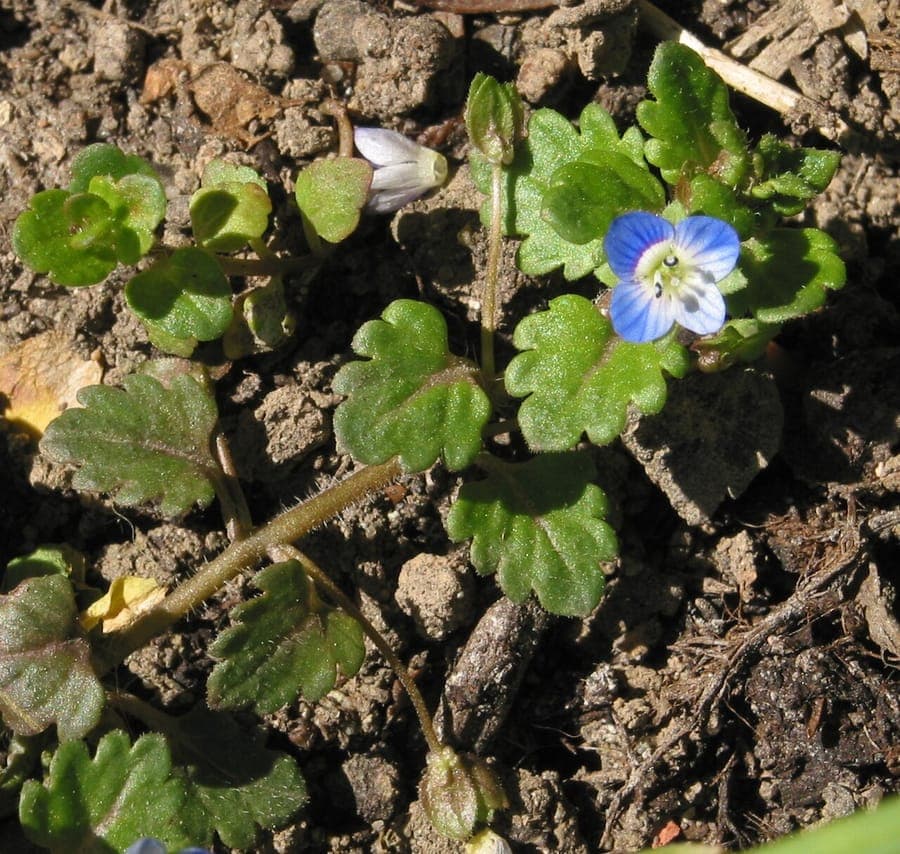
Robert Flogaus-Faust / CC BY 4.0, via Wikimedia Commons
Veronica polita: complete guide
Veronica polita
¿Quieres ver Veronica polita: complete guide en tu jardín?
1 minuto, sin tarjeta de crédito
Overview
Veronica polita, commonly known as grey field speedwell, is an elegant annual plant belonging to the Plantaginaceae family. This charming little flower thrives across Europe, extends to Central Asia, and even appears in North Africa. With its delicate blue flowers and fine texture, it brings an airy, natural aesthetic to any garden. The plant grows happily in open spaces and seems unbothered by planting conditions.
The remarkable flexibility of this speedwell is striking. It tolerates both wetter soils and drier areas equally well, making it exceptionally flexible for different garden styles and climate conditions. This makes it ideal for gardeners who don't want to spend much time on specialized care, yet still want a reliable and attractive flowering plant. Whether in hot, dry summers or cooler, damper regions, this plant adapts with ease.
Appearance and bloom cycle
Veronica polita typically reaches 20-40 cm in height, forming compact, branched plants with a naturally attractive silhouette. The small, opposite leaves are fine and elegant, displaying a light greyish-green color that earned its English name. The leaves have a soft texture that remains interesting even when the plant isn't blooming.
The flowers are striking for their delicate nature: tiny, sky-blue blooms with white or pale-pink eyes in the center. They appear from March to June in profusion, sometimes extending into mild autumns. Each flower lasts only a day, but the plant blooms continuously if you regularly remove faded flowers. This continuous flowering ensures color and life for months on end. The flowers are beloved by pollinators including bees and small butterflies.
Ideal location
This speedwell prefers full sun to partial shade. According to gardenworld.app, full sun yields the best results: at least six hours of direct sunlight daily stimulates the richest flowering. In warmer regions, afternoon shade provides protection against extreme heat that can scorch blooms.
Veronica polita thrives in borders, rock gardens, and as edging along pathways. The plant tolerates windy positions well and even adapts to coastal settings. Even between paving stones and in difficult corners where other plants struggle, this speedwell excels. It's truly a champion of versatility and adaptability.
Soil requirements
The plant is undemanding about soil. A well-draining, low-humus soil is ideal. Heavy clay soils can be problematic due to waterlogging; amend with sand or organic matter for better drainage. A mixture of garden soil and sand in a 70-30 ratio works perfectly.
PH can range from neutral to slightly acidic. Rich, heavily manured soil is unnecessary and can even promote excessive growth at the expense of flowering. Poor soils produce more compact, fuller-flowering plants. This is a plant that doesn't appreciate excessive feeding.
Diseño gratis
¿Quieres ver Veronica polita: complete guide en tu jardín? Crea un diseño gratis ahora.
Watering
Veronica polita prefers consistent moisture regulation. During growth and flowering phases (March-October), the soil should remain consistently moist but never waterlogged or stagnant. Check soil regularly: if the top 2 cm feels dry, it's time to water.
During dry spells, water daily, especially for young plants. Once established, it tolerates brief dry periods better. Avoid overhead watering; water at the root level is more hygienic and helps prevent moisture-related diseases. In autumn, gradually reduce watering.
Pruning
Pruning essentially means removing spent flowers: this stimulates continuous bloom production. Pinch off faded flower tips regularly. By mid-July, after the first flowering flush, cut the plant back to 10-15 cm to encourage a fuller, more compact shape that may produce a second bloom wave.
At season's end (October), no pruning is necessary. The plant dies back naturally when first frost arrives.
Maintenance calendar
March-April: Sow indoors or direct sow outdoors after frost. Soil temperature must reach at least 12 degrees. May-June: Thin seedlings, first flowering begins in abundance. This is the time for regular deadheading. July: Deadheading, trimming for second bloom wave. Many gardeners see even stronger blooming after trimming. August-September: Continuous deadheading, regular watering in dry periods. October: Flowering ends, remove plants and compost them.
Winter hardiness
Veronica polita is NOT winter hardy. It's an annual that dies at the first hard frost. This offers an advantage: you needn't worry about overwintering or other winter-related issues. Each spring, you can resow seeds or purchase plants from garden centers.
Companion plants
Veronica polita combines beautifully with other delicate annuals: forget-me-nots, mignonette, lobelia. This combination creates an airy, natural effect. For added structure, intersperse with small groundcovers like Sempervivum. On gardenworld.app, you'll find countless design ideas and combinations.
Closing
Veronica polita is a modest beauty demanding little but giving generously. Easy to grow from seed, simple to maintain, and covered with blue flowers for six months. Perfect for beginners yet equally rewarding for experienced gardeners seeking natural aesthetics. This speedwell proves you don't always need exotic or complicated plants for a stunning garden. Order your seeds via gardenworld.app for next season.
¿Quieres ver Veronica polita: complete guide en tu jardín? Crea un diseño gratis ahora.
Sube una foto, elige un estilo y obtén un diseño fotorrealista con lista de plantas en menos de un minuto.
Más de 10.000 jardines diseñados
Sin tarjeta de crédito


Plantas similares
White Beardtongue: complete guide
Penstemon albidus
Discover white beardtongue (Penstemon albidus) - elegant perennial with white to cream flowers. Drought-resistant, perfect for prairie and dry gardens.
Longsepal Beardtongue: complete guide
Penstemon calycosus
Discover longsepal beardtongue (Penstemon calycosus) - beautiful perennial with lilac-blue flowers. For partial shade and moist soil. Ideal for naturalized.
Penstemon cusickii: complete guide
Penstemon cusickii
Discover Cusick's beardtongue, a compact alpine flowering plant with violet-pink blooms. Perfect choice for rock gardens and water-wise landscaping.