
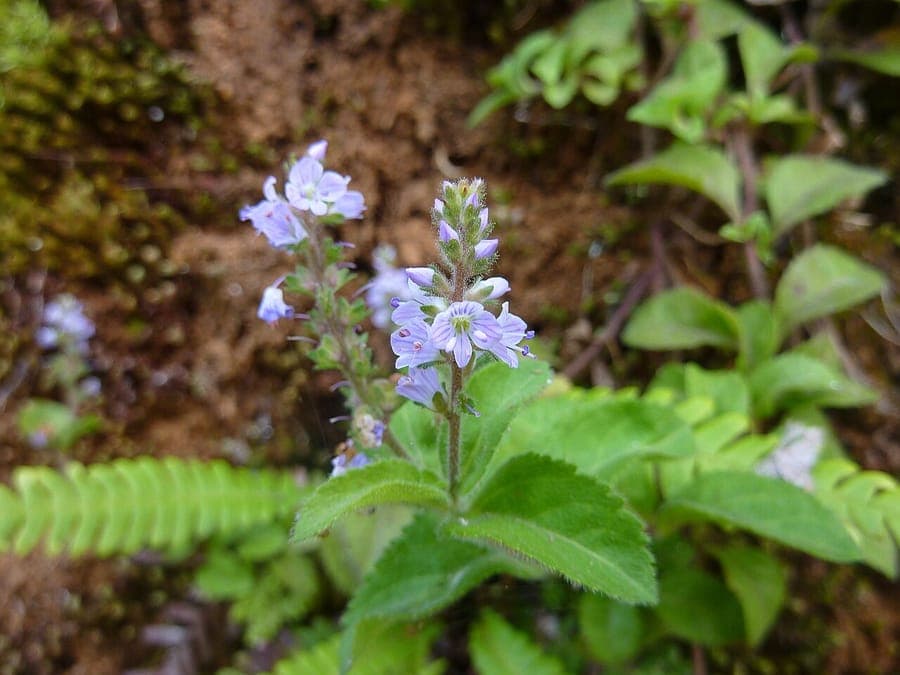
Fagus / CC BY-SA 4.0, via Wikimedia Commons
Heath speedwell: complete guide
Veronica officinalis
¿Quieres ver Heath speedwell: complete guide en tu jardín?
1 minuto, sin tarjeta de crédito
Overview
Heath speedwell (Veronica officinalis) is a traditionally valued perennial from the Plantaginaceae family. This useful plant grows naturally in heathland, grassland, and woodland edges from Europe to West Siberia and North Iran. With its blue flowers and traditional uses, it's an interesting addition to natural gardens and wild garden corners.
Veronica officinalis reaches 20-50 centimeters in height, forming a low, spreading plant. This herb was historically valued for its traditional properties and is still recognized for its useful qualities. The plant blooms from May to July with attractive, bright blue flowers.
Appearance and Bloom
Heath speedwell is recognizable by its oblong, serrated leaves growing in opposite pairs. The leaves have a dull green appearance and are about 2-4 centimeters long. The flowers are small, about 8-10 millimeters wide, and are bright blue with four petals.
The flowers grow in loose, branched clusters along the stems. They appear from May to July, depending on climate. The plant attracts bees, butterflies, and other insects. After flowering, small, heart-shaped seed capsules form.
Ideal Location
Heath speedwell grows well in sunny to partially shaded locations. Provide 4-6 hours of direct sunlight daily for optimal flowering. The plant can also grow in light shade but will flower less profusely.
Choose an airy, dry to moderately moist spot in borders, meadows, or natural gardens. Ensure adequate air circulation. The plant is flexible regarding location and thrives in most garden situations.
Soil
Heath speedwell is not fussy about soil. Regular, well-draining garden soil is perfectly adequate. The plant thrives in slightly acidic to neutral soil, pH 5-7 is ideal. The plant prefers somewhat poorer, not overly nutrient-rich soils.
Container-grown plants can use standard potting mix. Avoid very wet, heavy clay soils. The plant is highly adaptable and grows well in virtually all soil types.
Watering
Once established, heath speedwell is fairly drought-tolerant. Water regularly, especially during dry periods and growth/flowering seasons. Keep the soil moderately moist but not waterlogged.
During rainy periods, usually no additional water is needed. Container-grown plants may need more frequent watering in warm periods. Check regularly whether the soil remains moist.
Diseño gratis
¿Quieres ver Heath speedwell: complete guide en tu jardín? Crea un diseño gratis ahora.
Pruning
Heath speedwell requires minimal pruning. The plant grows naturally compact. After flowering, you can remove spent flowers, which improves appearance.
In spring you can gently remove dead or damaged growth. Don't cut back too hard, as this can disrupt the plant's natural form. Heavy pruning is unnecessary.
Maintenance Calendar
Spring (March-April) remove dead growth. April-May growth begins, water regularly. May-July flowering period - beautiful blue flowers. August continue watering in dry periods.
Fall remove spent growth. October to February plant dormant, minimal watering. Each spring gently clean up. Divide possibly every third year for propagation.
Winter Hardiness
Heath speedwell is very hardy to USDA zone 3 (-40°C). This means it can safely overwinter outdoors in almost all of Europe. The plant tolerates intense cold and wet winters well, as long as it's not in standing water.
Ensure good drainage, especially in winter. The plant can overwinter without protection in most European regions. It dies back to the ground and emerges each spring.
Companion Plants
Heath speedwell grows well with other growing plants, such as clovers, daisies, and other wild plants. Also attractive combined with silver-foliaged plants and grasses.
Use the plant in natural gardens, meadows, or wild corners. Its low growth ensures it doesn't compete with taller neighbors. Also suitable for bird gardens and insect gardens.
Conclusion
Heath speedwell is a traditionally valued perennial with blue flowers that bloom from May to July. With its preference for sunny locations and drought tolerance, it's an excellent choice for natural gardens and difficult spots. You'll occasionally find this plant at garden centers. Regular watering and minimal pruning ensure healthy growth. Visit GardenWorld.app for more inspiration!
With some knowledge, this useful plant thrives in your garden. Its hardy nature and flexibility regarding soil type make it ideal for beginners. Nature garden enthusiasts also appreciate it for its ecological value. Discover GardenWorld.app for more advice and plant recommendations!
¿Quieres ver Heath speedwell: complete guide en tu jardín? Crea un diseño gratis ahora.
Sube una foto, elige un estilo y obtén un diseño fotorrealista con lista de plantas en menos de un minuto.
Sin tarjeta de crédito


Plantas similares
White Beardtongue: complete guide
Penstemon albidus
Discover white beardtongue (Penstemon albidus) - elegant perennial with white to cream flowers. Drought-resistant, perfect for prairie and dry gardens.
Longsepal Beardtongue: complete guide
Penstemon calycosus
Discover longsepal beardtongue (Penstemon calycosus) - beautiful perennial with lilac-blue flowers. For partial shade and moist soil. Ideal for naturalized.
Penstemon cusickii: complete guide
Penstemon cusickii
Discover Cusick's beardtongue, a compact alpine flowering plant with violet-pink blooms. Perfect choice for rock gardens and water-wise landscaping.