
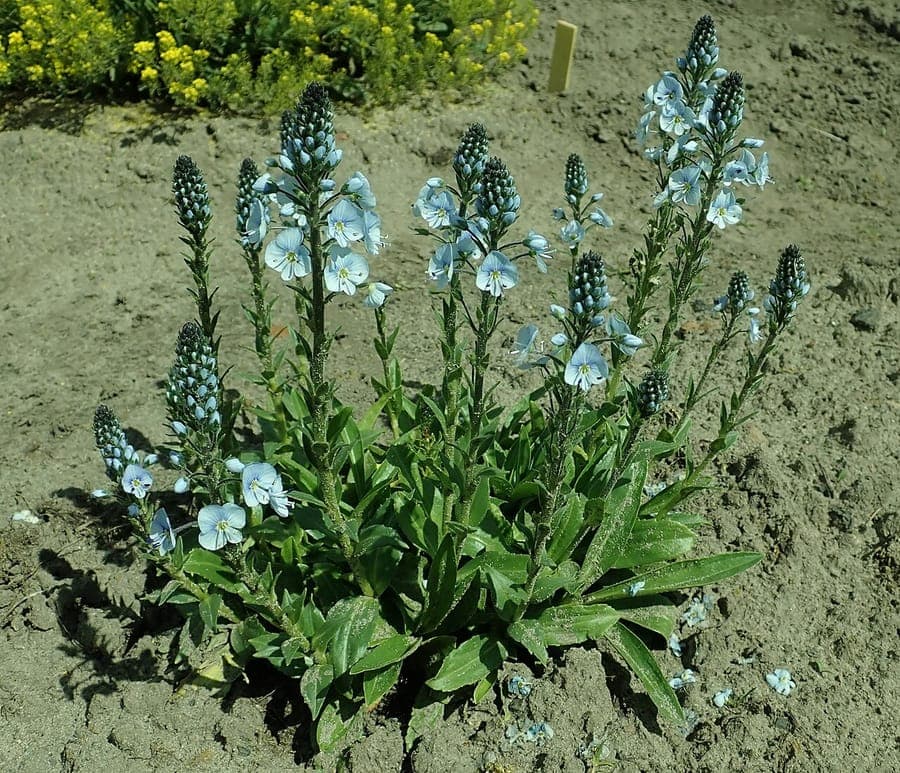
Salicyna / CC BY-SA 4.0, via Wikimedia Commons
Veronica gentianoides: complete guide
Veronica gentianoides
¿Quieres ver Veronica gentianoides: complete guide en tu jardín?
1 minuto, sin tarjeta de crédito
Overview
Veronica gentianoides, known as gentian speedwell, is a charming perennial native to the mountainous regions of Turkey and the Caucasus. This elegant plant is prized for its abundant soft blue flowers and robust nature. The plant is often overlooked by gardeners but deserves far more attention for its reliable performance and attractive appearance.
The plant belongs to the Plantaginaceae family, the same family as speedwell and plantain. This makes it an easy grower that holds up well under adverse conditions. Veronica gentianoides forms compact rosettes and spreads slowly via underground runners.
Appearance and Bloom
Veronica gentianoides reaches a height of 30-40 cm and forms dense tufts of lance-shaped leaves. The leaves are dark green, smooth, and form elegant rosette-like groupings at the base. The flowers appear in May-June on pointed stems and are light blue to purple-blue in color.
The flower spires are densely packed with small blooms that open slowly from bottom to top. This provides an extended blooming period lasting several weeks. The flowers attract mainly bees and other pollinators. After flowering, small seed capsules form.
Ideal Location
Gentian speedwell grows best in sunny to partially shaded locations. The plant tolerates full sun in temperate climates but in hot areas may prefer some afternoon shade. At least 4-6 hours of sunlight per day is needed for good growth and flowering.
Perfect spots include: front of borders, rock gardens, steep slopes, and planted in groups of 3-5. The plant does well at the foot of shrubs and can also grow in containers.
Soil
Veronica gentianoides thrives best in well-draining soil. The plant tolerates, however, a wide range of soil types, from sandy to loamy soil. Poorly draining, heavy clay soil causes water congestion and root rot in winter.
The pH can range from neutral to slightly acidic. Avoid constant waterlogging. Add some sand to heavy soils at planting to improve drainage. The plant has moderate nutrient requirements and grows well in average, non-rich soil.
Diseño gratis
¿Quieres ver Veronica gentianoides: complete guide en tu jardín? Crea un diseño gratis ahora.
Watering
After establishment, Veronica gentianoides is quite drought-tolerant. During the growing season, water when the top layer of soil feels dry. In dry periods, water more deeply but always ensure excess drains away.
In containers, water more frequently, especially in warm weather. In winter, water minimally, just enough to keep roots from completely drying out. Excessive water is the biggest threat; the plant prefers dry to moderately moist conditions.
Pruning
Veronica gentianoides requires minimal pruning. After flowering, you can pinch off spent flower stems to make the plant look neater. This also encourages slight regrowth of young leaves.
In spring, before new growth begins, dead or damaged leaves can be removed. The plant naturally forms dense tufts, so aggressive pruning is not necessary.
Maintenance Calendar
April: Planting time, water well until established. May-June: Peak of flowering, remove damaged flowers. July-August: Minimal maintenance, water during dry periods. Autumn: Plant prepares for dormancy. Winter: Minimal care, protection against hard frosts.
Winter Hardiness
Veronica gentianoides is persistently winter hardy to about -15°C or USDA zone 6. In most European regions, it easily survives winters. The plant does not die off but goes dormant and regrows in spring.
In very wet winters, damage can occur from waterlogging. In such conditions, improve drainage by adding sand or gravel. In extreme areas, extra mulch provides protection.
Companion Plants
Veronica gentianoides combines well with:
- Lavender (Lavandula) - simultaneous bloom, purple tones
- Phlox (Phlox subulata) - similar growth size and preference
- Bergenia (Bergenia) - interesting foliage contrast
- Sedge (Carex) - grass-like foliage beside it.
Closing
Veronica gentianoides deserves more attention as a distinctive, reliable perennial. With its elegant blue flowers and compact growth, it forms a valuable addition to any border. Once established, it provides years of pleasure with minimal effort.
Bring your dream garden to life with gardenworld.app: design, plant, and visualize in real time. Perfect your front yard with professional insights and plant combinations.
¿Quieres ver Veronica gentianoides: complete guide en tu jardín? Crea un diseño gratis ahora.
Sube una foto, elige un estilo y obtén un diseño fotorrealista con lista de plantas en menos de un minuto.
Más de 10.000 jardines diseñados
Sin tarjeta de crédito


Plantas similares
White Beardtongue: complete guide
Penstemon albidus
Discover white beardtongue (Penstemon albidus) - elegant perennial with white to cream flowers. Drought-resistant, perfect for prairie and dry gardens.
Longsepal Beardtongue: complete guide
Penstemon calycosus
Discover longsepal beardtongue (Penstemon calycosus) - beautiful perennial with lilac-blue flowers. For partial shade and moist soil. Ideal for naturalized.
Penstemon cusickii: complete guide
Penstemon cusickii
Discover Cusick's beardtongue, a compact alpine flowering plant with violet-pink blooms. Perfect choice for rock gardens and water-wise landscaping.