
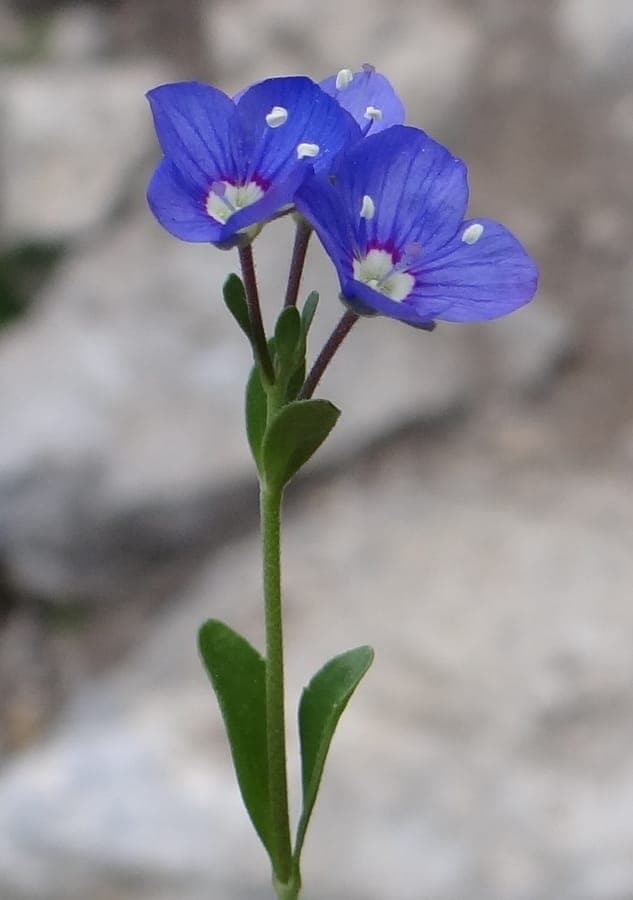
Jerzy Opioła / CC BY-SA 4.0, via Wikimedia Commons
Rock speedwell: complete guide
Veronica fruticans
¿Quieres ver Rock speedwell: complete guide en tu jardín?
1 minuto, sin tarjeta de crédito
Overview
Rock speedwell (Veronica fruticans) is a compact, frost-hardy shrubby perennial from the Plantaginaceae family. This diminutive mountain dweller thrives naturally in rocky Alpine habitats across Europe, from Greenland to Spain. With its dense, cushion-forming growth and exceptional cold tolerance, it makes an outstanding addition to alpine gardens, rock gardens, and alpine troughs.
The plant reaches just 15-30 centimeters in height, forming a dense, mounding mat of fine foliage. Thanks to its low stature and attractive appearance, it's ideal for border edging, crevice planting, and alpine displays. The flowers are a striking blue and bloom from June through September.
Appearance and Bloom
Rock speedwell is recognizable by its fine, linear foliage that clings closely to the stems. The leaves are small, green, and have a slightly leathery texture. The flowers are a striking blue, sometimes with a reddish eye, forming in dense clusters at the branch tips.
The plant blooms for four months: June to September. The flowers attract numerous pollinators, especially bees and butterflies. After flowering, small fruit capsules develop, containing countless seeds for the next generation.
Ideal Location
Rock speedwell grows best in a fully sunny location. Ensure at least 6 hours of direct sunlight daily. In areas with hot summers, light afternoon shade may be beneficial, but the plant generally needs abundant light for vigorous growth and profuse flowering.
Choose a well-draining, dry spot with excellent water drainage. Avoid areas where water collects, especially in winter. The plant thrives between stones or in raised beds where water drains quickly away.
Soil
Rock speedwell prefers poor, well-draining soil. Sandy or rocky soil is ideal. Add coarse sand or fine gravel to heavy clay soils to improve water drainage. The plant does not thrive in rich, nutrient-dense soils.
The ideal pH is neutral to slightly acidic (pH 5.5-7.5). For container-grown plants, use a mixture of garden soil, sand, and small pebbles in equal parts. This ensures optimal drainage and root development.
Watering
Once established, rock speedwell is drought-tolerant. During the growing season (April to October), water regularly but ensure the soil never remains wet. In rainy periods, additional watering is usually unnecessary.
In winter, water much less frequently. The plant requires minimal moisture during dormancy and actually suffers from overwatering. Check regularly whether the soil is dry before watering again. Container-grown plants need watering more often than garden plants.
Diseño gratis
¿Quieres ver Rock speedwell: complete guide en tu jardín? Crea un diseño gratis ahora.
Pruning
Rock speedwell requires minimal pruning. In March or April, you may gently remove dead or damaged branches. Use clean, sharp pruning shears and avoid excessive cutting, as this can disrupt the plant's natural form.
After flowering, you may carefully remove spent flower clusters, which can stimulate a second bloom. However, this is not necessary; the plant flowers well without this intervention.
Maintenance Calendar
In spring (March-April) remove winter debris and dead growth. May to October check regularly for moisture and water when soil feels dry. June to September blooming period - enjoy the striking blue flowers!
Fall and winter prevent drought stress. December to February keep the plant dormant without feeding. In early spring, you may apply gentle fertilizer, but rock speedwell requires minimal nutrition.
Winter Hardiness
Rock speedwell is extremely hardy to USDA zone 4 (-30°C). This means it can safely overwinter outdoors in nearly all of Europe without protection. The plant tolerates intense frost, snow, and wind well, provided the soil drains excellently.
In very wet winters, waterlogging can be more dangerous than frost. Therefore, ensure impeccable drainage. Container plants may need extra winter protection in extreme cold.
Companion Plants
Rock speedwell grows well with other alpine plants, such as sea thrift, rosemary, saxifraga, and other small mountain dwellers. Also attractive when combined with gray-foliaged plants like sedum and silverweed.
In rock gardens and between pavers, it creates beautiful scenes paired with stones and native grasses. Its low growth ensures it doesn't compete with taller neighbors.
Conclusion
Rock speedwell is a hardy, low-maintenance alpine plant that blooms beautifully from June to September. With its compact growth and blue flowers, it's a must-have for alpine gardens, rock gardens, and scree gardens. You'll find this plant at garden centers across the UK and Europe. Regular watering and excellent drainage ensure a healthy, free-flowering plant. Discover GardenWorld.app for more inspiration and tips!
With some basic knowledge and care, this remarkable alpine plant thrives in your garden. Its hardy nature and minimal maintenance requirements make it an excellent choice for beginning gardeners. Even experienced gardeners appreciate it as a valuable addition to alpine displays. Visit GardenWorld.app for more advice and plant recommendations!
¿Quieres ver Rock speedwell: complete guide en tu jardín? Crea un diseño gratis ahora.
Sube una foto, elige un estilo y obtén un diseño fotorrealista con lista de plantas en menos de un minuto.
Sin tarjeta de crédito


Plantas similares
White Beardtongue: complete guide
Penstemon albidus
Discover white beardtongue (Penstemon albidus) - elegant perennial with white to cream flowers. Drought-resistant, perfect for prairie and dry gardens.
Longsepal Beardtongue: complete guide
Penstemon calycosus
Discover longsepal beardtongue (Penstemon calycosus) - beautiful perennial with lilac-blue flowers. For partial shade and moist soil. Ideal for naturalized.
Penstemon cusickii: complete guide
Penstemon cusickii
Discover Cusick's beardtongue, a compact alpine flowering plant with violet-pink blooms. Perfect choice for rock gardens and water-wise landscaping.