
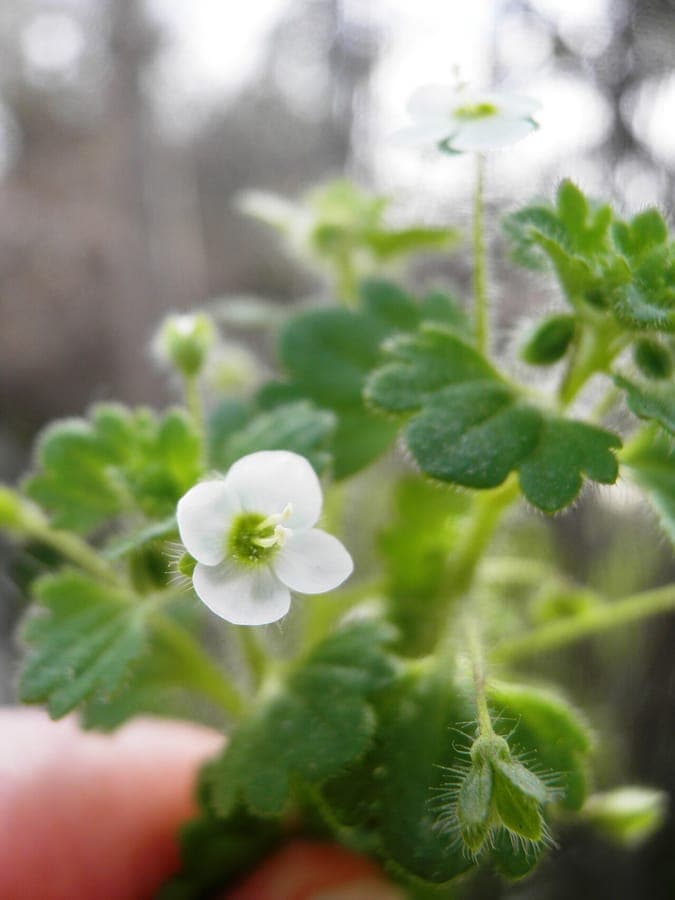
Ariel Palmon / CC BY-SA 3.0, via Wikimedia Commons
Pale speedwell: complete guide
Veronica cymbalaria
¿Quieres ver Pale speedwell: complete guide en tu jardín?
1 minuto, sin tarjeta de crédito
Overview
Pale speedwell (Veronica cymbalaria), also known as glandular speedwell or wall speedwell, is a delicate flowering plant of Mediterranean and Middle Eastern origin. This compact plant is renowned for its exceptional durability in dry climates and its sky-blue flowers. In gardens, this plant serves as a perfect element for rock gardens, Mediterranean plantings, and drought-resistant borders, enhancing its value for modern, water-saving gardens.
Appearance and bloom
Pale speedwell grows as a compact, low-growing plant, usually between 10 and 25 centimeters high. The plant forms dense mats or cushions with many small, softly hairy leaves. Small, blue flowers appear during an extended period from February through October, making this plant particularly valuable for bird-free seasons and dry summers. The flowers have a soft, pale blue color with white and yellow at the center.
Ideal location
Pale speedwell thrives best in full sun locations in warm, dry microclimates. In Mediterranean and southern gardens it can grow on exposed, windy places with minimal care. The plant is ideal for rock gardens, dry stone gardens, gravel garden designs, and drought-tolerant borders. In warmer regions, some afternoon shade during extreme summer heat may be beneficial.
Soil
Pale speedwell flourishes in very well-draining, light soils. This plant expects lean, nutrient-poor soils and will perform poorly in rich, nutrient-rich soil environments. A pH of neutral to slightly alkaline is preferred. The plant grows without issue in sandy, gravelly, or stony soils. As it is very drought-tolerant, ensure water cannot stagnate around the roots.
Diseño gratis
¿Quieres ver Pale speedwell: complete guide en tu jardín? Crea un diseño gratis ahora.
Watering
Once established, pale speedwell requires very little water. During the growing season and bloom period, careful misting or drip watering may be beneficial, but is not strictly necessary. In dry periods and extremely hot summers, regular watering can extend flowering. Prevention of water accumulation is essential; excessive moisture can cause fungal diseases.
Pruning
Pale speedwell requires minimal pruning. Remove dead material in early spring after frost passes. If the plant becomes too large, carefully cut back overhanging portions to desired size. In extremely cold winters, many leaves may disappear; remove these in spring.
Maintenance calendar
Spring: Remove winter-damaged parts; add gravel to improve drainage. Summer: Give sporadic watering in extremely dry periods; monitor for fungal diseases. Autumn: Increase moisture use as temperatures cool; cease fertilization. Winter: In mild winters, the plant remains evergreen; in harsh winters, it may die back.
Winter hardiness
Pale speedwell is USDA hardiness zone 5 (minus 15 to minus 20 degrees Celsius) and can tolerate to approximately minus 20 degrees Celsius. In extreme cold, however, the plant may die or seriously decline. In very cold climates, it performs well in stone rock gardens where underground roots are better protected.
Companion plants
Pale speedwell plants excellently with other Mediterranean, drought-tolerant plants such as catnip, lavender, roses, sage, and stonecrop. In rock features, it works well alongside sedums, sempervivums, and other succulents. Avoid association with moisture-loving soil dwellers.
Closing
Pale speedwell is a valuable plant for Mediterranean and dry gardens, with its exceptional drought tolerance and extended flowering period. Found in many European garden centers including those in warmer regions of Europe. For more information about drought-tolerant plants, see gardenworld.app/en and gardenworld.app/nl.
¿Quieres ver Pale speedwell: complete guide en tu jardín? Crea un diseño gratis ahora.
Sube una foto, elige un estilo y obtén un diseño fotorrealista con lista de plantas en menos de un minuto.
Más de 10.000 jardines diseñados
Sin tarjeta de crédito


Plantas similares
White Beardtongue: complete guide
Penstemon albidus
Discover white beardtongue (Penstemon albidus) - elegant perennial with white to cream flowers. Drought-resistant, perfect for prairie and dry gardens.
Longsepal Beardtongue: complete guide
Penstemon calycosus
Discover longsepal beardtongue (Penstemon calycosus) - beautiful perennial with lilac-blue flowers. For partial shade and moist soil. Ideal for naturalized.
Penstemon cusickii: complete guide
Penstemon cusickii
Discover Cusick's beardtongue, a compact alpine flowering plant with violet-pink blooms. Perfect choice for rock gardens and water-wise landscaping.