
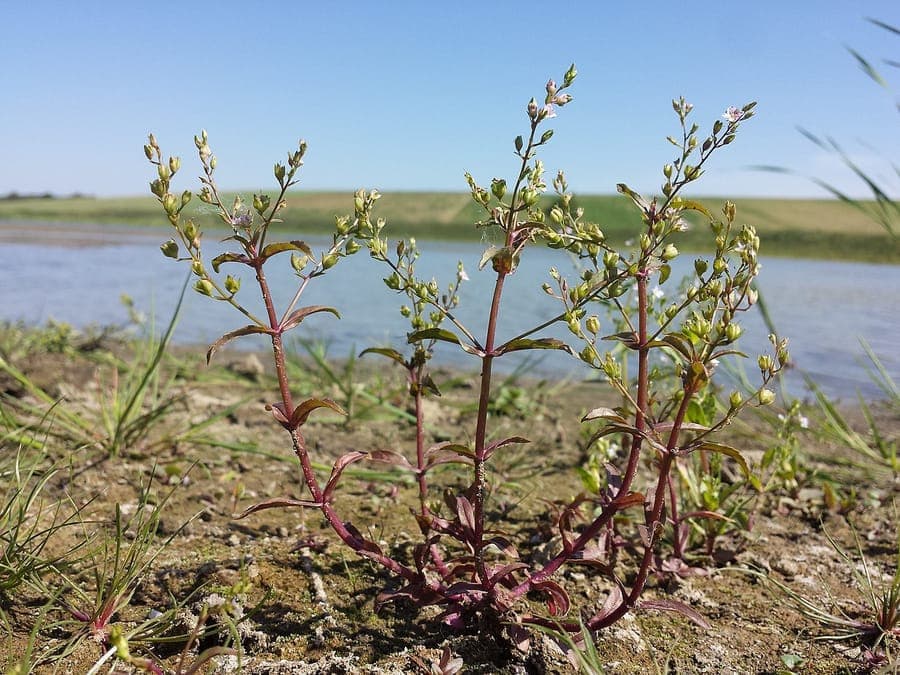
Stefan.lefnaer / CC BY-SA 4.0, via Wikimedia Commons
Pink water speedwell: complete guide
Veronica catenata
¿Quieres ver Pink water speedwell: complete guide en tu jardín?
1 minuto, sin tarjeta de crédito
Overview
Pink water speedwell (Veronica catenata) is an elegant, semi-aquatic plant naturally occurring in wetlands and ponds across Europe to the Caucasus region. This robust species is recognized for its long, slender stems and delicate pink to purple flowers. In garden design, this plant serves as a valuable addition to shorelines and water gardens, where it stabilizes banks while supporting aquatic wildlife habitats.
Appearance and bloom
Pink water speedwell grows as a low-creeping plant with slender, threadlike stems. The plant typically reaches 10 to 30 centimeters in height and spreads via underground runners. Characteristic are the small, lance-shaped leaves densely arranged along the stems. During the growing season, numerous four-petaled flowers appear in shades of pink, white, and lilac. The flowering period extends from May through October, providing extended visual interest in water features.
Ideal location
This plant thrives at waterside margins, in shallow waters, and on moist soils where it requires full sun to partial shade. It adapts to full shade but flowers most abundantly in locations with at least four to six hours of direct sunlight daily. In gardens without water features, it suits moist ditches, muddy plant edges near water reservoirs, or as groundcover in water-focused garden designs.
Soil
Pink water speedwell thrives in moist to permanently wet soils. It prefers a pH range of 7.0 to 7.5, hence neutral to slightly alkaline. Since it grows alongside other aquatic plants, it thrives in both sandy and clay-based soils provided they contain organic matter. For optimal growth, incorporate compost to improve nutrient richness. It tolerates only moderate nutrient concentrations, meaning heavy fertilization is unnecessary and potentially harmful.
Watering
Such an aquatic plant requires no traditional watering when grown as part of a water garden system. However, when grown in dry land garden situations, it benefits from regular watering to keep soil moist. Daily misting or subsurface drip irrigation ensures the species remains protected during dry periods. If water is available, plants can temporarily be fully submerged, though they cannot remain permanently underwater.
Diseño gratis
¿Quieres ver Pink water speedwell: complete guide en tu jardín? Crea un diseño gratis ahora.
Pruning
Pink water speedwell requires minimal pruning during the growing season. Remove dead or damaged foliage to prevent disease and encourage healthy growth. After the flowering season, around October or November, selected stems can be cut back to ground level to prevent the plant from becoming too tall and unruly. This promotes a more compact form and stimulates strong new growth the following season.
Maintenance calendar
Spring: Inspect for frost damage; remove dead material; add compost to the soil zone. Add water if drought periods occur. Summer: Ensure adequate moisture; monitor for diseases; remove spent flowers to promote longer bloom. Autumn: Reduce moisture intake; prune after flowering; harvest seed if planning for next season. Winter: In cold climates, plants may fully enter dormancy, though water roots remain alive beneath ice.
Winter hardiness
Veronica catenata is highly winter hardy and can tolerate temperatures down to minus 20 degrees Celsius. It is suitable for temperate and cold climates from Europe to Canada. For maximum winter protection in extremely cold areas, stems can be placed in a layer of protective material. The plant offers an advantage in pond gardens where ice may form: they survive beneath ice covers as long as stagnant oxygen remains available.
Companion plants
Pink water speedwell partners well with other aquatic plants such as reed grass, marsh marigold, water primrose, and small water ferns. In moist garden situations, they grow well alongside hydrangeas, wild privet, and other moisture-loving shrubs. Avoid strong growers that may overtake the delicate stems. Many aquatic and semi-aquatic communities limit plant density to minimize competition.
Closing
The pink water speedwell adds natural water gardens at the peak of their biological value. With its delicate pink flowers and useful role as bank stabilizer, this plant is a valuable choice for ecologists and water garden enthusiasts. Found in many European garden centers, this species offers years of low-maintenance beauty in water settings. Learn more about aquatic plants at gardenworld.app/en and gardenworld.app/nl.
¿Quieres ver Pink water speedwell: complete guide en tu jardín? Crea un diseño gratis ahora.
Sube una foto, elige un estilo y obtén un diseño fotorrealista con lista de plantas en menos de un minuto.
Más de 10.000 jardines diseñados
Sin tarjeta de crédito


Plantas similares
White Beardtongue: complete guide
Penstemon albidus
Discover white beardtongue (Penstemon albidus) - elegant perennial with white to cream flowers. Drought-resistant, perfect for prairie and dry gardens.
Longsepal Beardtongue: complete guide
Penstemon calycosus
Discover longsepal beardtongue (Penstemon calycosus) - beautiful perennial with lilac-blue flowers. For partial shade and moist soil. Ideal for naturalized.
Penstemon cusickii: complete guide
Penstemon cusickii
Discover Cusick's beardtongue, a compact alpine flowering plant with violet-pink blooms. Perfect choice for rock gardens and water-wise landscaping.