
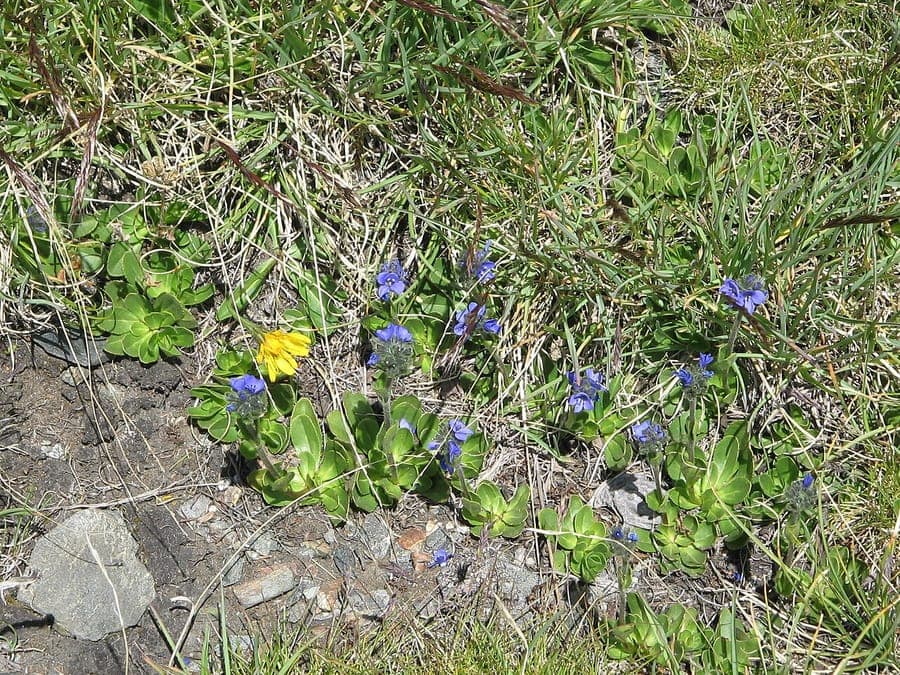
Meneerke bloem / CC BY-SA 4.0, via Wikimedia Commons
Daisy Speedwell: complete guide
Veronica bellidioides
¿Quieres ver Daisy Speedwell: complete guide en tu jardín?
1 minuto, sin tarjeta de crédito
Overview
Daisy Speedwell (Veronica bellidioides) is a charming alpine plant that belongs to the Plantaginaceae family. This low-growing perennial originates from mountainous regions ranging from the Pyrenees through the Carpathians to northern Greece. With its delicate blue flowers and compact growth habit, it is an ideal choice for rock gardens, alpine troughs, and Mediterranean-style gardens. The plant typically grows just 15-20 centimeters tall, making it perfect for edging pathways or filling small spaces in the garden.
Daisy Speedwell is renowned for its robustness and ability to thrive in challenging conditions. The plant offers an extended blooming period from May through September, keeping your garden in flower for months. The blue blooms attract pollinators and create a calming effect in garden design. This guide provides complete instructions for successfully cultivating this beautiful plant.
Appearance and Bloom Cycle
Daisy Speedwell presents itself with small, tightly-packed rosette-shaped leaves resembling those of daisies, hence its common name. The leaves are glossy green and form compact cushions of approximately 5-10 centimeters diameter. Blue flowers emerge on thin stems above the foliage, blooming continuously from May through September.
Each flower measures about 8-10 millimeters across with four blue petals. The flowers group in loose clusters, creating a soft, cloud-like effect when the plant is in full bloom. This blooming pattern makes the plant ideal for creating colorful accents in rock gardens and alpine beds.
Ideal Location
Place your Daisy Speedwell in a location receiving abundant sunlight. The plant thrives best in spots where it receives at least 6-8 hours of direct sunlight daily. While the plant can tolerate some shade, full sun promotes the best flowering. In very hot climates, light afternoon shade can be beneficial to prevent leaf desiccation.
The plant is exceptionally suitable for rock gardens, alpine troughs, living walls, and containers on patios. Thanks to its small stature, it occupies minimal space and fits perfectly in small gardens. Plant Daisy Speedwell along pathways and steps, where it will greet visitors with its blooming beauty.
Soil Requirements
Daisy Speedwell demands well-draining soil. Overly wet soil can lead to root rot, so improve soil with gravel, sand, or perlite to increase water permeability. The plant grows well in moderately fertile to poor soils. A pH between 6.5 and 7.5 is ideal.
When planting, add some compost, but not excessive organic matter. In containers, use a mixture of approximately 50% alpine soil and 50% perlite or coarse sand. Ensure excellent drainage by providing adequate drainage holes in container bottoms.
Diseño gratis
¿Quieres ver Daisy Speedwell: complete guide en tu jardín? Crea un diseño gratis ahora.
Watering
Water your Daisy Speedwell moderately. The plant tolerates drought better than excessive moisture. Given that the plant originates from mountainous environments, it is accustomed to regular but not excessive watering. Water deeply when the soil surface feels dry to the touch.
During the growing season (spring and summer), water regularly, but do not allow the soil to become waterlogged. Reduce watering in winter when the plant is dormant. For potted specimens, be especially careful with watering since moisture evaporates more quickly. Check regularly that the soil does not dry out, especially on warm days.
Pruning
Daisy Speedwell requires minimal maintenance regarding pruning. Remove spent flowers regularly to encourage longer bloom time. This deadheading practice helps the plant direct energy toward producing new flowers rather than seed development.
After the blooming season (October/November), you can carefully remove dead leaves and stems. Complete plant cutback is unnecessary unless the plant has become overly leggy. Try to maintain the plant's compact natural form.
Maintenance Calendar
- March: Plant preparation. Check drainage systems and soil structure.
- April-May: Growing season begins, new growth emerges. Ensure regular watering.
- June-July: Peak blooming period. Deadhead spent flowers regularly.
- August-September: Continuous blooming. Continue consistent watering.
- October-November: Blooming ends. Carefully remove dead foliage.
- December-February: Dormancy period. Minimal watering, protect from extreme frost.
Winter Hardiness
Daisy Speedwell is winter hardy and can tolerate temperatures down to -15 degrees Celsius. This makes it suitable for most temperate gardens (USDA zones 5-8). In mild climates outside these zones, it deserves protection with leaves or straw during winter.
In very wet winters, potted specimens benefit from winter protection by placing them under a roof. Freezing is less problematic than wet feet in winter. If soil becomes too wet, this can lead to foliage rot.
Companion Plants
Combine Daisy Speedwell with other alpine plants for an attractive rock garden display. Some excellent combinations include:
- Saxifraga species (Saxifrage) - complementary height variations
- Sempervivum (Houseleek) - contrasting leaf forms
- Dianthus alpinus (Alpine Pink) - pink flowers beside blue
- Phlox subulata - purple blooms combine beautifully with blue
- Sedum species (Stonecrop) - interesting textural contrast
Plant these combinations closely together for a full, attractive rock garden. Ensure plants have similar watering needs to simplify maintenance. Visit gardenworld.app for more ideas on alpine garden compositions.
Closing
Daisy Speedwell is a jewel for any garden, especially for those who love alpine plants. With its blue flowers, compact growth, and minimal maintenance requirements, it brings years of pleasure. Plant multiple specimens for greater effect, and use them in alpine troughs, rock gardens, or container gardens.
Discover more plant possibilities on gardenworld.app, where you will find inspiration for your next garden project. With proper care and location, you will enjoy the beauty of Daisy Speedwell year after year. Visit your local garden centres for quality seed and plant material of this exceptional alpine treasure.
¿Quieres ver Daisy Speedwell: complete guide en tu jardín? Crea un diseño gratis ahora.
Sube una foto, elige un estilo y obtén un diseño fotorrealista con lista de plantas en menos de un minuto.
Más de 10.000 jardines diseñados
Sin tarjeta de crédito


Plantas similares
White Beardtongue: complete guide
Penstemon albidus
Discover white beardtongue (Penstemon albidus) - elegant perennial with white to cream flowers. Drought-resistant, perfect for prairie and dry gardens.
Longsepal Beardtongue: complete guide
Penstemon calycosus
Discover longsepal beardtongue (Penstemon calycosus) - beautiful perennial with lilac-blue flowers. For partial shade and moist soil. Ideal for naturalized.
Penstemon cusickii: complete guide
Penstemon cusickii
Discover Cusick's beardtongue, a compact alpine flowering plant with violet-pink blooms. Perfect choice for rock gardens and water-wise landscaping.