
Tigerente / CC BY 4.0, via Wikimedia Commons
Veronica aphylla: complete guide
Veronica aphylla
¿Quieres ver Veronica aphylla: complete guide en tu jardín?
1 minuto, sin tarjeta de crédito
Overview
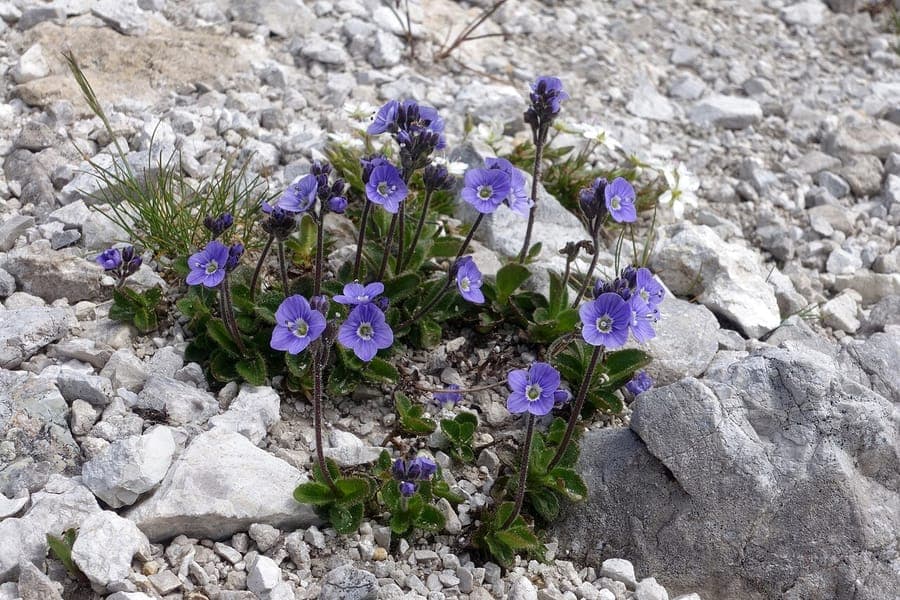
Veronica aphylla, commonly called leafless speedwell or naked-stalked speedwell, is a compact alpine plant native to the mountains of Central and Southern Europe. This dwarf plant grows only 5-10 cm tall and forms dense cushions with attractive blue flowers. It is perfect for rock gardens, alpine troughs, and rocky alpine plantings.
Appearance & Bloom
Leafless speedwell has very small, narrow leaves packed densely together, creating a compact cushion-like appearance. The name 'leafless' refers to the fact that many leaves are very small or absent on the lower stem portions. From June to August, numerous blue to purple flowers appear in dense clusters. The plant reaches approximately 5-10 cm in height.
Ideal Location
This plant thrives in full sun to partial shade with well-ventilated surroundings. The plant prefers locations with direct sunlight and good air circulation to prevent moisture buildup. In mountainous areas, the plant naturally grows on open rocks and steep slopes. A sheltered spot without heat stress is ideal.
Soil
Veronica aphylla requires extremely well-draining soil, which is virtually essential for this alpine plant. Add gravel, slate chippings or stone grit to garden or potting soil. The plant grows best in moderately fertile soil and tolerates calcareous soil well. Heavy clay soils must be avoided; sand-gravel mixture is preferred.
Diseño gratis
¿Quieres ver Veronica aphylla: complete guide en tu jardín? Crea un diseño gratis ahora.
Watering
Once established, leafless speedwell needs moderate watering - not too wet, not too dry. Water regularly during the growing season but ensure excellent drainage. In potting soil, the substrate should be superficially dry between waterings. Winter moisture must be minimal to prevent root rot.
Pruning
Pruning is generally unnecessary. Remove only dead or damaged leaves in spring. After flowering, you can remove seed heads to keep the plant compact. This sometimes stimulates a second bloom later in the season.
Maintenance Calendar
- March-April: Plant awakens, water very sparingly
- May: Blooming period begins, frost risk still present
- June-July: Peak flowering period, water regularly
- August-September: Flowering decreases, keep more moist
- October-November: Winter preparation
- December-February: Winter dormancy, keep very dry
Winter Hardiness
Leafless speedwell is extremely frost-hardy (-15 to -20 degrees C) and can overwinter outdoors. However, the plant is sensitive to winter moisture. Protect from harsh winds and wet conditions. In very wet winters, a mulch layer of gravel or shells helps.
Companion Plants
Veronica aphylla combines beautifully with:
- Saxifraga (saxifrage)
- Sedum and other succulents
- Dianthus (pinks)
- Aubrieta and other alpine cushion flowers
- Armeria (thrift)
Closing Thoughts
Veronica aphylla is a valuable addition to alpine and rock gardens. With its compact form, attractive blue flowers, and simple care, it is ideal for alpine flora enthusiasts. The plant is frost-hardy and long-lived when growing conditions are optimal.
A true classic alpine plant!
¿Quieres ver Veronica aphylla: complete guide en tu jardín? Crea un diseño gratis ahora.
Sube una foto, elige un estilo y obtén un diseño fotorrealista con lista de plantas en menos de un minuto.
Sin tarjeta de crédito


Plantas similares
White Beardtongue: complete guide
Penstemon albidus
Discover white beardtongue (Penstemon albidus) - elegant perennial with white to cream flowers. Drought-resistant, perfect for prairie and dry gardens.
Longsepal Beardtongue: complete guide
Penstemon calycosus
Discover longsepal beardtongue (Penstemon calycosus) - beautiful perennial with lilac-blue flowers. For partial shade and moist soil. Ideal for naturalized.
Penstemon cusickii: complete guide
Penstemon cusickii
Discover Cusick's beardtongue, a compact alpine flowering plant with violet-pink blooms. Perfect choice for rock gardens and water-wise landscaping.