
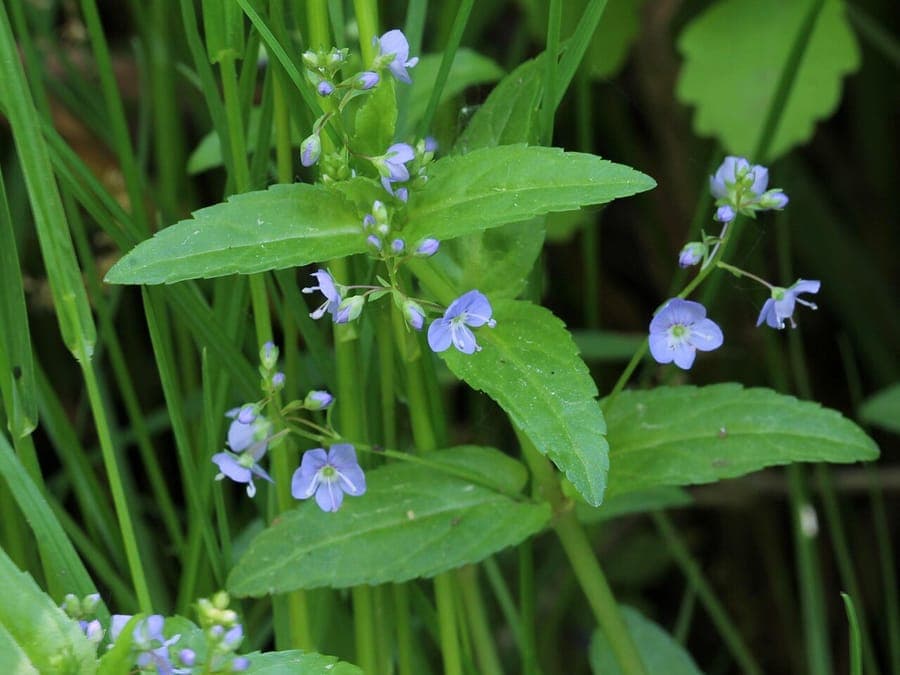
Rob Routledge, Sault College, Bugwood.org / CC BY 3.0 us, via Wikimedia Commons
Brook Pimpernel: complete guide
Veronica anagallis
¿Quieres ver Brook Pimpernel: complete guide en tu jardín?
1 minuto, sin tarjeta de crédito
Overview
Brook Pimpernel (Veronica anagallis), also known as Water Speedwell, is a delicate aquatic plant found worldwide in freshwater environments. This plant is celebrated for its beautiful blue flowers and its ability to enhance fast-flowing streams and rivers. With its lovely blooms and ability to attract birds, it is a beloved waterside plant.
Appearance and Bloom
Brook Pimpernel grows as a compact, branching aquatic plant with narrow, opposite leaves. The plant produces delicate blue to purple flowers during spring and summer months. The flowers are small but striking and attract many pollinators. The plant forms slender stems that extend along water edges.
Ideal Location
This plant thrives best in semi-shady to sunny locations along waterways. Plant in a spot with at least 4-5 hours of sunlight daily. The plant appreciates water movement and excels in fast-flowing streams and rivers. In still waters, growth is also possible but less vigorous.
Soil
Brook Pimpernel requires nutrient-rich, moist soil. Well-draining ground along water edges is ideal. The plant tolerates both sand and clay. A pH between 6 and 7 is optimal. In aquaria, it grows better on light, nutrient-rich substrates.
Diseño gratis
¿Quieres ver Brook Pimpernel: complete guide en tu jardín? Crea un diseño gratis ahora.
Watering
As an aquatic plant, Brook Pimpernel is constantly placed in water. In aquaria, water must be refreshed regularly. Avoid heavy pollution. In natural waters, natural water circulation provides maintenance.
Pruning
Brook Pimpernel requires minimal pruning. Remove dead portions or excess growth as needed. Regular thinning prevents overgrowth and helps maintain form. Monthly checks are sufficient.
Maintenance Calendar
Spring: Check for winter damage; blooming begins. Summer: Good feeding; regular water. Autumn: Reduce feeding; blooming wanes. Winter: Minimal care.
Winter Hardiness
Brook Pimpernel is hardy and survives freezing in streams and rivers. In deep waters (at least 60cm), it survives freezing. Shallow waters may freeze; protect with old wood or blankets.
Companion Plants
Brook Pimpernel combines well with other waterside plants such as Bramble, Water Mint, and Reeds. The plant grows well with other native aquatic species. Avoid fast-growing invasive species.
Closing Thoughts
Brook Pimpernel is an excellent choice for waterside projects and aquaria. With its delicate blue flowers and native character, it contributes to ecosystem health. Plant seeds or young plants by streams and rivers.
Where to Buy
Find aquatic plants at aquarium and pond retailers. Online ordering via gardenworld.app/en or gardenworld.app/nl offers availability and expert advice.
¿Quieres ver Brook Pimpernel: complete guide en tu jardín? Crea un diseño gratis ahora.
Sube una foto, elige un estilo y obtén un diseño fotorrealista con lista de plantas en menos de un minuto.
Más de 10.000 jardines diseñados
Sin tarjeta de crédito


Plantas similares
White Beardtongue: complete guide
Penstemon albidus
Discover white beardtongue (Penstemon albidus) - elegant perennial with white to cream flowers. Drought-resistant, perfect for prairie and dry gardens.
Longsepal Beardtongue: complete guide
Penstemon calycosus
Discover longsepal beardtongue (Penstemon calycosus) - beautiful perennial with lilac-blue flowers. For partial shade and moist soil. Ideal for naturalized.
Penstemon cusickii: complete guide
Penstemon cusickii
Discover Cusick's beardtongue, a compact alpine flowering plant with violet-pink blooms. Perfect choice for rock gardens and water-wise landscaping.