
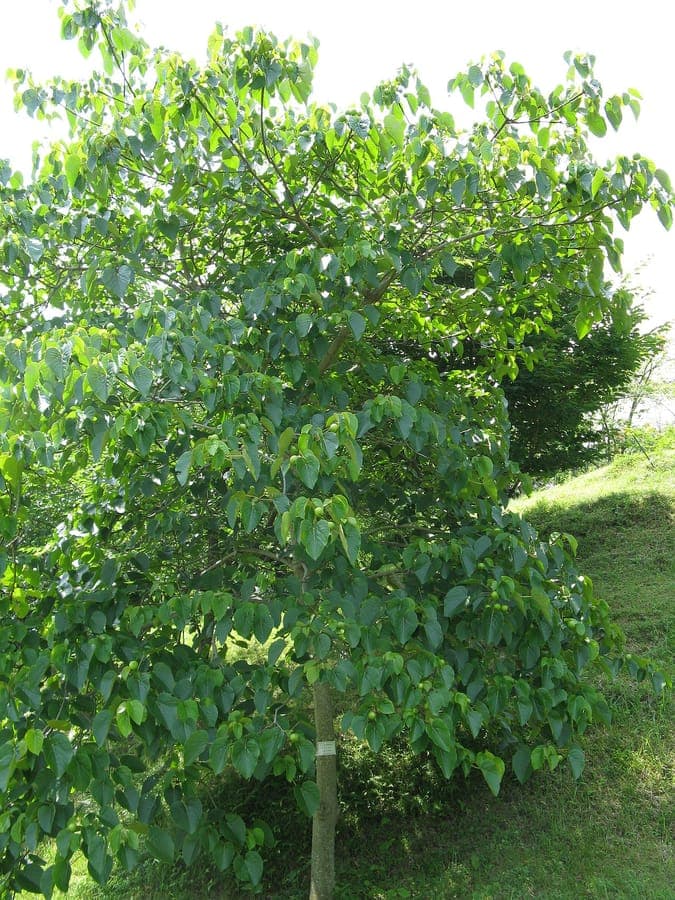
KENPEI / CC BY-SA 3.0, via Wikimedia Commons
Chinese Wood-Oil Tree: complete guide
Vernicia fordii
¿Quieres ver Chinese Wood-Oil Tree: complete guide en tu jardín?
1 minuto, sin tarjeta de crédito
Overview
The Chinese Wood-Oil Tree (Vernicia fordii), also known as the Tung Tree, is a valuable crop originating from China and Southeast Asia. This tree is primarily cultivated for extracting tung oil from its seeds, widely used in industrial applications. With its rapid growth and lush canopy, it also serves as an attractive addition to large gardens and landscapes.
Appearance and Bloom
The Chinese Wood-Oil Tree grows as a medium to large tree with broad, glossy leaves. The plant produces striking flowers ranging from white to pink hues, especially in spring. After flowering, characteristic round fruits form containing oil-rich seeds. The tree typically reaches 12-15 meters in height.
Ideal Location
This tree thrives best in warm, sunny locations with protection from strong winds. Plant in a spot with full sun exposure for at least 8 hours daily. The tree appreciates warmth and grows better in subtropical and warm temperate climates.
Soil
The Chinese Wood-Oil Tree requires well-draining soil with pH between 6 and 7.5. Add organic matter to poor soils. The tree tolerates various soil types provided they drain well. Avoid permanently wet or heavy clay soils.
Watering
Water regularly in the first growing season to establish a deep root system. Once established, the tree is quite drought-tolerant. Water during dry periods, especially during fruit set. Prevent excessive watering.
Diseño gratis
¿Quieres ver Chinese Wood-Oil Tree: complete guide en tu jardín? Crea un diseño gratis ahora.
Pruning
Pruning helps maintain an open canopy form and allow sunlight penetration. Remove crossing branches and weak wood. Annual pruning during winter helps structure and yield. Avoid heavy heading that may limit growth.
Maintenance Calendar
Spring: Prune and start feeding; blooming visible. Summer: Regular watering; fruit development. Autumn: Reduce feeding; seed harvest period. Winter: Minimal care; prepare for new season.
Winter Hardiness
The Chinese Wood-Oil Tree is semi-hardy and frost-sensitive. In the Netherlands and Belgium, it can grow in protected locations but requires shelter. In southern areas, trees may overwinter outdoors. In colder regions, it grows better in greenhouse or sheltered space.
Companion Plants
Plant with other warm-loving trees and shrubs. The tree combines well with other East Asian species. Underplanting with hardy groundcovers is possible if water drains well.
Closing Thoughts
The Chinese Wood-Oil Tree is a fascinating choice for those desiring a fast-growing, useful-bearing tree. With its industrial value and attractive appearance, it offers numerous benefits. Seeds and young trees are available from specialized nurseries.
Where to Buy
Find seeds and young plants at major garden centers and tree nurseries. Online ordering via gardenworld.app/en or gardenworld.app/nl offers expert guidance and availability updates.
¿Quieres ver Chinese Wood-Oil Tree: complete guide en tu jardín? Crea un diseño gratis ahora.
Sube una foto, elige un estilo y obtén un diseño fotorrealista con lista de plantas en menos de un minuto.
Más de 10.000 jardines diseñados
Sin tarjeta de crédito


Plantas similares
Woolly mercury: complete guide
Mercurialis tomentosa
All about Mercurialis tomentosa, the woolly mercury from southwestern Europe: site, soil, watering, care and garden design tips.
Shurur: complete guide
Euphorbia fruticosa
Everything about Shurur: cultivation in dry climates, xeriscaping, care and tips for drought-resistant gardens in warm climates
Glary spurge: complete guide
Euphorbia glareosa
Everything about glary spurge: cultivation, maintenance, frost hardiness and use in Mediterranean and mountain-inspired gardens