
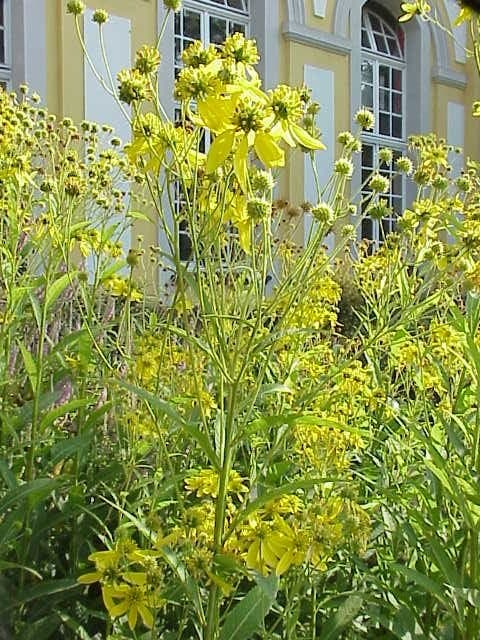
Wikimedia Commons / CC BY-SA 3.0, via Wikimedia Commons
Wingstem: complete guide
Verbesina alternifolia
¿Quieres ver Wingstem: complete guide en tu jardín?
1 minuto, sin tarjeta de crédito
Overview
Verbesina alternifolia, commonly known as wingstem or yellow ironweed, is a robust North American plant native to the area from Southeastern Canada through the United States. This impressive plant is known for its distinctive winged stems and abundant yellow aster-like flowers. With its substantial height and brilliant blooms, it is an excellent choice for natural borders, pollinator gardens and background planting. The plant grows in its natural habitat on moister terrain along forest edges and in grasslands.
Appearance and bloom
Verbesina alternifolia grows as a perennial that can reach 1 to 2 meters in height. The stems are distinctly winged (by membranes between nodes), which is its most characteristic feature. These wings give the plant its distinctive architectural look. The leaves are alternate, lance-shaped and softly hairy. The flowers are small, bright yellow aster-like blooms arranged in open clusters. They appear from August through October and are highly attractive to butterflies, bees and other pollinators. The plant produces hook-bearing seeds enabling excellent self-seeding. The yellow color of the flowers is very pleasant and contrasts nicely against green backgrounds.
Ideal location
Wingstem grows best in full sun, though it can still bloom reasonably well in partial shade. More sun gives better blooms and stronger plants. The plant is not particularly fussy about windy conditions. Plant in borders, along edges or at the back of mixed beds, so it does not shade other plants. This is a perfect background element for mixed garden designs.
Soil
Verbesina alternifolia is not fussy about soil quality. It grows well on dry to moderately moist soils, but can also tolerate excessive moisture. Good drainage is preferred, however. The plant adapts to acidic and neutral soils. In heavy clay soils, adding sand or gravel can help. Nutrient content can be low to moderate. This plant is very adaptable to different soil types.
Watering
Once established, wingstem is fairly drought tolerant. In the first year you can water regularly for good root establishment. Thereafter supplemental water is only needed during drought periods. In very wet summers, excessive water can lead to disease. Ensure good drainage to prevent problems. In very dry regions, some extra water can encourage bloom. Once established, the plant can survive months without extra water.
Diseño gratis
¿Quieres ver Wingstem: complete guide en tu jardín? Crea un diseño gratis ahora.
Pruning
In early spring you can cut back the previous year's growth to 15-20 centimeters height. This promotes a bushier, more compact plant. You can also restrict height through pruning, for example by shortening top branches in late July. This reduces final height and can prevent falling over. You can remove spent flowers to encourage more blooms, though this is not necessary.
Maintenance calendar
In spring (March-April) new shoots appear. May through July is the growth period. August through October is the blooming period, which can extend to first frost. November through February the plant remains dormant. Seed heads may form in September-October. Check for diseases in autumn. The flower show becomes increasingly impressive as the plant ages.
Winter hardiness
Verbesina alternifolia is very winter-hardy in temperate to cold climates. It can tolerate temperatures down to -25C and lower. In very wet winters, roots can rot in poor drainage, but this is usually not an issue. The plant dies back to ground level and regrows in spring. This plant is exceptionally robust and will grow for years without much care.
Companion plants
Wingstem combines beautifully with other late-blooming pollinator magnets. Try together with Monarda (bergamot), Rudbeckia (black-eyed Susan), Liatris, late-season Solidago and Aster. Smaller grasses like Panicum and Miscanthus are also good neighbors. For back borders, combine with taller joe-pye weed and Helenium. These plants together contribute to a winter-welcoming pollinator-attractive garden.
Closing remarks
Verbesina alternifolia is a true showstopper for the natural, pollinator-friendly garden. The winged stems are architecturally interesting, while the yellow flowers attract many pollinators. With its substantial height, robustness and late-season blooming, it is a valuable season-extending element. Available from many wildflower nurseries or online via gardenworld.app. Plant in groups of three or more for best effect. A must-have for the modern, nature-friendly garden!
¿Quieres ver Wingstem: complete guide en tu jardín? Crea un diseño gratis ahora.
Sube una foto, elige un estilo y obtén un diseño fotorrealista con lista de plantas en menos de un minuto.
Más de 10.000 jardines diseñados
Sin tarjeta de crédito


Plantas similares
Calendula stellata: complete guide
Calendula stellata
Complete guide to Calendula stellata, the star-flowered marigold from Sicily: location, soil, watering and companion planting tips.
Korean chrysanthemum: complete guide
Chrysanthemum x rubellum
Chrysanthemum x rubellum is a hardy autumn perennial with single pink to copper flowers from August to November. Care and combinations.
Helianthus divaricatus: complete guide
Helianthus divaricatus
Helianthus divaricatus is a North American woodland sunflower with yellow summer blooms, ideal for naturalistic borders and shady edges.