
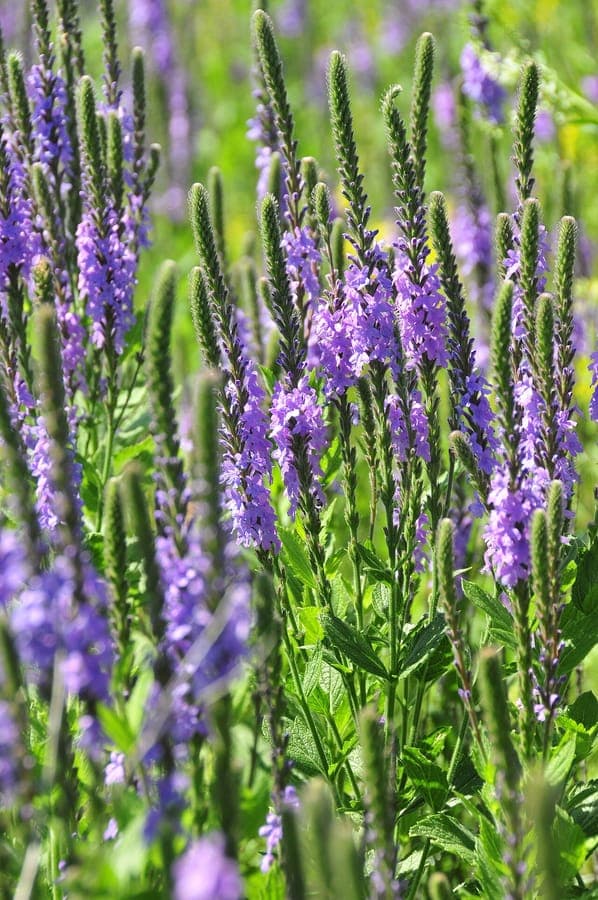
USFWS Mountain-Prairie / Public domain, via Wikimedia Commons
Verbena stricta: complete guide
Verbena stricta
¿Quieres ver Verbena stricta: complete guide en tu jardín?
1 minuto, sin tarjeta de crédito
Overview
Verbena stricta, commonly known as hoary vervain or woolly verbena, is a striking flowering plant native to North America. This member of the Verbenaceae family captivates with its dense, woolly flower spikes in shades of purple to pink. It's an increasingly popular garden choice in Europe for those seeking a reliable, low-maintenance plant that attracts pollinators and provides excellent midsummer to autumn interest.
The plant's appeal lies in its extended bloom period, which runs from summer through fall. In warmer climates it's a true perennial, while in colder regions it can be grown as an annual. The upright growth habit makes it suitable for borders, cottage gardens, and even container cultivation. With minimal fuss, verbena stricta delivers months of consistent color and texture.
Appearance and bloom
Verbena stricta grows as a compact, upright plant reaching 60 to 90 centimeters in height. The stems are stiff and sturdy, covered with short hairs that give the plant its characteristic woolly appearance. The lanceolate leaves are green with a somewhat rough texture, contributing to the plant's robust character.
Flowers develop in dense, elongated panicles at stem tips. These flower heads are extremely attractive to butterflies and other pollinators. Color ranges from pale pink to deep purple, with some cultivars offering nearly white blooms. Individual flowers are small but numerous, creating voluminous, eye-catching floral displays.
Blooming extends from July through October, making verbena stricta invaluable for providing late-season color. The flowers remain attractive even after fading, adding extended interest to the garden. This reliability makes it an excellent choice for gardeners seeking dependable late-summer to autumn appeal.
Ideal location
Verbena stricta thrives in full sun, requiring at least 6 to 8 hours of direct sunlight daily for optimal blooming. In insufficient light, flowering diminishes and stems may become leggy as the plant stretches toward available light.
Choose a location with good air circulation to prevent moisture-related fungal issues. Avoid crowding the plant among other specimens, as poor air movement can lead to disease. The site should be reasonably exposed without being windswept.
The plant shows good cold hardiness (USDA zones 5-9), meaning it can overwinter successfully in most of the Netherlands, Belgium, and Germany. However, in particularly wet winters, plants may perish, especially in poorly draining soil.
Soil
Verbena stricta is undemanding regarding soil type but prefers well-draining conditions. The plant thrives in neutral to slightly acidic soil with a pH around 6.5 to 7.0. It tolerates poor, dry soil far better than heavy, waterlogged clay.
If your garden has clay-heavy soil, amending with sand and grit improves drainage significantly. Adding composted organic matter at planting time improves soil structure without creating waterlogged conditions. The plant will spread by seed, so deadhead spent flower spikes if you wish to prevent unwanted self-seeding.
Verbena stricta demonstrates salt tolerance, making it suitable for gardens near coastal areas or in regions where road salt drift may be a concern.
Diseño gratis
¿Quieres ver Verbena stricta: complete guide en tu jardín? Crea un diseño gratis ahora.
Watering
Water requirements are moderate to low once plants are established. Upon planting, water regularly for 3 to 4 weeks until roots develop deeply. Thereafter, verbena stricta typically requires water only during extended dry spells.
Overwatering poses risks of root rot and fungal disease. Water deeply but infrequently, which promotes deep root development and drought tolerance. Avoid overhead watering to prevent foliage diseases. During extreme drought (more than two weeks without rain), supplemental watering is beneficial.
Mulching around the plant conserves soil moisture while maintaining adequate drainage. A thin layer (2-3 inches) of organic mulch works well.
Pruning
Verbena stricta responds well to pruning. In spring, cut back the plant to 20-30 centimeters if it hasn't winterkilled, promoting bushier growth. Midsummer pruning of straggly plants often results in renewed branching and additional flowering later in the season.
Deadheading (removing spent flowers) extends bloom time considerably and prevents excess self-seeding. Make pruning cuts with clean tools to prevent disease transmission.
Maintenance calendar
Spring (March-April): Spring pruning, division of older plants, and addition of light compost layer.
Late spring (May): Ensure young plants are thriving, water during dry periods.
Summer (June-August): Deadhead spent flowers, manage watering needs.
Autumn (September-October): Allow some seed spikes to mature if desired, otherwise remove. Minimal maintenance required.
Winter (November-February): Minimal activity. In harsh climates, apply protective mulch.
Winter hardiness
Verbena stricta is hardy to zone 5 (-28 degrees Celsius). In the Netherlands, Belgium, and most of Germany, it typically overwinters successfully. In severe winters or areas with hard frosts, protection may be beneficial.
Apply a 5-10 centimeter mulch layer around the plant base in autumn. Avoid compacted, moisture-retaining mulch. Leaf mold or straw works well. This insulation protects roots from extreme freezing.
In zone 4 or colder areas, grow verbena stricta as an annual, replanting yearly.
Companion plants
Verbena stricta combines beautifully with other summer and autumn bloomers. Pair it with golden Rudbeckia or orange Helenium for warm, dramatic color combinations. Pale pink verbena looks stunning against silvery-foliaged plants like Artemisia.
The plant's pollinator-attracting nature makes it valuable in butterfly gardens. It integrates well into native plant schemes, particularly when combined with other North American natives. Container growing is also viable using 20-30 liter pots on sunny balconies or terraces.
Closing thoughts
Verbena stricta is a refined garden plant offering numerous advantages: minimal maintenance, pollinator attraction, extended blooms, and soil adaptability. With little effort, you'll enjoy years of beautiful woolly flower spikes. Add verbena stricta to your garden today and discover how well it performs.
For cultivars and further information, visit specialty nurseries or consult gardenworld.app for personalized garden planning. Happy growing!
¿Quieres ver Verbena stricta: complete guide en tu jardín? Crea un diseño gratis ahora.
Sube una foto, elige un estilo y obtén un diseño fotorrealista con lista de plantas en menos de un minuto.
Más de 10.000 jardines diseñados
Sin tarjeta de crédito


Plantas similares
Bigbract verbena: complete guide
Verbena bracteata
Full guide to Verbena bracteata, the creeping North American vervain. Growth habit, care, soil needs, and use as ground cover in drought-tolerant gardens.
Purpletop vervain: complete guide
Verbena incompta
Verbena incompta, a South American charmer. Discover long blooming period and care for sunny borders.
Verbena canescens: complete guide
Verbena canescens
Discover the elegant American gray vervain with purple flowers and exceptional drought tolerance. Perfect shrub for sunny, dry borders.