
NOZO / CC BY-SA 3.0, via Wikimedia Commons
Brazilian vervain: complete guide
Verbena brasiliensis
¿Quieres ver Brazilian vervain: complete guide en tu jardín?
1 minuto, sin tarjeta de crédito
Overview
Verbena brasiliensis, commonly known as Brazilian vervain or Narrow-leaved vervain, is a sturdy, resilient plant from South America, native from Brazil to Chile. This plant belongs to the Verbenaceae family, the same family as many other valuable garden plants. Verbena brasiliensis is highly valued in modern gardens for its long, abundant flowering, tolerance for drought and difficult growing conditions, and minimal maintenance requirements.
In many climates this plant is grown as an annual, but in warmer zones it can behave as a short-lived perennial. The plant grows quickly, flowers abundantly from summer to autumn, and attracts pollinators. It is an excellent choice for borders, prairie gardens, and any spot with full sun and well-draining soil.
Appearance & bloom cycle
Verbena brasiliensis grows as a densely-leafed shrub or subshrub, typically 60-150 cm tall, depending on climate and growing conditions. The stems are thin, angular, and sometimes reddish-purple. The leaves are small to medium, approximately 2-5 cm long, lance-shaped to linear, with coarse serrations or wavy edges.
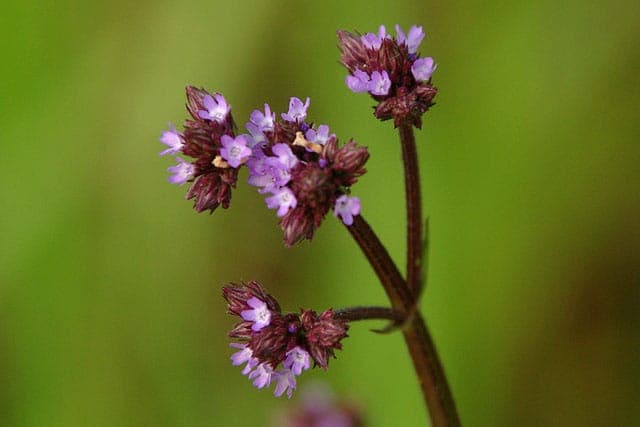
The flowers are spectacular: slender, upright flower spikes densely packed with tiny florets in purple, pink, red, or occasionally nearly white. Flower colour varies depending on cultivar. Flowering begins in June-July and continues until the first hard frost in October-November. A healthy plant can produce hundreds of thousands of small flowers during the season.
Ideal location
Verbena brasiliensis grows best in locations with full sun - at least 6-8 hours of direct sunlight daily. This is essential for maximum flower production. The plant tolerates partial shade but becomes less compact and less floriferous. In hot climates, partial shade may even be beneficial to reduce water loss in intense heat.
The plant is extremely wind-tolerant and grows well in coastal gardens and windy locations. It tolerates salty aerosol, making it ideal for gardens near the sea. In temperate regions it grows beautifully in sunny gardens anywhere.
Soil requirements
Verbena brasiliensis is not fussy about soil composition. It grows well in light, heavy, acidic, alkaline, sandy, or clay soils. The key is good drainage - heavy, water-retaining soils must be improved with sand and organic matter. For average garden soil, adding compost is sufficient preparation.
The plant grows even in poor soil without feeding. Supplemental feeding can enhance flowering, but it is not strictly necessary.
Watering
Once established, Verbena brasiliensis is extremely drought-tolerant and requires minimal water. In dry periods water only once per week or even less. In containers water more regularly - when the top 1-2 cm of potting soil feels dry.
Overwatering can cause plant problems, so better to underwater than overwater. In very rainy weather the plant may appear stressed; this is normal and the plant quickly recovers.
Pruning
Light pruning in mid-July (mid-season) promotes compact growth and more flower buds. Trim 10-15 cm from the tops when the plant reaches 30-40 cm tall. This encourages lateral branching and a bushy form.
By late October, when frost arrives, pull out the entire plant. In warm climates where it's a perennial, you can cut it back hard in spring.
Maintenance calendar
Spring (March-May): Sow seeds indoors in March or plant young seedlings after frost danger passes in May.
Summer (June-August): Check regularly for pests. Mid-July perform light pruning. No feeding required.
Autumn (September-October): Continue enjoying blooms. Late October, remove plants.
Winter: No work needed if grown as annual. In warm areas, cut back hard in spring.
Diseño gratis
¿Quieres ver Brazilian vervain: complete guide en tu jardín? Crea un diseño gratis ahora.
Winter hardiness
Verbena brasiliensis is not frost-hardy. Soft frost (-2 to -5°C) damages or kills the plant. Hard frost (-10°C or colder) kills immediately. Outdoor overwintering in temperate regions is impossible.
Grow it as an annual in temperate regions, or collect seed for next season.
Companion plants
Verbena brasiliensis pairs spectacularly with other summer-blooming annuals: Zinnias, Dahlias, Salvia, Coreopsis, Rudbeckia, and Tagetes. Also excellent with shrubs and perennials as background. In containers it works well with Heliotrope, Ipomoea, and Plumbago.
Harvesting and use
For fruit-bearing species, harvest when fully ripe and gently detach from the plant. For herbs, snip the top 5-10 cm of branches for fresh use. For flowers, gather just before they fully open for maximum colour and fragrance. Many species can be dried for winter use. Store dried material in airtight containers away from direct sunlight for best preservation.
Besondere Kultivareneigenschaften
Es gibt verschiedene Verbena brasiliensis-Kultivare mit unterschiedlichen Bluetenfarben von tiefviolett bis rosa bis rot. Einige moderne Sorten sind kompakter als Wildtypen und eignen sich besser fur kleine Garten. Neuere Zuchtungen haben auch verbesserte Krankheitsresistenz entwickelt. Die Sorte "Campfire" zum Beispiel hat intensive rote Bluten und erreicht nur 60 cm Hohe. "Amethyst" bietet tiefviolette Bluten auf einer ubersichtlichen Pflanze.
Combination with other flowering plants
Verbena brasiliensis works beautifully in border combinations. Try it with fellow sun-lovers like Coreopsis, Rudbeckia and Zinnias. Purple and red varieties create a warm, inviting appearance. Plant low-growing Verbena at the front of borders for a cascading effect. Taller varieties at the back serve as a background. This creates layers and depth in the design. The long flowering period means colour is guaranteed from June to October, making it a valuable investment for any summer garden scheme. Mixed with silver-leaved plants like Artemisia, the combination is stunning.
This plant is an excellent choice for mixed borders where extended flowering is desired. It can also be grown in large containers and creates spectacular displays combined with other heat-loving annuals. The slender flower spikes attract bees and butterflies throughout summer. This makes it not only beautiful but also ecologically valuable. The nectar production supports crucial pollinator populations.
Saving seeds: Toward the end of the season, approximately October-November, seed heads from spent flowers can be collected. Allow these heads to dry completely, then remove the seeds and store them in a cool, dry place. Verbena brasiliensis seeds can remain viable for several years. This allows gardeners to reproduce plants cost-free each year and share with friends.
Closing
Verbena brasiliensis is a vital, easy-growing plant ideal for gardeners seeking long flowering and low maintenance. The plant requires minimal care, tolerates difficult growing conditions, and rewards with ceaseless flowering from summer to frost. Seeds are readily available at garden centres. For more garden designs with long-blooming annuals, visit gardenworld.app. Add this robust verbena to your garden and enjoy birdsong and butterfly visitors!
Visit gardenworld.app for complete garden designs with summer-flowering plants.
¿Quieres ver Brazilian vervain: complete guide en tu jardín? Crea un diseño gratis ahora.
Sube una foto, elige un estilo y obtén un diseño fotorrealista con lista de plantas en menos de un minuto.
Más de 10.000 jardines diseñados
Sin tarjeta de crédito


Plantas similares
Bigbract verbena: complete guide
Verbena bracteata
Full guide to Verbena bracteata, the creeping North American vervain. Growth habit, care, soil needs, and use as ground cover in drought-tolerant gardens.
Purpletop vervain: complete guide
Verbena incompta
Verbena incompta, a South American charmer. Discover long blooming period and care for sunny borders.
Verbena canescens: complete guide
Verbena canescens
Discover the elegant American gray vervain with purple flowers and exceptional drought tolerance. Perfect shrub for sunny, dry borders.