
Sten / CC BY-SA 3.0, via Wikimedia Commons
Hungarian Mullein: complete guide
Verbascum speciosum
¿Quieres ver Hungarian Mullein: complete guide en tu jardín?
1 minuto, sin tarjeta de crédito
Overview
The Hungarian Mullein (Verbascum speciosum), also known as Showy Mullein, is a remarkable biennial or short-lived perennial plant native to Central and Southeastern Europe through Iran. This plant belongs to the Scrophulariaceae family and is celebrated for its stately, branched flowering spikes adorned with numerous yellow blooms.
Appearance and bloom
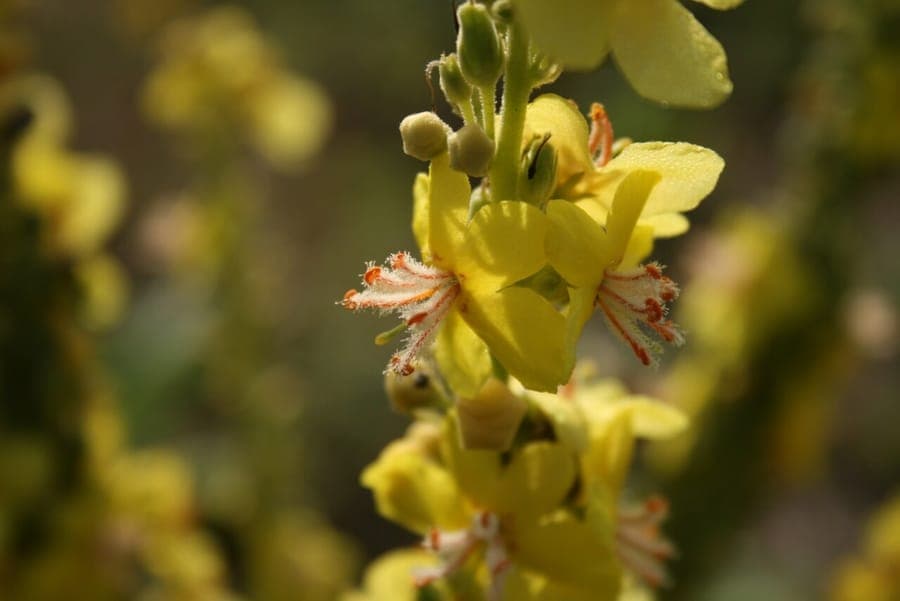
Hungarian Mullein grows into an impressive upright specimen with sturdy, erect stems reaching considerable heights. The leaves are woolly and hairy, clustered at the plant's base with a soft, felted texture. Flowers emerge in July and August in dense clusters, typically golden-yellow, arranged in a candelabra-like formation, which gives this plant its common name. Each individual flower is round to disc-shaped.
Ideal location
This plant thrives in full sun, requiring at least 6-8 hours of direct sunlight daily. Hungarian Mullein prefers open border positions where air can circulate freely, helping prevent fungal issues. Avoid shaded corners entirely.
Soil
Verbascum speciosum is not fussy about soil type. It grows readily in well-draining, moderately fertile soil. Heavy clay can be improved with added sand or compost. The plant tolerates dry conditions better than waterlogged feet.
Diseño gratis
¿Quieres ver Hungarian Mullein: complete guide en tu jardín? Crea un diseño gratis ahora.
Watering
Water regularly after planting until the plant is well-established. Once settled, Hungarian Mullein is quite drought-tolerant. Water deeply only when the top soil layer feels dry. During growth periods (spring through early summer), more frequent watering may be beneficial.
Pruning and shaping
Remove spent flowers regularly to encourage continuous blooming and maintain a neat appearance. At season's end, dead growth can be removed. Young plants benefit from light pinching to encourage branching.
Maintenance calendar
Photograph in April for future reference. Water regularly May through June. Enjoy blooms July and August. Deadhead regularly in August. Prepare for winter September-October.
Winter hardiness
The plant is reasonably hardy and can overwinter in temperate climates. In harsh winters, mulching around the base provides extra protection. After the first winter, plants may only persist from the base and regrow.
Companion plants
Combine Hungarian Mullein with other summer bloomers like Salvia, Achillea, or lavender. The vertical form contrasts beautifully with rounded shapes of Allium or Echinops. Green foliage backgrounds make the flowers shine brighter.
Conclusion
Hungarian Mullein is a striking addition to any front garden. With minimal care and maximum impact, this plant brings architecture and drama to your landscape. Available at Intratuin and Gamma in the Netherlands, OBI and Hornbach in Germany.
Need more ideas? Visit gardenworld.app/en for additional plant guides and design inspiration.
¿Quieres ver Hungarian Mullein: complete guide en tu jardín? Crea un diseño gratis ahora.
Sube una foto, elige un estilo y obtén un diseño fotorrealista con lista de plantas en menos de un minuto.
Más de 10.000 jardines diseñados
Sin tarjeta de crédito


Plantas similares
Naio: complete guide
Myoporum sandwicense
All about naio or bastard sandalwood (Myoporum sandwicense): a Hawaiian coastal tree, its uses, cultivation, and role as a tough windbreak in mild gardens.
Oriental Mullein: complete guide
Verbascum orientale
Complete guide to Oriental Mullein (Verbascum orientale): placement, soil, watering, pruning and garden design tips.
Buddleja marrubiifolia: complete guide
Buddleja marrubiifolia
Woolly butterfly-bush from Texas and Mexico. Shrub with soft, hairy leaves and orange-red flowers. Hardy to -5C. Blooms summer-fall. Drought-tolerant and low-maintenance plant.