
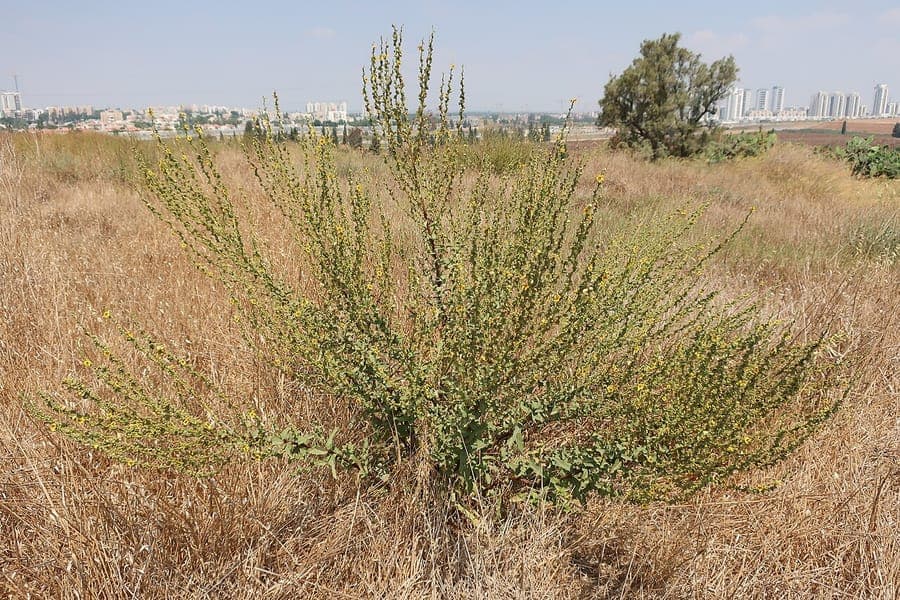
Davidbena / CC BY-SA 4.0, via Wikimedia Commons
Wavyleaf mullein: complete guide
Verbascum sinuatum
¿Quieres ver Wavyleaf mullein: complete guide en tu jardín?
1 minuto, sin tarjeta de crédito
Overview
Verbascum sinuatum, commonly known as wavyleaf mullein or wavy-leaved mullein, is a robust Mediterranean plant native to the Mediterranean region extending through West and South Iran. This impressive plant is known for its voluminous wavy leaves and abundant golden yellow flowers. Thanks to its drought tolerance and adaptability, it is an excellent choice for modern, water-wise and low-maintenance gardens. The plant grows in wild state on dry slopes and stony grounds where many other plants cannot survive.
Appearance and bloom
Verbascum sinuatum grows as a biennial or short-lived perennial with large, woolly leaf rosettes reaching 40-80 centimeters tall. The leaves are deeply wavy-cut (sinuate), giving the plant its characteristic appearance. They are covered with silvery down, giving the plant a grayish tone. This silvery coating protects the leaves against intense sun exposure and drought. The flowers are abundant, yellow and small, arranged in dense, erect spikes. They appear from May through September and attract bees and other pollinators. The flowers have a silky texture and grow in dense clusters visible from afar. After blooming, seed pods form providing bird food and enabling self-seeding.
Ideal location
This mullein thrives best in a location with full sun. It can have direct, intense sunlight without any problems. Half-shade might work marginally, but full shade does not. Windy locations are actually beneficial, as they promote strong, compact plants. Plant in border zones along pathways, in Mediterranean gardens or among rocky terraces. In very hot climates, some afternoon protection can be beneficial, though the plant tolerates nearly everything.
Soil
Verbascum sinuatum is not fussy about soil quality, but does prefer dry to very dry soils. Well-draining, preferably poor to moderately fertile soil is ideal. Sandy, clay or heavy soils can work as long as drainage is optimal. The plant also grows well on calcareous soils. Add sand and gravel for extra drainage if needed. Avoid excessive compost or manure, as this can cause unnecessary lush growth. The plant grows best when in somewhat restricted fertility.
Diseño gratis
¿Quieres ver Wavyleaf mullein: complete guide en tu jardín? Crea un diseño gratis ahora.
Watering
Once established, this mullein is highly drought-tolerant. In the first year you can provide extra water to encourage root formation, but thereafter supplemental water is almost never needed. Too much water can lead to plant decline. Rain is usually sufficient. In exceptionally dry conditions and droughts, minimal water application can be beneficial. Ensure water drains well and never accumulates around the root zone.
Pruning
Pruning is barely necessary. You can remove spent flower spikes in autumn or simply leave them as bird food. If you want to prevent self-seeding, you can carefully remove seed pods before they ripen. Since it is usually biennial, the plant will naturally fade after seed setting. In the first year only leaf rosettes form, in the second year it blooms abundantly.
Maintenance calendar
In the first year, leaf rosette and growth appear. In the second year (May through September) you can expect flowering. After seed setting, the plant usually dies off. Reseeding can occur if you leave some seed pods standing. No overwintering needed in temperate climates, as many specimens already grow and flower in the first year. This is called the biennial cycle where two years are needed for complete development.
Winter hardiness
Verbascum sinuatum is moderately winter-hardy. In harsh winters, plants may die, especially when standing in wet conditions. In warmer regions or under dry conditions it can be perennial. In cold, wet climates, it is better to treat it as an annual or biennial. Dry mulch can provide protection in less severe conditions. In very wet areas, the plant often dies off from moisture excess before frost can occur.
Companion plants
This mullein combines nicely with other dry, sunny lovers. Try together with Rumex (sorrel), Cistus (rock rose), Anthemis, Eryngium and knotted Ononis. Also lavender, thyme, sage and small conifers are perfect partners. For a more authentic Mediterranean look, plant with olive, myrtle and other southern species. Grasses like Stipa or Festuca also form nice combinations.
Closing remarks
Verbascum sinuatum is a real asset for water-conscious and low-maintenance gardens. The wavy leaves and yellow flowers lend character and warmth. Given its drought tolerance and low maintenance requirements, it is ideal for modern, sustainable gardens. Available from many garden centers or online via gardenworld.app. Start with at least several plants for maximum impact. A wonderful choice for the bird garden lover!
¿Quieres ver Wavyleaf mullein: complete guide en tu jardín? Crea un diseño gratis ahora.
Sube una foto, elige un estilo y obtén un diseño fotorrealista con lista de plantas en menos de un minuto.
Sin tarjeta de crédito


Plantas similares
Naio: complete guide
Myoporum sandwicense
All about naio or bastard sandalwood (Myoporum sandwicense): a Hawaiian coastal tree, its uses, cultivation, and role as a tough windbreak in mild gardens.
Oriental Mullein: complete guide
Verbascum orientale
Complete guide to Oriental Mullein (Verbascum orientale): placement, soil, watering, pruning and garden design tips.
Buddleja marrubiifolia: complete guide
Buddleja marrubiifolia
Woolly butterfly-bush from Texas and Mexico. Shrub with soft, hairy leaves and orange-red flowers. Hardy to -5C. Blooms summer-fall. Drought-tolerant and low-maintenance plant.