
Jeffdelonge at French Wikipedia / CC BY-SA 3.0, via Wikimedia Commons
Purple mullein: complete guide
Verbascum phoeniceum
¿Quieres ver Purple mullein: complete guide en tu jardín?
1 minuto, sin tarjeta de crédito
Overview
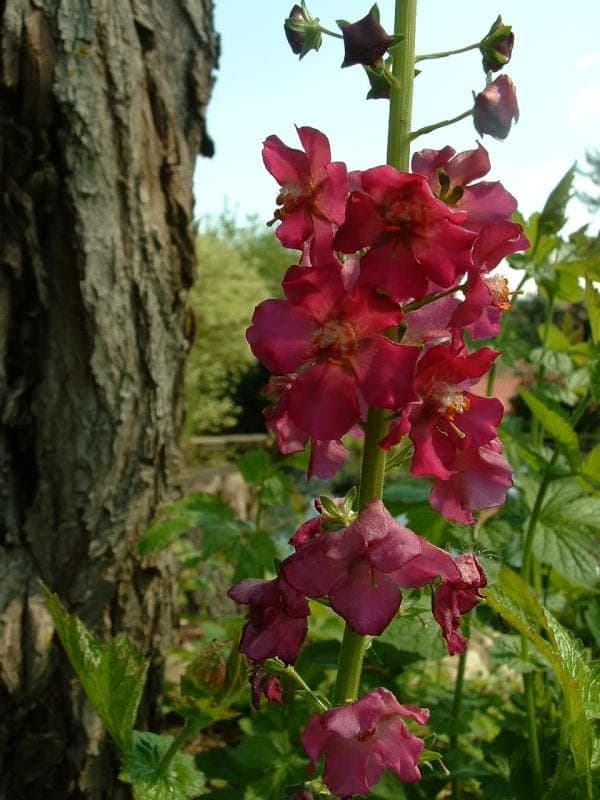
The Purple Mullein (Verbascum phoeniceum) is an elegant plant from the Scrophulariaceae family, native to southeastern Europe through to Iran. This stunning plant is renowned for its bright purple to violet flowers that bloom from early summer through autumn. It is an easy-to-grow plant that attracts bees and butterflies, adding a Mediterranean flair to any garden.
Appearance and Bloom Time
The Purple Mullein grows as an upright plant with thin, graceful stems reaching 60 to 100 cm in height. The flowers are approximately 2 cm in diameter and grow in dense clusters. The plant features thin, lanceolate leaves that grow delicately along the stem. The blooming period runs from May to August, providing a long season of colorful flowers in your garden. The purple to violet color distinguishes this species from other mullein varieties.
Ideal Location
The Purple Mullein thrives best in sunny locations. The plant requires at least six to eight hours of direct sunlight daily. This plant is ideal for heat lovers and will grow better in spots where the sun shines for long periods. If you live in a warm climate, even some afternoon light can be beneficial, but the plant will also grow in partial shade, though blooms will be less abundant. Avoid areas with heavy wind and shade from buildings.
Soil
The Purple Mullein prefers well-draining, nutrient-poor to moderately fertile soil. This plant thrives in sandy or gravel-like soils. A pH value between 7 and 7.5 is ideal, meaning the plant appreciates calcareous soils. Heavy clay soils should be improved with sand or gravel to enhance drainage. Avoid wet, waterlogged soils as the plant is susceptible to root rot.
Watering
Once established, the Purple Mullein is quite drought-tolerant and requires less water. Water regularly during the growing season, especially if it is exceptionally dry. In the ground, the plant usually needs no extra water except during extremely hot and dry periods. In containers, regular watering is essential. Ensure the soil dries slightly between waterings.
Diseño gratis
¿Quieres ver Purple mullein: complete guide en tu jardín? Crea un diseño gratis ahora.
Pruning
The Purple Mullein requires minimal pruning. Remove faded flowers and clusters to extend the blooming period and encourage more flowers. After the season, in autumn, dead stems can be broken off. This plant is a perennial that returns each year, but many gardeners prefer to replace it every two to three years. If the plant becomes too large, you can carefully thin it.
Maintenance Calendar
Spring: Plant from seed or pot young plants. Start watering as growth occurs. Summer: Water regularly. Remove faded flowers. Autumn: Flowers fade. Keep the plant clean by removing dead material. Winter: In colder climates, plants may die. Protect with leaves or cut back if they are not winter-hardy in your region.
Winter Hardiness
The Purple Mullein is quite hardy and tolerates temperatures down to approximately -15 degrees Celsius. In regions with very harsh winters, it is better to grow this plant annually. In milder climates, the plant can survive several years. If you live in a cold climate, grow the plant in a pot or mulch the base.
Companion Plants
The Purple Mullein combines beautifully with other sun lovers that grow similarly. Try combinations with lavender, rosemary, sage, or other Mediterranean herbs. The purple flowers also pair well with yellow sunflowers and white Gaura. In the front of the bed, small blue forget-me-nots can provide a nice contrast. Also combine with silver-leaved plants like Senecio or Santolina.
Conclusion
The Purple Mullein is an excellent choice for sunny gardens with well-draining soil. With its vibrant purple flowers and compact growth, it adds Mediterranean elegance to any garden. Available at local garden centers. Discover on gardenworld.app how you can transform your garden with this stunning plant. With minimal care, you can enjoy this elegant mullein for years to come.
¿Quieres ver Purple mullein: complete guide en tu jardín? Crea un diseño gratis ahora.
Sube una foto, elige un estilo y obtén un diseño fotorrealista con lista de plantas en menos de un minuto.
Más de 10.000 jardines diseñados
Sin tarjeta de crédito


Plantas similares
Naio: complete guide
Myoporum sandwicense
All about naio or bastard sandalwood (Myoporum sandwicense): a Hawaiian coastal tree, its uses, cultivation, and role as a tough windbreak in mild gardens.
Oriental Mullein: complete guide
Verbascum orientale
Complete guide to Oriental Mullein (Verbascum orientale): placement, soil, watering, pruning and garden design tips.
Buddleja marrubiifolia: complete guide
Buddleja marrubiifolia
Woolly butterfly-bush from Texas and Mexico. Shrub with soft, hairy leaves and orange-red flowers. Hardy to -5C. Blooms summer-fall. Drought-tolerant and low-maintenance plant.