
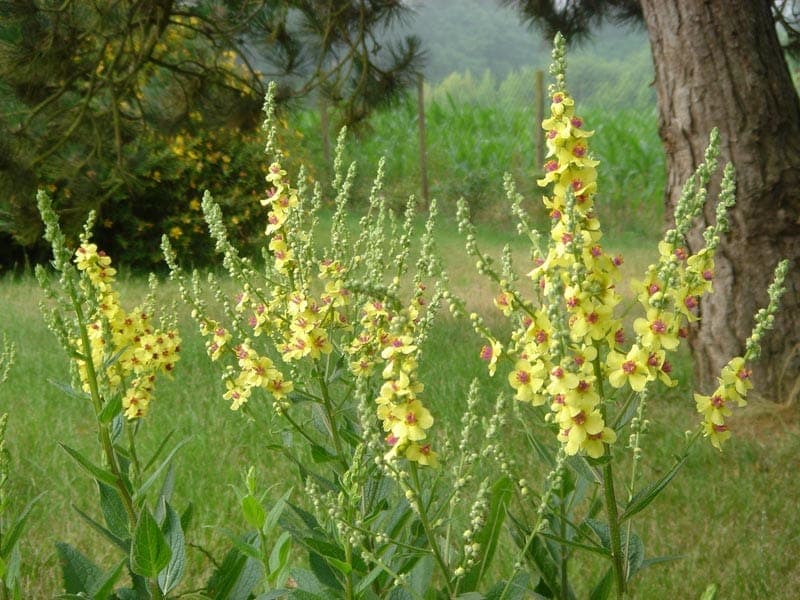
Ghislain118 http://www.fleurs-des-montagnes.net / CC BY-SA 3.0, via Wikimedia Commons
Verbascum chaixii: complete guide
Verbascum chaixii
¿Quieres ver Verbascum chaixii: complete guide en tu jardín?
1 minuto, sin tarjeta de crédito
Overview
Verbascum chaixii, commonly known as Chaix's mullein or nettle-leaf mullein, is an elegant biennial to short-lived perennial plant native to the warm regions of Southern Europe. This distinctive member of the Scrophulariaceae family captivates with its charming yellow flowers arranged in dense spikes and its ability to attract pollinators. The plant thrives across the Spanish Pyrenees to Greece and makes a splendid addition to sun-drenched gardens.
Chaix's mullein is renowned for its resilience and creates a perfect bridge between wild, naturalistic planting schemes and more structured garden designs. With its graceful leaves and towering flower spikes, this plant brings vertical interest and architectural impact to garden borders.
Appearance & bloom
Verbascum chaixii reaches heights of 60 to 100 centimeters and forms a compact, bushy growth habit. The dark green leaves are coarse and distinctive, with a soft, velvety texture. The lower leaves form a characteristic rosette, while stem leaves are arranged alternately along the stems.
The flowers are bright yellow and appear from June through September in elegant, loose spikes. Each flower has five yellow petals with a striking red or orange center. Blooms attract numerous pollinators, particularly bees and butterflies. Following bloom, the plant develops seed capsules that ripen by August-September, promising self-seeding in subsequent seasons.
Ideal location
Select a sunny position for Verbascum chaixii with at least six hours of direct sunlight daily. The plant thrives in warm, dry conditions. In partial shade, plants become leggy and produce fewer flowers. Excessive shade results in dramatically reduced blooming.
Chaix's mullein excels on slopes, in dry borders, and rock gardens where other plants struggle. The plant features a deep root system capable of accessing moisture unavailable to shallower-rooted neighbors. Avoid damp locations and areas prone to water stagnation or poor drainage.
Soil
This plant performs best in well-draining, moderately fertile soil. Heavy clay soils should be amended with sand or gravel to improve drainage. Ideal pH ranges from 7.0 to 8.0, favoring neutral to slightly alkaline conditions.
Verbascum chaixii requires no particularly rich soil - indeed, overly fertile soils promote vegetative growth at the expense of flowering. When planting, incorporate gravel or perlite to enhance drainage. In containers, blend garden soil with 30% gravel for optimal results.
Diseño gratis
¿Quieres ver Verbascum chaixii: complete guide en tu jardín? Crea un diseño gratis ahora.
Watering
Once established, Chaix's mullein needs minimal water. Water regularly during the first growing season until the plant is well-rooted. Thereafter, water only during extended dry periods, particularly if over two weeks pass without rainfall.
Avoid waterlogging, particularly over winter. Excessive moisture in winter causes root rot. A mulch layer of gravel helps the soil drain faster and protects against wet soil.
Pruning
Pruning is unnecessary for healthy growth. Remove spent flower spikes after blooming to prevent excessive self-seeding and maintain a neater appearance. Remove damaged or dead stems in early spring.
Pinching young growth tips in May can produce denser, bushier plants, though this delays flowering. Most gardeners accept the somewhat more open structure that appears more naturalistic.
Maintenance calendar
March-April: Sow seed indoors in pots; set out seedlings generously spaced after frost. May-June: Vigorous growth begins; first flower buds form. June-September: Peak flowering period; water only as needed once established. October-November: Collect seed; remove dead stems and foliage. December-February: Winter dormancy; protect against prolonged wetness.
Winter hardiness
Verbascum chaixii exhibits moderate winter hardiness to zone 5-6 (-20 to -15 degrees Celsius). In the Netherlands and Belgium, it grows robustly in urban environments and warm microclimates without extensive winter protection.
In harsher regions, plants benefit from a light winter mulch of reed or conifer boughs. Heavy snow and frequent freeze-thaw cycles prove problematic; well-draining soil becomes essential.
Companion plants
Chaix's mullein pairs excellently with:
- Lavender (Lavandula) - similar drought tolerance
- Foxtail lilies (Eremurus) - comparable height and yellow color
- Toadflax (Linaria) - contrasting flower form
- Coreopsis and Rudbeckia - annual yellow companions
- Blazing star (Liatris) - structural contrast and pollinator attraction
Combine this plant subtly: group at least three plants together; position taller growers toward the rear of borders for best effect.
Closing
Verbascum chaixii is a captivating mullein that brings character and southern flair to your garden with minimal maintenance demands. Whether you are establishing a dry garden or simply seeking height and golden blooms, this plant delivers. Major retailers like most garden centers stock seeds and plants of Verbascum species regularly.
Visit gardenworld.app for design inspiration and schemes featuring mullein species. Gardenworld.app helps you design a garden perfectly suited to your style and conditions. Download our comprehensive guides for additional plant advice and garden design inspiration.
¿Quieres ver Verbascum chaixii: complete guide en tu jardín? Crea un diseño gratis ahora.
Sube una foto, elige un estilo y obtén un diseño fotorrealista con lista de plantas en menos de un minuto.
Más de 10.000 jardines diseñados
Sin tarjeta de crédito


Plantas similares
Verbascum densiflorum: complete guide
Verbascum densiflorum
Dense-flower mullein offers spectacular yellow blooms in full, dense spikes. A heritage plant that brings grouping, structure and guaranteed abundant flowering.
Verbascum lychnitis: complete guide
Verbascum lychnitis
White mullein offers delicate white or creamy flowers in elegant spikes. A versatile heritage plant full of character for dry, subtle, natural gardens.
Verbascum nigrum: complete guide
Verbascum nigrum
Dark mullein has yellow flowers with distinctive dark stamens. An interesting heritage plant full of character for natural, dry gardens with European charm.