
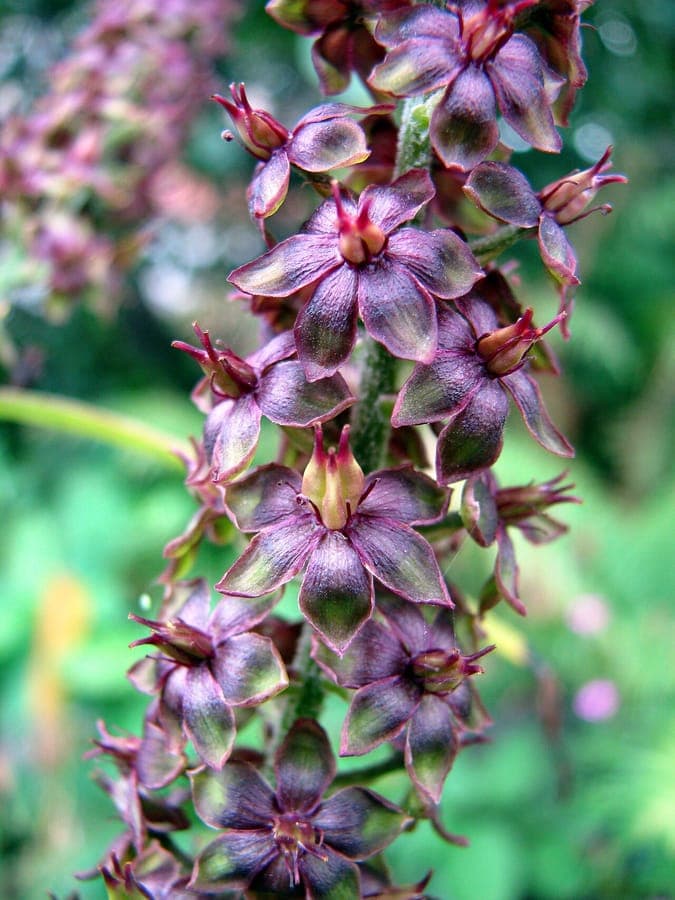
Agnieszka Kwiecień (Nova) / CC BY 3.0, via Wikimedia Commons
Veratrum nigrum: complete guide
Veratrum nigrum
¿Quieres ver Veratrum nigrum: complete guide en tu jardín?
1 minuto, sin tarjeta de crédito
Veratrum nigrum, better known as black veratrum or false hellebore, is an impressive stately plant much used in classic European gardens. With its purple flowers and lush growth, this plant forms a dramatic accent in half-shaded garden corners.
Overview
Veratrum nigrum belongs to the family Melanthiaceae and is a herbaceous perennial that naturally occurs from Central Europe to East Asia and Korea. This stately species can reach heights of 100 to 150 centimeters and especially during the blooming period forms a striking garden accent.
The plant is known for its imposing appearance, its long leaves, and its spectacular purple flowers that unfold in large panicles. Although all parts of the plant are poisonous, this is not a concern for gardeners who handle the plant carefully.
Appearance and bloom
Veratrum nigrum has large, oblong-oval leaves that grow in rows along the stem. The leaves can reach lengths of 20 to 40 centimeters and give the plant a lush appearance.
Blooming occurs from July through August and delivers spectacular, purple flower clusters that rise vertically from the top of the plant. These flower clusters can reach heights of up to 50 centimeters and consist of hundreds of small purple flowers. After blooming, characteristic seed pods appear.
Ideal location
Veratrum nigrum flourishes best in partial shade, although the plant can also grow in full sun provided sufficient moisture is available. A partially shaded location beneath deciduous trees or along north-facing walls is ideal.
The plant feels at home in moist soils in orientations that provide sufficient protection from strong winds. Plant in groups of three to five for maximum impact.
Soil composition
Veratrum nigrum thrives best in nutrient-rich, humus-rich soils with good moisture infiltration. A mixture of 50% garden clay, 30% leaf mold, and 20% sand or coarse grain provides ideal growing conditions.
The plant tolerates both slightly acidic and neutral soils (pH 6.0 to 7.5). Add plenty of compost or leaf mold to the planting hole. This improves water retention and provides nutrition.
Diseño gratis
¿Quieres ver Veratrum nigrum: complete guide en tu jardín? Crea un diseño gratis ahora.
Watering and moisture management
Veratrum nigrum prefers moist to wet soils. Provide regular watering during the growing season, especially during dry periods. The plant does not tolerate short-term drought well; consistently moist soil is preferred.
Mulch ground surface generously (5 to 10 centimeters) with leaf mold or wood chips to maintain moisture balance. This also promotes nutrient infiltration and protects against weeds.
Pruning and shaping
Pruning is minimally needed. Remove withered flowers and stems after blooming to allow seed dispersal and natural self-seeding. If you want to prevent seed production, cut off withered flower clusters before seed pods mature.
The plant self-shapes into a beautiful natural silhouette. Remove only damaged or diseased leaves.
Maintenance calendar
April to May: Emergence and beginning of growth; rehydration of moist soils. June to August: Growth period and blooming; regular watering. September to October: Seed harvest (carefully due to toxicity); preparation for rest. November to March: Rest period; minimal maintenance.
Winter hardiness
Veratrum nigrum is very cold hardy to zone 3 (minimum temperature -35 degrees Celsius). The plant tolerates severe winters without problem. As a growth type, the above-ground part dies off at the end of fall, while roots survive underground.
No winter protection needed; the plant actually benefits from cold periods.
Companion plants
Veratrum nigrum combines beautifully with other shade-loving plants such as Hosta species, Helleborus niger (Christmas rose), and Geranium species. For texture contrast, add Athyrium ferns.
At the shore, Astilbe and dwarf bamboo (Fargesia) work harmoniously together. For color, white or yellow tulips provide good contrast around.
Safety precautions
All parts of Veratrum nigrum are poisonous and can cause serious gastrointestinal and skin irritation. Wear gloves when handling the plant and avoid contact with face or mouth. Keep out of reach of children and pets.
Closing thoughts
Veratrum nigrum is a spectacular plant for gardeners wanting more drama and elegance in their garden. The impressive growth, purple flowers, and purifying properties make this a classic in European gardens.
Available from many garden centers and plant nurseries. Invest in this stately plant and enjoy years of drama and elegance. Visit gardenworld.app for more inspiration.
¿Quieres ver Veratrum nigrum: complete guide en tu jardín? Crea un diseño gratis ahora.
Sube una foto, elige un estilo y obtén un diseño fotorrealista con lista de plantas en menos de un minuto.
Más de 10.000 jardines diseñados
Sin tarjeta de crédito


Plantas similares
California false hellebore (Veratrum californicum): complete guide
Veratrum californicum
Full guide to Veratrum californicum, the imposing native perennial from western North America. Toxicity warning, site, soil, watering and bold companion plant ideas.
Beargrass: complete guide to growing Xerophyllum tenax
Xerophyllum tenax
Xerophyllum tenax is a dramatic perennial with fine grass-like leaves and tall white flower plumes, ideal for dry, sunny gardens and naturalistic border designs.
Anticlea elegans: complete guide
Anticlea elegans
Anticlea elegans, commonly called white camas or mountain death camas, is an elegant alpine plant with delicate white-yellow flowers and distinctive blue-tinged foliage. Perfect for rock and alpine gardens.