
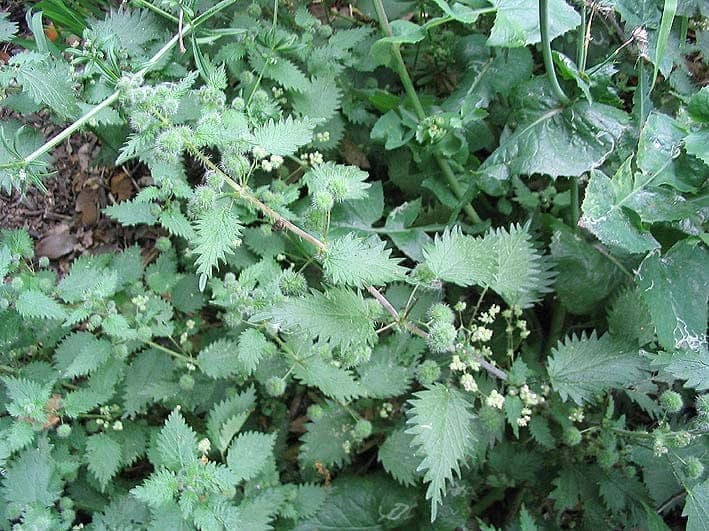
Jean Tosti / CC BY-SA 3.0, via Wikimedia Commons
Roman nettle: complete guide
Urtica pilulifera
¿Quieres ver Roman nettle: complete guide en tu jardín?
1 minuto, sin tarjeta de crédito
Overview
The Roman nettle (Urtica pilulifera), also known as pill nettle or ball nettle, is a distinctive annual plant from the Mediterranean region. Unlike her larger, dioecious cousin - the common nettle - this plant grows anew from seed each year and offers an entirely different ecological profile.
This plant is naturally at home in the Mediterranean and occurs from France to Pakistan. It spreads across the Balkans, North Africa, and adjacent regions. In modern gardens, it can become an interesting and useful annual - particularly in warmer regions of northern Europe.
Appearance and bloom cycle
Roman nettle reaches 20-60 cm in height. Like her larger family member, she has square stems covered with stinging hairs. These hairs contain the irritating toxin typical of nettles.
The leaves are opposite, oval to heart-shaped, with toothed edges. They are smaller than those of common nettle - typically 2-5 cm long. Characteristic of this species are the female flower heads: they form ball-shaped, spherical seed clusters (hence 'pill nettle' or 'ball nettle'). These characteristic globes are an unmistakable recognition feature.
The plant blooms from April through October. The female flowers remain more compact than those of common nettle.
Ideal location
Roman nettle grows best in full sun to partial shade. In northern climates, the plant achieves optimal growth in warm, sheltered locations - against a south-facing wall, in raised beds where sun shines directly, or in greenhouse conditions.
The plant is drought-tolerant and accepts drier locations without complaint. This makes it ideal for gardens with warm microclimates.
Soil requirements
Roman nettle grows on virtually all soils, but thrives best in well-draining, moderately fertile soil. It accepts chalky soils without objection. A pH of 5-8 is suitable. The plant is more tolerant of poor soils than common nettle.
In containers, it grows well in universal potting mix or homemade mixture (compost + sand). Good drainage is important to prevent root rot.
Diseño gratis
¿Quieres ver Roman nettle: complete guide en tu jardín? Crea un diseño gratis ahora.
Watering
Once established, Roman nettle is drought-tolerant. Young seedlings need regular watering until they are established - water when the top layer feels dry. Mature plants in the ground need little extra water in normal rainfall.
In containers, keep the soil moister than in the ground. Too much water leads to root rot. Better dry than wet.
Pruning
Because this is an annual plant, you don't remove the entire plant. Instead, you can regularly harvest young tops for kitchen use. This stimulates side growth and production of new tops. Wear gloves when harvesting - even fresh shoots can sting.
To prevent seed set, you can remove spent flower heads before they set seed.
Maintenance calendar
April-May: Sow seed directly in the ground or in pots under glass. June-July: Plants grow quickly. Begin harvesting young tops for tea or nutrition. August-October: Flowering time. Harvesting can continue until first frosts. November: Plant dies after first hard frost.
Winter hardiness
Roman nettle is not hardy in northern climates. It's an annual plant that dies after first frost. For reproduction, allow seed to ripen and self-seed, or save seed yourself for next season.
Companion plants
In warm gardens, Roman nettle grows well with other Mediterranean plants: thyme, sage, oregano, savory. In moister corners, it can mix with salads and cut greens.
The plant attracts the same butterflies as common nettle - particularly Peacock and Small Tortoiseshell use young foliage for their caterpillars.
Closing
Roman nettle is a fascinating and useful annual for warmer regions or sheltered microclimates. Its characteristic ball-shaped female fruits and rapid growth make it an interesting garden addition. Try young tops in nutrition - they are more nutrient-dense than common nettle and can be eaten raw or cooked.
Want more tips for warm-climate gardening? Visit gardenworld.app for more advice on herb gardens and Mediterranean plant choices. For inspiration and supplies, consult local garden centers.
Gardenworld.app offers many more guides on specialist gardening genres.
¿Quieres ver Roman nettle: complete guide en tu jardín? Crea un diseño gratis ahora.
Sube una foto, elige un estilo y obtén un diseño fotorrealista con lista de plantas en menos de un minuto.
Más de 10.000 jardines diseñados
Sin tarjeta de crédito


Plantas similares
False nettle (Boehmeria cylindrica): complete guide
Boehmeria cylindrica
Full guide to Boehmeria cylindrica, false nettle: origin, appearance, ideal location, soil, watering and care for this wetland perennial.
Pumpwood: complete guide
Cecropia schreberiana
Complete guide to Cecropia schreberiana: origins, appearance, care requirements and growing tips for this tropical pioneer tree.
Laportea canadensis: complete guide
Laportea canadensis
Discover Laportea canadensis (Wood-nettle), a fascinating woodland plant. Thrives in moist shaded areas. Complete growing and care guide for this unique species.