
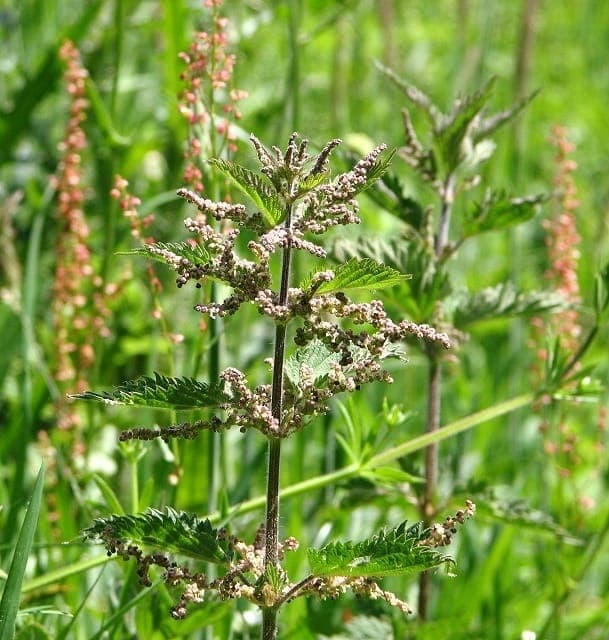
Evelyn Simak / CC BY-SA 2.0, via Wikimedia Commons
Common nettle: complete guide
Urtica dioica
¿Quieres ver Common nettle: complete guide en tu jardín?
1 minuto, sin tarjeta de crédito
Overview
The common nettle (Urtica dioica) is a remarkable plant that many gardeners initially dismiss as a weed. Yet this plant deserves far more respect. It's a powerful indicator of nutrient-rich soil and offers incredible benefits. From nutrition to medicine, from liquid feed to compost - common nettle is a valuable ally in sustainable gardening.
This dioecious plant grows across Europe, Siberia, and western China. In mixed gardens and wild corners, nettle plays a crucial ecological role. The plant attracts numerous butterflies - particularly Small Tortoiseshell, Peacock, and Eastern Brimstone use nettle as their caterpillar food plant.
Appearance and bloom cycle
Common nettle reaches 60-150 cm in height. The stems are square in cross-section and covered with stinging hairs (trichomes) that contain a highly irritating toxin. This defense mechanism evolved to deter herbivores.
The leaves are opposite, heart-shaped to kidney-shaped, with strongly toothed edges. They measure 3-8 cm long and have the same stinging hairs. The plant blooms from May through October. The flowers are small, greenish, and inconspicuous - male and female flowers grow on separate plants. Male plumes carry pollen, while female flowers form small seed clusters.
Ideal location
Nettle thrives in nutrient-rich soil. It grows readily along hedgerows, on wasteland, and in vegetable gardens where soil is fertile. The plant tolerates partial to full sun, though it will also grow in dappled shade.
The appearance of nettle in your garden is actually a good sign - it indicates nutrient-rich soil and excellent fertility. Rather than trying to eliminate it completely, you can learn from it and manage it intentionally.
Soil requirements
Nettle grows best in heavy, nutrient-rich, humus-filled loamy clay soil. A pH of 4-8 is perfect. The plant accepts both wet and dry conditions, though it prefers moderately moist sites.
The plant is highly tolerant of typical garden conditions. Pot it in compost sacks for container cultivation or let it grow naturally in a designated area of your garden.
Diseño gratis
¿Quieres ver Common nettle: complete guide en tu jardín? Crea un diseño gratis ahora.
Watering
Once established, nettle is extremely drought-tolerant thanks to its deep root system. Young plants in containers need regular watering - water when the top inch of soil feels dry. Mature plants in the ground only need extra water during extended dry periods.
In very wet years, you can prevent waterlogging by ensuring good drainage. The plant naturally grows in damp habitats and accepts both extremes.
Pruning
Pruning nettle is straightforward: simply cut tops before flowering to keep plants compact. This also stimulates side growth. Pruned shoots can be used for tea. Wear gloves and long sleeves - even fresh shoots retain their stinging properties.
To keep nettle under control: mow regularly before seed set (July-August). This prevents seed spread. Regular harvesting of young tops keeps plants productive.
Maintenance calendar
April-May: Shoots emerge. Begin harvesting young tops once they reach 10 cm length. June-July: Full growth period. Harvest or mow regularly. August-October: Flowering time. Stop harvesting for tea now. Focus on preventing seed set. November-March: Winter dormancy. Above-ground parts die back, but the root system survives.
Winter hardiness
Common nettle is fully hardy throughout the Netherlands and in much harsher climates. Above-ground parts die back at the first hard frost, but the root system survives without protection. Plants re-emerge in April.
Companion plants
Nettle grows readily alongside wild herbs like thistles and wild brassicas. In nutrient-rich corners, you can combine it with other 'weeds' that have medicinal value: nettle, dandelion, chickweed.
Nettle has no particular plant companions - it grows wherever it wishes. Many gardeners choose to maintain a designated area for it, preventing it from taking over the entire garden.
Closing
Common nettle is much more than a weed. It's a food source, medicine, ecological powerhouse, and soil improver. Millions of butterfly caterpillars depend on it. Try to approach this plant with new respect - control it with mowing, harvest young tops for tea, and make nettle liquid feed for your vegetables. You'll be pleasantly surprised at the benefits.
Want to learn more about sustainable gardening practices? Visit gardenworld.app for more guides and advice. For professional expertise on management strategies or plant placement, consult local garden centers for inspiration and tools.
Gardenworld.app offers additional insights into working with wild plants in your garden.
¿Quieres ver Common nettle: complete guide en tu jardín? Crea un diseño gratis ahora.
Sube una foto, elige un estilo y obtén un diseño fotorrealista con lista de plantas en menos de un minuto.
Más de 10.000 jardines diseñados
Sin tarjeta de crédito


Plantas similares
False nettle (Boehmeria cylindrica): complete guide
Boehmeria cylindrica
Full guide to Boehmeria cylindrica, false nettle: origin, appearance, ideal location, soil, watering and care for this wetland perennial.
Pumpwood: complete guide
Cecropia schreberiana
Complete guide to Cecropia schreberiana: origins, appearance, care requirements and growing tips for this tropical pioneer tree.
Laportea canadensis: complete guide
Laportea canadensis
Discover Laportea canadensis (Wood-nettle), a fascinating woodland plant. Thrives in moist shaded areas. Complete growing and care guide for this unique species.