
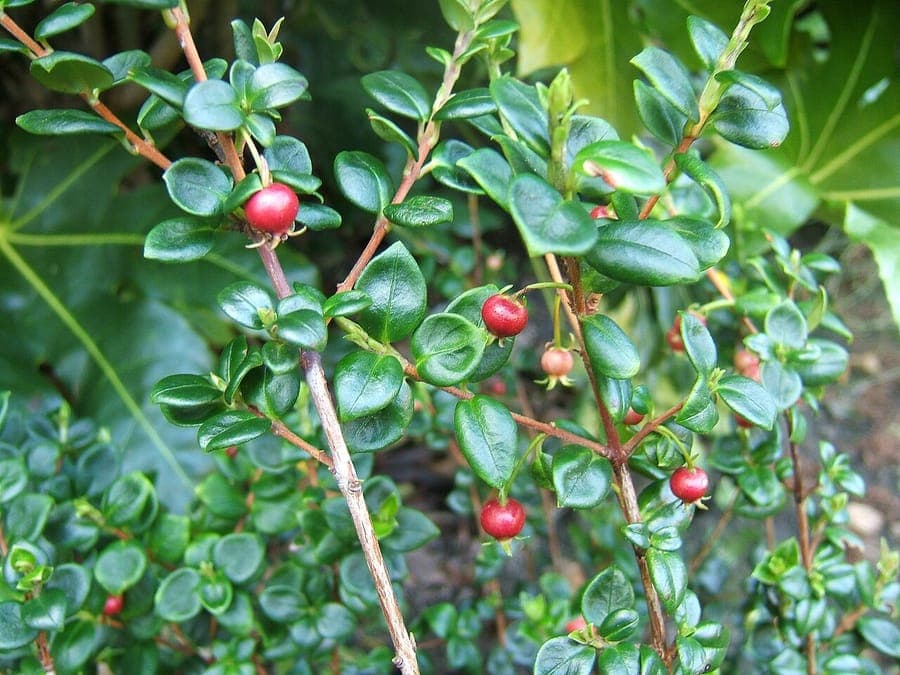
No machine-readable author provided. MPF assumed (based on copyright claims). / CC BY 2.5, via Wikimedia Commons
Ugni molinae: complete guide
Ugni molinae
¿Quieres ver Ugni molinae: complete guide en tu jardín?
1 minuto, sin tarjeta de crédito
Overview
Ugni molinae, known as Chilean guava, strawberry myrtle or murta, is a frost-sensitive, compact shrub from the mountainous regions of Chile and Argentina. This plant belongs to the Myrtaceae family and produces small, aromatic red fruits with a unique guava-like taste. With its glossy, leathery foliage and attractive white flowers in summer, it is a valuable addition to climates where it can grow.
Appearance and harvest
Ugni molinae grows as a compact, densely leafed shrub, usually 60 to 100 centimeters tall. The leaves are small, lance-shaped, glossy dark green with fine texture. The flowers are white to pale pink, approximately 1 centimeter in diameter, and appear in May-June. After flowering, the characteristic red fruits appear, round to oval, approximately 1 to 1.5 centimeters in diameter. The fruits are harvestable in July to October, depending on location.
Ideal location
Ugni molinae thrives best in locations with full sun to light shade, at least four to six hours of direct sunlight daily. In very warm climates, some afternoon shade prevents the fruits from overheating. The plant prefers cooler, temperate climate; it grows optimally in zones where winter temperatures can drop below zero but not more extreme than -5 to -10 degrees Celsius.
Soil
Ugni molinae prefers nutrient-rich, well-draining soil with a pH between 5.0 and 6.5, thus slightly acidic. Rich, organic soils with compost are ideal. Addition of peat lowers the pH and improves moisture retention. Heavy soils can be improved with sand and compost. Good drainage is essential to prevent root rot.
Watering
Watering should take place regularly, especially during the growing period (March to October). The soil should remain moderately moist, but not waterlogged. Water deeply but less frequently than for other fruit shrubs. Mulch around the base with 5 centimeters of organic material to retain moisture and keep roots cool. In dry climates more water is needed; in rainy areas less.
Diseño gratis
¿Quieres ver Ugni molinae: complete guide en tu jardín? Crea un diseño gratis ahora.
Propagation and feeding
Ugni molinae can be propagated via seeds (slow, uneven) or semi-ripe cuttings in July-August. Feeding is important; apply slow-acting organic feed in March and August. Summer feeding stimulates flowering and fruit setting. Potassium is important for fruit quality. No animal feed needed; organic forms are preferred.
Pruning and maintenance
Pruning is minimal; remove only dead, diseased or crossing branches. Light shaping in February after harvest promotes compact growth. Heavy pruning is not needed as this removes new fruiting wood. Remove small fruits in June to promote larger specimens. Hand self-pollination helps, but insects usually do this.
Maintenance calendar
- February to March: Pruning after harvest, first feeding
- April to May: Leaf growth, flower preparation
- June to July: Flowering, pollination, fruit set
- August: Feeding for fruit development
- September to October: Harvest of ripe fruits
- November to January: Rest period
Winter hardiness
Ugni molinae is winter hardy to about -10 degrees Celsius when well established, making it suitable for mild winter areas. However, young plants are more vulnerable. In areas with harsher winters, protect with burlap or mulch, or grow in containers that can be brought indoors. Regular watering in dry periods in winter helps.
Fruits and harvest
The fruits are edible red with a subtle, unique guava-like taste with a hint of strawberry. Harvest when fully red and soft. Fruits can be eaten fresh, stewed or made into jam. Flavor improves after light frost exposure. Yield is low (0.5 to 1 kg per plant per year in ideal conditions), but quality is excellent.
Closing
Ugni molinae offers unique, gourmet fruits in a compact, attractive shrub. With good drainage, regular watering and temperate climate, you enjoy years of this rare fruit plant. Grow this special plant via gardenworld.app and discover the taste of Chile in your own garden!
¿Quieres ver Ugni molinae: complete guide en tu jardín? Crea un diseño gratis ahora.
Sube una foto, elige un estilo y obtén un diseño fotorrealista con lista de plantas en menos de un minuto.
Más de 10.000 jardines diseñados
Sin tarjeta de crédito


Plantas similares
Flooded gum (Eucalyptus grandis): complete guide
Eucalyptus grandis
Everything about the flooded gum: fast growth, impressive stature and silvery bark. How to plant and care for this eucalyptus in your garden.
Yellow gum (Eucalyptus leucoxylon): complete guide
Eucalyptus leucoxylon
Everything about the yellow gum: showy flowers in winter, compact form and drought tolerance. How to grow and care for this eucalyptus in your garden.
Sydney blue gum (Eucalyptus saligna): complete guide
Eucalyptus saligna
Everything about the Sydney blue gum: extraordinary growth rate, beautiful grey-blue bark and impressive stature. How to plant and care for this eucalyptus.