
Wikimedia Commons / CC BY-SA 3.0, via Wikimedia Commons
Turritis glabra: complete guide
Turritis glabra
¿Quieres ver Turritis glabra: complete guide en tu jardín?
1 minuto, sin tarjeta de crédito
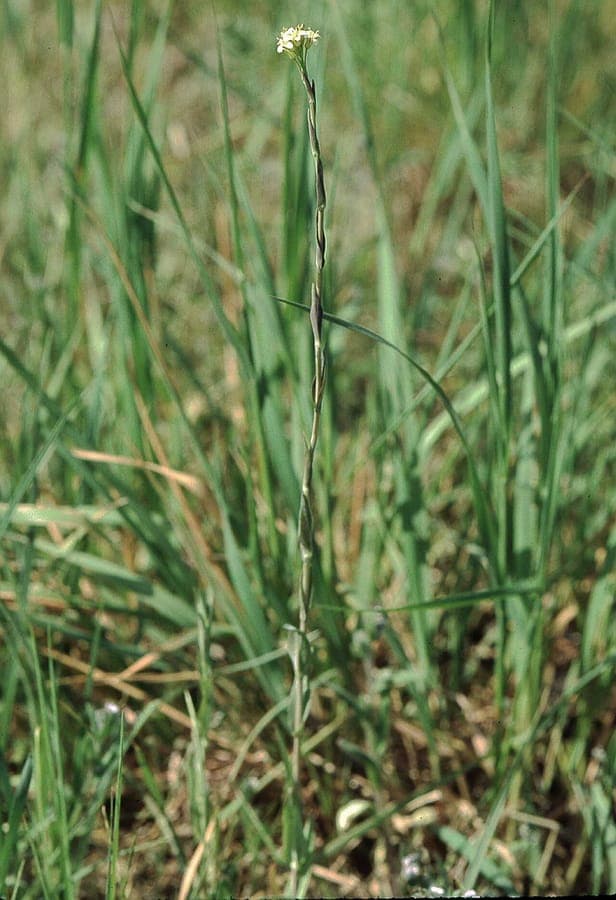
Tower mustard (Turritis glabra) is a fascinating biennial plant from the mustard family (Brassicaceae). This plant is renowned for its distinctive growth pattern and elegant flower spike. During the first year, Turritis glabra forms a low basal rosette of narrow leaves, while the second year brings the true spectacle.
Overview
Turritis glabra is native to much of the Northern Hemisphere, from temperate regions to mountainous tropics. The plant is highly versatile and grows on various soils and climate conditions. This makes tower mustard an excellent choice for gardeners wishing to experiment with interesting, unconventional species.
Appearance and Bloom
The plant is famous for its characteristic vertical growth with numerous small white to yellow flowers closely packed along stems 30 to 60 centimeters tall. Flowers appear in the second growing year, typically from May to June. After flowering, the plant produces elongated seed pods (siliquae) characteristic of the mustard family.
The leaves are serrate and glabrous (smooth, without hairs), which justifies the plant's scientific name. In the first year, leaves are grouped in an attractive basal rosette, all glossy green. This rosette can reach 20 to 30 centimeters in diameter.
Ideal Location
Turritis glabra thrives in full sun to partial shade. The plant needs at least six hours of direct sunlight daily for optimal flowering. In areas with very hot summers, some afternoon shade is beneficial. The plant grows well along border edges, in rock gardens, and even in wall crevices.
Note for international gardeners: on websites like gardenworld.app you'll find much inspiration for integrating unusual plants into your garden design.
Soil
Turritis glabra is not particularly fussy about soil types, but grows best in dry to moderate, well-draining soil. The plant can tolerate poor, infertile soils and thus has great potential in difficult corners of the garden. Heavy clay soil should be improved with sand and organic matter.
The plant does not thrive in wet soil. Ensure good drainage by perhaps creating raised beds. A pH between 6.0 and 7.5 is ideal, although Turritis glabra is fairly alkali-tolerant.
Watering
In the first year, water regularly, especially during dry periods, so the young basal rosette can establish well. Once established, Turritis glabra is quite drought-tolerant and thus needs little extra water. Excessive water can lead to root rot, so it's better to be cautious than generous.
In the blooming year (year 2), you can water less once the plant is fully established. Ensure the plant doesn't completely dry out during dry spells.
Pruning
Pruning is not essential for Turritis glabra. However, if you want to prevent the plant from self-seeding too much, remove the seed pods before they ripen. This can also prevent unwanted self-sown seeders in your garden.
Maintenance Calendar
Spring (March-April): Sow seeds directly in the garden or start indoors 6 to 8 weeks before the last frost.
Late Spring (May-June): First-year rosettes reach full size. Water regularly if dry.
Summer (July-August): Second-year plants flower. Remove seed pods if you want to prevent self-seeders.
Autumn (September-October): Sowing can occur, with flowering the following year.
Winter Hardiness
Turritis glabra is fully hardy across Europe and tolerates temperatures down to minus 15 degrees Celsius without protection. The rosette base of first-year plants may suffer from extreme frost and low night temperatures, especially on wet ground. In very wet winters, it may be better to give young plant material some protection.
Companion Plants
Turritis glabra combines beautifully with other Brassicaceae species such as various cabbage types (ornamental kale, green cabbage). It also works well with low-growing herbs like thyme, oregano, and winter purslane. For border compositions, lettuce, spinach, and other vegetable plants work well together.
In many European gardens this plant grows well alongside other wildflower plants and insect-friendly ground covers. Consult gardenworld.app for designing harmonious plant combinations in your front garden.
Closing
Turritis glabra or tower mustard is an underrated plant with great potential for gardeners seeking elegance and functionality. As a biennial plant that self-seeds, it can become part of a more natural garden landscape. With its minimal maintenance needs, tolerance for poor soils, and attraction to beneficial insects, tower mustard is a valuable addition to any front garden. Give it a try and discover why this plant is becoming increasingly popular.
Available at major garden centers across Europe.
¿Quieres ver Turritis glabra: complete guide en tu jardín? Crea un diseño gratis ahora.
Sube una foto, elige un estilo y obtén un diseño fotorrealista con lista de plantas en menos de un minuto.
Más de 10.000 jardines diseñados
Sin tarjeta de crédito


Plantas similares
Brassica cretica: complete guide
Brassica cretica
Brassica cretica, the Cretan cabbage, grows wild on Aegean cliffs. Discover how to grow this drought-tolerant, yellow-flowered Mediterranean perennial.
Corsican cabbage: complete guide
Brassica insularis
Corsican cabbage is a rare Mediterranean rock cabbage with white flowers and blue-green leaves. Location, soil and winter protection.
Prostrate cabbage: complete guide
Brassica procumbens
Prostrate cabbage is a creeping North African cliff plant with yellow flowers. Discover location, soil type and winter protection.