
Wikimedia Commons / CC BY-SA 3.0, via Wikimedia Commons
Turkestan tulip: complete guide
Tulipa turkestanica
¿Quieres ver Turkestan tulip: complete guide en tu jardín?
1 minuto, sin tarjeta de crédito
Overview
Tulipa turkestanica is an adorable compact tulip from the central Asian mountains of Tajikistan, Uzbekistan and Kyrgyzstan. It belongs to the Liliaceae family and is a true gem for rock and alpine gardens. With its dwarf growth and abundance of flowers per bulb, it is an excellent choice for those wanting something more interesting than standard tulips. The name refers to Turkestan, the historical name for the Central Asian region from which this tulip originates.
Appearance and bloom
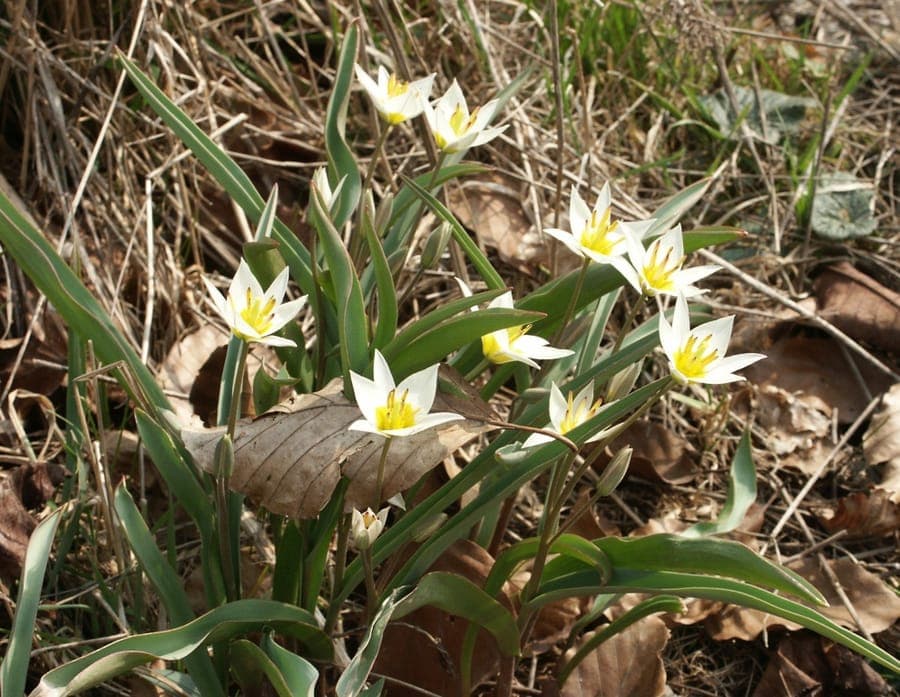
Tulipa turkestanica produces small bulbs that grow only 10-15 cm tall. What is remarkable, however: each bulb produces not just one flower, but four to twelve flowers at once! The flowers are small, white with yellow centers, very elegant ornamental shrubs. The petals are narrow and pointed, giving the whole a refined appearance. Flowering takes place in March-April, early spring. The fragrance is subtly sweet.
Ideal location
Choose a sunny spot for optimal growth and bloom. A minimum of six hours of direct sunlight daily is needed. This plant grows best in fully sunny locations. Ensure the spot drains well: no stagnation and no water seepage. Alpine rock gardens or plant beds are ideal. Also very successful in pots if drainage is good.
Soil
Tulipa turkestanica requires excellent drainage - this is essential. Sandy and gritty soil is perfect. Heavy clay or wet compost is fatal for this mountain dweller. Add gravel or sand to regular garden soil. A neutral to slightly acidic pH is ideal. Minimal feeding needed; the plant grows on poor mountain soils.
Diseño gratis
¿Quieres ver Turkestan tulip: complete guide en tu jardín? Crea un diseño gratis ahora.
Watering
Once planted, tulips are very drought-tolerant. Water especially during the growth and flowering period (March-May). In summer and fall, virtually no water needed. The soil must dry well between waterings. Too much water leads to rot. With potted plants, more caution is needed with watering.
Pruning
Tulips need no pruning. After flowering, withered flowers can be removed. However, leave the stems and leaves until they turn yellow (late May-June) so the bulb can recover energy for next season. In short: pinch off the faded flowers but leave the green stem growth.
Maintenance calendar
SEPTEMBER-OCTOBER: Plant bulblets. OCTOBER-DECEMBER: Root formation in cold soil. JANUARY-MARCH: Growth begins, careful watering. APRIL: Peak bloom. MAY-JUNE: Leaves remain green for bulb transport. JULY-SEPTEMBER: Bulbs rest, no maintenance.
Winter hardiness
Tulipa turkestanica is extremely hardy, to at least -20 to -25 degrees Celsius. The plant actually needs a cold period for good blooming (vernalization). This makes it ideal for all temperate climates and many colder regions. In warm regions it may perform less well.
Companion plants
Beautiful combinations emerge with other alpine flowers and dwarf plants. Combines well with saxifrage species, pinks, and dwarf sedums. Also lovely with other small tulips. For pot culture: pair with grape hyacinth (muscari) and snowdrop (galanthus). Gravel and stones as background work perfectly.
Closing
The Turkestan tulip is a worthy alternative to the standard tulip. With its dwarf growth, abundance of flowers and strong winter hardiness, it is a winner for gardens with alpine tones. Plant bulblets in groups of ten or more for maximum effect. Add it to your gardenworld.app designs for true alpine beauty. Explore more gardenworld.app garden combinations for further inspiration!
¿Quieres ver Turkestan tulip: complete guide en tu jardín? Crea un diseño gratis ahora.
Sube una foto, elige un estilo y obtén un diseño fotorrealista con lista de plantas en menos de un minuto.
Más de 10.000 jardines diseñados
Sin tarjeta de crédito


Plantas similares
Reverchon's gagea: complete guide
Gagea reverchonii
Full guide to Gagea reverchonii, Reverchon's gagea: rare Pyrenean bulb with bright yellow spring flowers, soil needs and companion planting.
Leafy gagea: complete guide
Gagea foliosa
Gagea foliosa is a rare Mediterranean bulb with bright yellow star-shaped flowers blooming February to March in well-drained rocky settings.
Tubular gagea: complete guide
Gagea fragifera
Gagea fragifera is a mountain bulb with golden-yellow star flowers blooming May to July on subalpine slopes from Europe to the Himalaya.