
Zachi Evenor and MathKnight / CC BY 3.0, via Wikimedia Commons
Tulipa agenensis: complete guide
Tulipa agenensis
¿Quieres ver Tulipa agenensis: complete guide en tu jardín?
1 minuto, sin tarjeta de crédito
Overview
Tulipa agenensis, known as the sun-eye tulip or Agen tulip, is a refined spring-flowering bulb from the family Liliaceae. This species originates from the eastern Mediterranean and is native to Cyprus, Turkey, Syria and Palestine. With its characteristic dark red to blackish flowers and compact growth, it is a precious addition to any spring bed, alpine garden or container.
Appearance and bloom
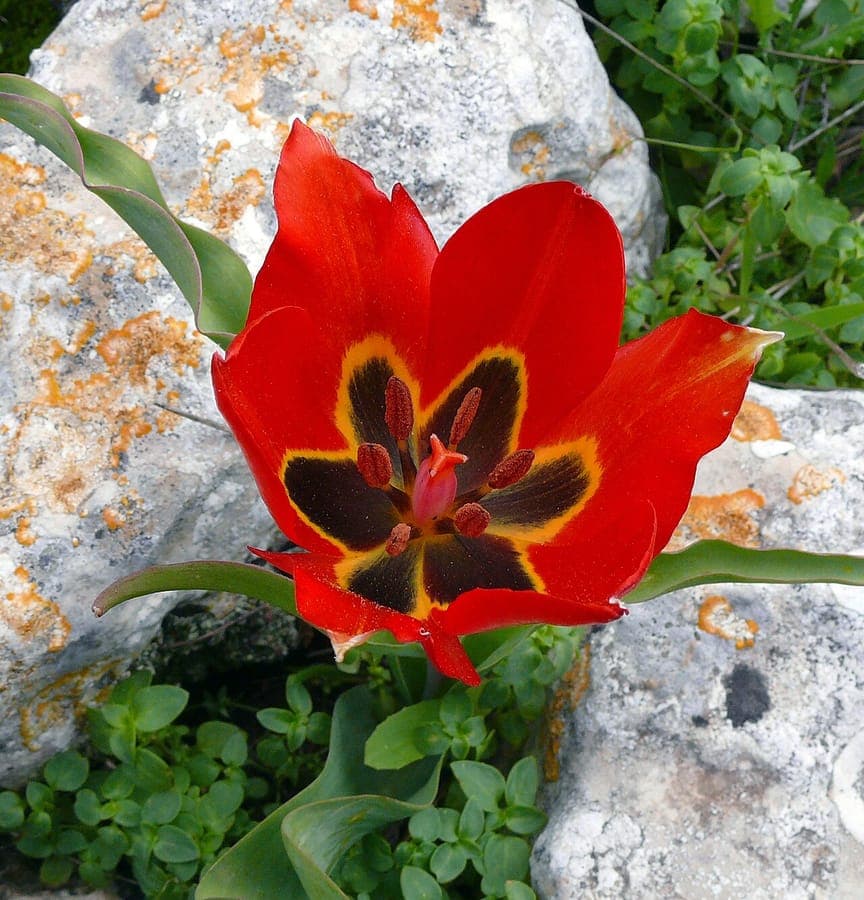
Tulipa agenensis reaches a height of approximately 15 to 25 centimeters and forms narrow, gray-green shiny leaves. The flowers appear in April and have four to six glossy petals that open fully in sunlight. The color ranges from deep burgundy to almost black, often with a shiny, silky appearance. The center of the flower shows characteristic black spots that give the flower even more character.
Ideal location
Tulipa agenensis feels most at home in sunny locations where it receives at least six hours of direct sunlight. The flowers open fully in full sun, allowing their dark colors to shine. Protect the plant from too much wind by placing it in a sheltered spot. Suitable for rock gardens, borders, containers and flower tubs.
Soil
This tulip has high demands on drainage. The soil must be well-draining, preferably sandy to loamy with a neutral to slightly alkaline pH (7.0 to 7.5). Poor, lean soil is even preferable to nutrient-rich soil, as this prevents rotting diseases. Add perlite or sharp sand to heavy soils to improve drainage. Avoid wet, compacted soils.
Watering
During growth and flowering, the soil may remain moderately moist, without allowing water to stagnate. Water carefully at the root zone, not over the leaves. After flowering, gradually reduce watering. After the leaves wither in June, the bulbs can remain dry, especially if they are in pots. In very dry years, extra watering may be needed, but usually natural rainfall is sufficient.
Diseño gratis
¿Quieres ver Tulipa agenensis: complete guide en tu jardín? Crea un diseño gratis ahora.
Pruning
Remove withered flowers so that no seeds form, this leads to better bulb energy. Leave the foliage until it is completely yellow (around mid-June), as this weakens the bulb. Do this carefully to avoid damage. The bulbs can be dug up and dried annually or left in the ground for natural rejuvenation.
Maintenance calendar
- August to September: Plant bulbs at 10-15 cm depth
- October to November: Root growth underground
- March: Leaf growth begins, first feeding
- April to May: Flowering period, regular monitoring
- June to July: Leaf death, reduce watering
- July to August: Rest and harvest period
Winter hardiness
Tulipa agenensis is winter hardy to at least -15 degrees Celsius and even tolerates harder winters without protection. It is therefore suitable for use in northern climates or places where frost is expected. In very mild winter regions, bulbs can remain in the soil year-round without replanting.
Companion plants
This tulip combines beautifully with other Mediterranean bulbs such as Fritillaria, Muscari and Ornithogalum. Combine with alpine stone roses and silver-leaved plants such as Artemisia and Lavandula for a cohesive, Mediterranean alpine landscape. For pot cultivation, it combines well with violets and smaller ornamental plants.
Closing
Tulipa agenensis is an elegant, demanding tulip for specialized gardeners. Its rarity and beauty are rewarded with careful cultivation. Bring this precious tulip to your garden via gardenworld.app and discover its full potential!
¿Quieres ver Tulipa agenensis: complete guide en tu jardín? Crea un diseño gratis ahora.
Sube una foto, elige un estilo y obtén un diseño fotorrealista con lista de plantas en menos de un minuto.
Más de 10.000 jardines diseñados
Sin tarjeta de crédito


Plantas similares
Reverchon's gagea: complete guide
Gagea reverchonii
Full guide to Gagea reverchonii, Reverchon's gagea: rare Pyrenean bulb with bright yellow spring flowers, soil needs and companion planting.
Leafy gagea: complete guide
Gagea foliosa
Gagea foliosa is a rare Mediterranean bulb with bright yellow star-shaped flowers blooming February to March in well-drained rocky settings.
Tubular gagea: complete guide
Gagea fragifera
Gagea fragifera is a mountain bulb with golden-yellow star flowers blooming May to July on subalpine slopes from Europe to the Himalaya.