
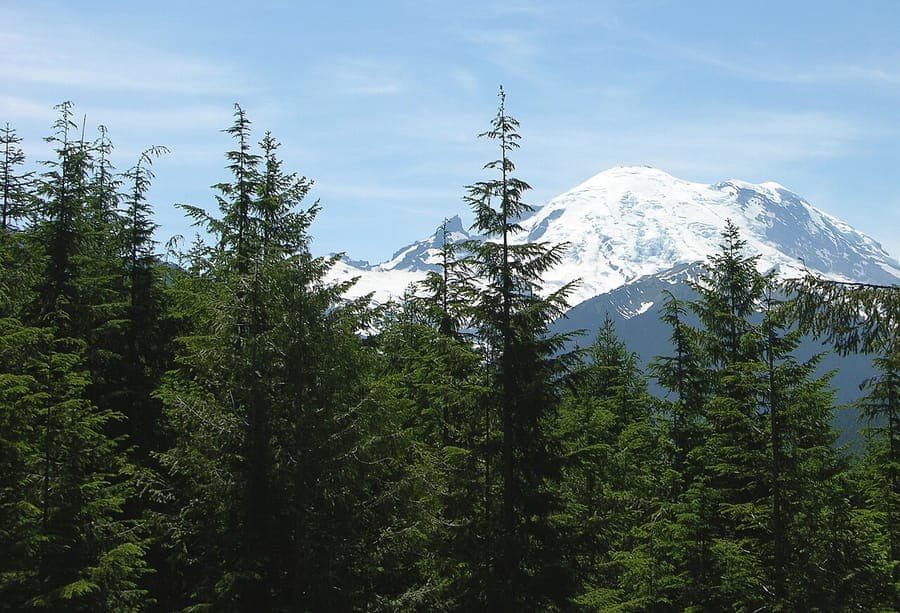
Alex O'Neal / CC BY-SA 2.0, via Wikimedia Commons
Western hemlock: complete guide
Tsuga heterophylla
¿Quieres ver Western hemlock: complete guide en tu jardín?
1 minuto, sin tarjeta de crédito
Overview
The Western hemlock (Tsuga heterophylla), also known as Pacific hemlock or British Columbia hemlock, is an impressive conifer from the Pacific Northwest of North America. This species is one of the largest hemlocks and can reach 60 meters or higher in ideal conditions. In the wild, it achieves its greatest size in the moist valleys of the Pacific Northwest, where it often grows as the second-tallest tree in mixed forests after the Sitka spruce. Compared to Eastern hemlock, Western hemlock tolerates more sun and thus offers greater versatility for larger landscapes.
Appearance and Bloom
Western hemlock grows into a slender, conical form with horizontally spreading branches that droop elegantly. The needles are finer and more variable than related species, ranging from 10-20 mm in length, which is why the botanical name heterophylla refers to its variable foliage. Needles are dark green with two white bands on the underside. The small, brown cones measure 18-25 mm and hang gracefully from twigs. The yellow to reddish-brown bark becomes increasingly red-brown with age. Birds consume the tiny seeds from cones, particularly in late fall and winter. The tree produces discrete male and female flowers in spring.
Ideal Location
Western hemlock grows best in full to partial sun with protection from severe winds. Unlike Eastern hemlock, this species can tolerate more sun, especially in cooler climates. A location with western or northeastern exposure works well. The tree thrives in moderately moist, well-drained sites. Protection from intense summer drought is important, as in its native range the tree regularly experiences mist and precipitation.
Soil
Western hemlock is acid-loving but less stringent than Eastern hemlock. Optimal pH ranges from 4.5 to 6.5. Well-draining, consistently moist soil is essential. The tree grows best in loamy soils with high organic matter content. Heavy clay soils should be amended with compost or peat before planting. Mulching helps retain moisture and gradually adds organic matter.
Watering
Western hemlock requires consistent moisture, especially in the first year after planting and during dry spells. The tree is, however, more tolerant of light drought than many other hemlock species. Deep watering in spring and summer supports vigorous growth. In very dry regions, misting in warm conditions can be beneficial.
Pruning
This tree naturally develops an attractive form and requires minimal pruning. Remove only dead, damaged, or crossing branches. Light pruning in early spring can encourage denser growth in young trees, but excessive pruning can introduce disease. Young specimens can tolerate more pruning to develop bushier forms.
Maintenance Calendar
Spring: Inspect for winter damage. Refresh mulch layer with compost. Begin consistent watering. Summer: Water as needed. Monitor for pests and fungal issues in moist conditions. Fall: No special attention required. Tree prepares for dormancy. Winter: Protect from heavy snow. Young trees may need windbreak protection.
Winter Hardiness
Western hemlock is hardy to USDA zone 5 (minimum temperature approximately -25 degrees Celsius), though it performs best in zone 6 and colder. In warm climates, the tree suffers heat stress. Optimal growth occurs in Pacific Northwest-like climates with moderate temperatures and regular precipitation.
Companion Plants
Pair Western hemlock with other Pacific Northwest plants such as Sitka spruce, western redcedar, and other conifers. Shade-tolerant shrubs like rhododendron, Pacific myrtle, and salal make suitable companions. These combinations create authentic Pacific Northwest forest character.
Final Thoughts
Western hemlock is a magnificent specimen for larger gardens or landscapes with adequate space and appropriate climate. With consistent first-year watering and minimal maintenance pruning, you will enjoy a beautiful, fast-growing tree that attracts birds and wildlife. This is an excellent choice for those wishing to recreate Pacific Northwest forest character at home. Nurseries and specialty plant providers recommend this species, particularly in regions with suitable Pacific Northwest-type climates.
¿Quieres ver Western hemlock: complete guide en tu jardín? Crea un diseño gratis ahora.
Sube una foto, elige un estilo y obtén un diseño fotorrealista con lista de plantas en menos de un minuto.
Más de 10.000 jardines diseñados
Sin tarjeta de crédito


Plantas similares
Abies delavayi: complete guide
Abies delavayi
Delavayi fir is an elegant, medium-sized coniferous tree from the Pinaceae family with dark green needles. This Asian evergreen is perfect for alpine gardens and large landscapes.
Taiwan fir: complete guide
Abies kawakamii
Discover the magnificent Taiwan fir, a rare evergreen conifer from Taiwan's mountain regions. Learn growth requirements, care tips, and why this beautiful tree is perfect for collectors of unique garden specimens.
Farges fir: complete guide
Abies fargesii
Discover the majestic Farges fir, an impressive conifer from China's mountains with elegant foliage and columnar form. Ideal for large gardens.