
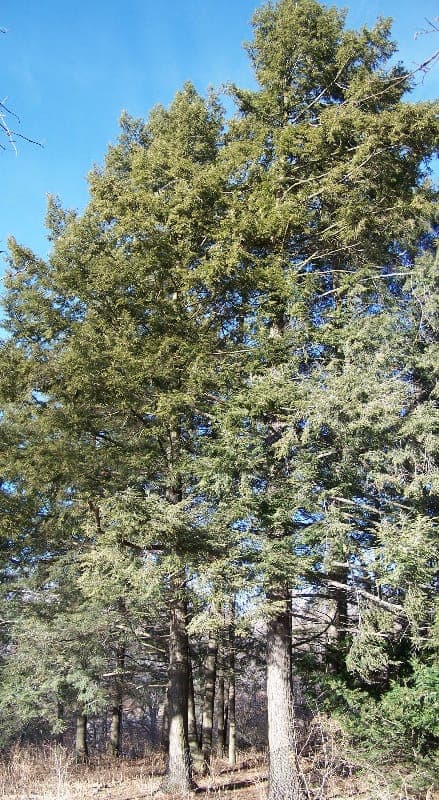
Bruce Marlin / CC BY-SA 3.0, via Wikimedia Commons
Eastern hemlock: complete guide
Tsuga canadensis
¿Quieres ver Eastern hemlock: complete guide en tu jardín?
1 minuto, sin tarjeta de crédito
Overview
The Eastern hemlock (Tsuga canadensis) is a magnificent conifer native to eastern North America, renowned for its fine, delicate foliage and gracefully drooping branching habit. This elegant tree transforms landscapes with its soft, feathery texture and towering presence. In the wild, hemlocks thrive in mist-shrouded forests from Canada to North Carolina, where they play crucial roles in forest ecosystems. These slow-growing trees can live for 800 years or more, making them valuable indicators of old-growth forests.
Appearance and Bloom
Eastern hemlock grows into a pyramidal form with horizontally spreading branches that droop gracefully, especially as the tree matures. The needles are extremely fine, flat, and deep green, arranged in two rows along the twigs. Each needle measures only 8-15 mm, giving the foliage a delicate, lacy appearance quite unlike other evergreens. The small, egg-shaped cones are merely 15-20 mm long with a soft brown color. Flowers appear in early spring but are inconspicuous: male flowers are yellow-red, female flowers green. The reddish-brown bark becomes increasingly rough with age. Many songbirds and small mammals rely on the tiny seeds within the cones.
Ideal Location
Eastern hemlock thrives in partial to full shade, though it can tolerate more sun than many forest conifers. The tree performs best with afternoon shade protection in warmer climates. A location beneath larger trees or on the north side of a building is ideal. The species demands consistently moist, humid air and dislikes deep shade or very dry locations. Wind protection enhances the tree's elegant form. These trees decline significantly in hot, dry, windy locations.
Soil
Tsuga canadensis is highly acid-loving and performs best in soil with a pH range of 4.5 to 6.0. Well-draining, consistently moist soil is essential, as the tree cannot tolerate heavy clay or waterlogging. Incorporate generous amounts of compost or peat at planting time. Sandy loam and humus-rich soils support excellent growth. Mulching helps retain moisture and stabilizes soil temperature.
Watering
Hemlock requires regular moisture, especially during establishment and drought periods. In its natural habitat, the tree grows where mist and cloud cover maintain high humidity. Water deeply during dry spells, but avoid creating waterlogged conditions. Misting the foliage can help maintain humidity in warm, dry climates. The root system must never completely dry out.
Pruning
Eastern hemlock requires minimal pruning. The tree naturally develops a beautiful pyramidal form without intervention. Remove only dead or damaged branches. Light pruning in early spring can help maintain density, but heavy pruning disrupts the elegant habit and stresses the tree. Hemlock scale and other pests readily attack stressed trees.
Maintenance Calendar
Spring: Inspect for winter damage. Refresh mulch layer with fresh compost. Monitor for hemlock scale, aphids, and mites. Summer: Water consistently, especially during dry periods. Mist foliage during heat waves. Fall: No special attention needed. Trees prepare for dormancy. Winter: Protect young trees from heavy snow with burlap wrapping. Provide windbreaks where needed.
Winter Hardiness
Eastern hemlock is hardy to USDA zone 4 (minimum temperature approximately -30 degrees Celsius). In warmer climates (zone 7 and warmer), the tree suffers from heat and drought stress. Growth is significantly better in cooler regions with moist, misty conditions.
Companion Plants
Pair hemlock with shade-tolerant shrubs such as holly, rhododendron, and mountain laurel. Groundcovers like wintercreeper and English ivy create natural woodland understory effects. These combinations emphasize hemlock's delicate texture and subtle beauty. Avoid vigorous plants that might outcompete the tree.
Final Thoughts
The Eastern hemlock is a remarkable tree for gardeners seeking elegance and refinement. Its fine texture, natural form, and wildlife value make it invaluable for larger landscapes. With attention to shade, moisture, and soil pH, you will enjoy this noble conifer for generations. Many wild hemlock populations face decline from pests and climate change, making cultivation in gardens an important conservation contribution.
¿Quieres ver Eastern hemlock: complete guide en tu jardín? Crea un diseño gratis ahora.
Sube una foto, elige un estilo y obtén un diseño fotorrealista con lista de plantas en menos de un minuto.
Más de 10.000 jardines diseñados
Sin tarjeta de crédito


Plantas similares
Abies delavayi: complete guide
Abies delavayi
Delavayi fir is an elegant, medium-sized coniferous tree from the Pinaceae family with dark green needles. This Asian evergreen is perfect for alpine gardens and large landscapes.
Taiwan fir: complete guide
Abies kawakamii
Discover the magnificent Taiwan fir, a rare evergreen conifer from Taiwan's mountain regions. Learn growth requirements, care tips, and why this beautiful tree is perfect for collectors of unique garden specimens.
Farges fir: complete guide
Abies fargesii
Discover the majestic Farges fir, an impressive conifer from China's mountains with elegant foliage and columnar form. Ideal for large gardens.