
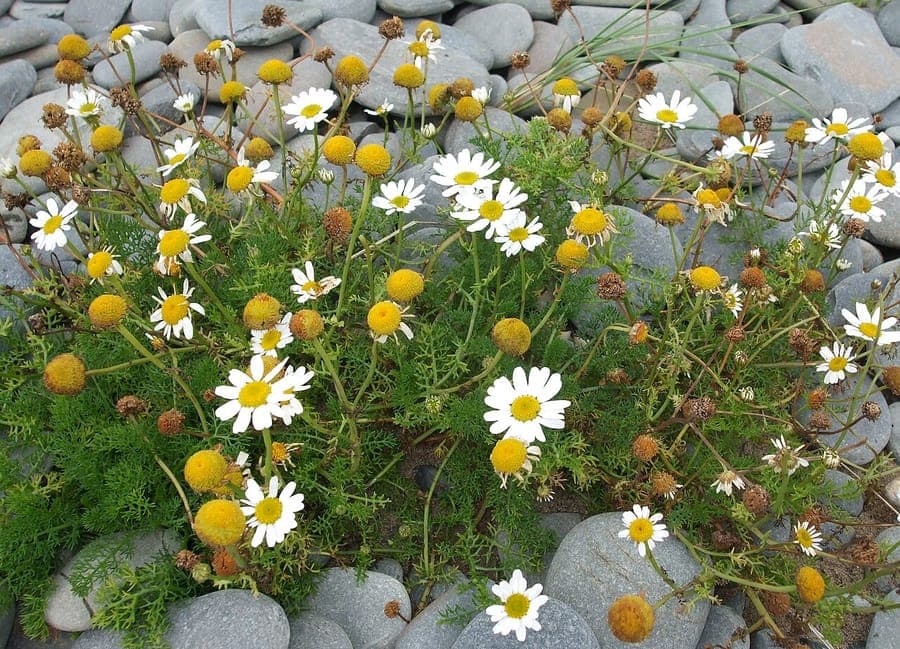
User:Jamesnbryant / CC BY-SA 3.0, via Wikimedia Commons
Tripleurospermum maritimum: complete guide
Tripleurospermum maritimum
¿Quieres ver Tripleurospermum maritimum: complete guide en tu jardín?
1 minuto, sin tarjeta de crédito
Overview
Tripleurospermum maritimum, commonly known as coastal scentless mayweed or sea mayweed, is a robust coastal plant that thrives in extreme seaside conditions. This resilient plant colonizes beaches, dunes, salt marshes, and rocky shores. With fine, feathery foliage and white daisy-like flowers with yellow centers, it forms compact clusters in coastal sands. Tripleurospermum maritimum is salt-tolerant, wind-resistant, and adapted to wet-salty conditions. The plant displays charming, informal growth perfect for beach gardens and coastal landscapes.
Appearance and Bloom
Coastal scentless mayweed typically reaches 30-60 cm height with thin, finely divided feathery leaves that remain green year-round in mild climates. The plant produces white flowers with yellow disk centers from June through autumn. These flowers are small (about 2 cm diameter) but appear abundantly. The blooms are airy and attractive to butterflies and bees. Small, round seeds develop after flowering.
Ideal Location
Tripleurospermum maritimum prefers full sun and open, windy locations where other plants struggle. This is the ideal plant for coastal areas, windswept hills, and beach-like environments. The plant tolerates salt and sea spray exceptionally well, making it a frequent choice for coastal plantings. Shade results in weak, spindly plants. Choose locations where water drains freely to prevent root rot.
Soil
Sea mayweed grows happily in poor, sandy, and gravelly soils avoided by many plants. The plant accepts acidic to neutral soil (pH 5.5-7.0). Add small amounts of compost at planting, but excessive feeding is counterproductive. Well-draining soil is essential. Sea mayweed notoriously thrives in salt-laden and lean soils.
Watering
Sea mayweed is extremely drought-resistant and prefers drier conditions. Once established, this plant needs virtually no watering. Only during the initial establishment period provide light watering to accelerate rooting. Overwatering must be avoided entirely. The plant extracts moisture from seawater and rainfall.
Diseño gratis
¿Quieres ver Tripleurospermum maritimum: complete guide en tu jardín? Crea un diseño gratis ahora.
Pruning
Pruning is not needed for Tripleurospermum maritimum. You can remove spent flowers to encourage more blooming, though this is not strictly necessary. Damaged portions can be removed in spring. Old growth can be cut back after winter to encourage more compact regrowth.
Maintenance Calendar
Spring (March-May): Plant seedlings out. Provide light watering during establishment. No further care needed. Summer (June-September): Enjoy abundant blooming. No watering required. Deadhead old flowers for extra blooms. Autumn (October-November): Blooming begins to decline. Allow seeds to form if you want self-seeding. Winter (December-February): Plant remains green. No maintenance in mild winters.
Winter Hardiness
Tripleurospermum maritimum is hardy in most temperate climates and tolerates temperatures down to -15 degrees Celsius. In severe winters, shoot tips may die back but the plant regenerates easily from the base. In coastal regions where frost danger is low, most plants overwinter with green foliage.
Companion Plants
Sea mayweed shines with other coastal plants such as sea holly (Eryngium) and tree mallow (Lavatera). It combines well with grasses like marram grass (Ammophila) and fescue (Festuca). Additionally: bladder campion (Silene), thrift (Armeria), and flax (Linum). The light, feathery growth contrasts beautifully with more substantial companions.
Conclusion
Tripleurospermum maritimum is the ideal plant for coastal areas, windy gardens, and difficult locations where other plants fail. With minimal care and fine, continuous blooming, it is a must-have for coastal gardening. Purchase seeds or plants from specialized nurseries. More garden and design ideas are found at gardenworld.app/en.
With its low demands and beautiful flowers, you are assured of success. Discover more plant possibilities at gardenworld.app/en.
¿Quieres ver Tripleurospermum maritimum: complete guide en tu jardín? Crea un diseño gratis ahora.
Sube una foto, elige un estilo y obtén un diseño fotorrealista con lista de plantas en menos de un minuto.
Sin tarjeta de crédito


Plantas similares
Calendula stellata: complete guide
Calendula stellata
Complete guide to Calendula stellata, the star-flowered marigold from Sicily: location, soil, watering and companion planting tips.
Korean chrysanthemum: complete guide
Chrysanthemum x rubellum
Chrysanthemum x rubellum is a hardy autumn perennial with single pink to copper flowers from August to November. Care and combinations.
Helianthus divaricatus: complete guide
Helianthus divaricatus
Helianthus divaricatus is a North American woodland sunflower with yellow summer blooms, ideal for naturalistic borders and shady edges.