
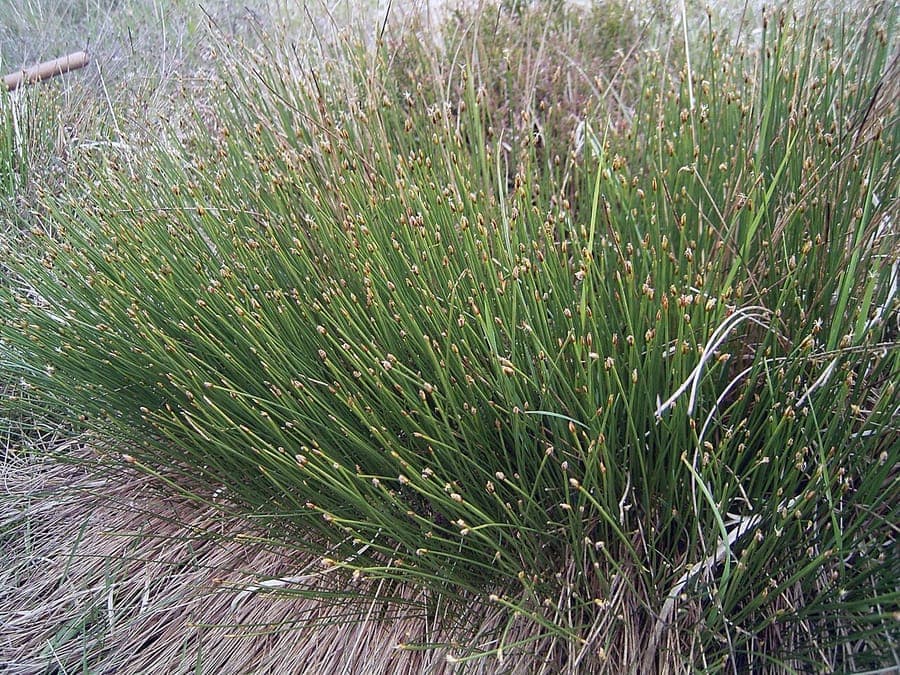
Elke Freese / CC BY-SA 3.0, via Wikimedia Commons
Tufted bulrush: complete guide
Trichophorum cespitosum
¿Quieres ver Tufted bulrush: complete guide en tu jardín?
1 minuto, sin tarjeta de crédito
Overview
Tufted bulrush (Trichophorum cespitosum) is an arctic-alpine sedge flourishing in moist, acidic substrates of high mountains through arctic tundra. This is not simply a garden plant, but rather a characteristic species of wetlands and heath landscapes. In Netherlands and Belgium, it occurs in nature reserves and intact peatbogs, but is less suited to standard gardens.
The plant forms dense, tufted tussocks - explained by the scientific name 'cespitosum' (tufted). Each tuft consists of many thin, stiff leaves growing upright. Flowering appears May-July and is distinctly dark-brown, distinguishing it from the lighter-gray alpine variant.
Tufted bulrush is ecologically important in wild peatbogs and bird territories. For gardeners, it offers interest in wetland gardens, bog containers, or wet zones with extremely acidic soils. However, this isn't a plant for dry, neutral home gardens.
Appearance and bloom
Tufted bulrush grows as dense, tufted tussocks 10-20 centimeters diameter. Leaves are extremely fine, thin, and stiff, growing upright from the base. They're dark green, darker than the alpine variant.
The inflorescence appears May-July and is the most distinctive feature. The flowering head is dark-brown to nearly black, much darker than Trichophorum alpinum. The structure is compact, roughly 1-1.5 centimeters long. After flowering, the plant produces minute, wind-dispersed seeds.
Typically the plant remains modest in appearance, providing no spectacular seasonal coloring, but staying year-round visible in dark-green tint. After flowering, the plant doesn't die back - this is evergreen, permanently visible.
The plant is rhizomatous (root-running), explaining natural spread in peatbogs. These root systems spread slowly and can form large plant areas.
Ideal location
Sun: 4-6 hours direct sunlight. Semi-shade (2-3 hours) is well accepted. The plant grows in arctic tundra where sun varies with mist and clouds.
Temperature: This is a cold-loving plant. USDA zone 3-5 recommended, but it grows also in zones 6-7 with wet summers. In warmer climate (zone 8+), it grows poorly.
Moisture regime: This is critical. The plant grows in permanently wet soils. Constant high moisture levels (but not waterlogged in extreme sense) are essential.
Air: Alpine ventilation is beneficial. The plant grows better in areas with air circulation than in still, warm corners.
Location-type: Bog containers, peatbogs, wetland simulations, pond edges are perfect. Dry gardens are completely unsuitable.
Soil requirements
This is essential for success. Tufted bulrush demands very specific soil conditions.
Soil-type: Strongly acidic, peaty, with very high organic matter. This isn't normal garden soil but rather specialized peatbog substrate. Ideal is pure or nearly-pure peat moss, or natural peatland.
Acidity: Very strongly acidic desired. pH 4.0-5.0 ideal. pH below 4.0 also acceptable. Neutral soils (pH 6.5+) are completely unsuitable.
Nutrition: Very nutrient-poor, lean soils. The plant grows in natural peatbogs that are depleted. Fertilizer destroys this plant.
Drainage: This is paradoxical. The plant grows in "wet" conditions, but this isn't waterlogging in horticultural sense. The plant grows in soils that are constantly wet through rainfall and groundwater, but where water can drain from extremes (no dead water).
Diseño gratis
¿Quieres ver Tufted bulrush: complete guide en tu jardín? Crea un diseño gratis ahora.
Watering
This is non-standard. This plant doesn't really "need watering" - it grows in permanently wet conditions.
Wet soil: maintain! This is the key secret. In natural habitats it grows in peatbogs that are 100% wet year-round. In gardens you must simulate: regular saturation, misty side-environments, or pots set in water.
Rainwater: essential! The plant prefers soft (acidic) water. Tapwater can be problematic due to calcification.
Water-type: No stagnant water (waterlogging), but constantly-moistened soils.
Dry-periods: Avoid! If the plant dries out, it slowly dies.
Pruning
Pruning isn't needed. This plant experiences no above-ground dieback.
Maintenance:
- Soil replenishment: Add peat moss annually to maintain acidity.
- Disease control: In wet conditions, fungal growth can emerge. Ensure air circulation.
- Expansion: The plant naturally expands through rhizomatous growth. This can be desired or unwanted - monitor.
Maintenance calendar
May-June: Growth resumes after winter. Inflorescence emerges. Keep regularly watered.
July-August: Full bloom. Seed ripening. Plant at peak growth.
September: Seeds mature and disperse. Plant begins slowing.
October-November: Plant enters winter rest. Moisture levels remain high.
December-March: Winter dormancy. Plant appears dull and gray. Moisture stays constant.
April: Growth begins restarting. Plant becomes more green again.
Winter hardiness
Extreme hardiness: to USDA zone 1-2 (-40+ degrees Celsius). This is a true arctic-alpine plant.
Snow cover: In snow regions, snowpack protects this plant well. Don't remove snow.
Icing: No problem as long as soil isn't frozen solid. This plant grows in arctic tundra where soil is permafrost underneath but seasonally thaws above.
Companion plantings
Tufted bulrush pairs with other wetland and heath plants:
Calluna vulgaris (heather): grows together in natural peatbogs and heath ecosystems.
Erica species (ling): same wetland preference, excellent combination.
Sphagnum mosses: the natural companions in peatbogs - help maintain acidity.
Rhododendron ferrugineum (alpine rose): grows in alpine heath habitats together.
Juncus species (rushes): share same wet-soil preference.
Caution: don't combine with drought-loving plants. They'll die in this wet, acidic environment.
Closing thoughts
Tufted bulrush isn't a conventional garden plant. It demands permanently wet soils, very acidic conditions, and patience with slow growth. But for those with wetland passion, nature conservation projects, or specialized bog gardens, it offers unique ecological value and botanical interest.
This plant contributes to true wetland ecosystems. It appears in bird habitats, insect habitats, and complete nature mitigation projects. For gardeners this means value beyond mere decoration.
Want more on wetland garden design? Visit gardenworld.app/en. You'll find guides for wet-zone management and bog simulations in temperate climates.
Seed is available from wildflower suppliers or specialized wetland-ecosystem conservators. This isn't a standard garden center plant, but rather for passionate wetland managers and botanical researchers.
¿Quieres ver Tufted bulrush: complete guide en tu jardín? Crea un diseño gratis ahora.
Sube una foto, elige un estilo y obtén un diseño fotorrealista con lista de plantas en menos de un minuto.
Más de 10.000 jardines diseñados
Sin tarjeta de crédito


Plantas similares
Flat-stemmed club-rush: complete guide
Bolboschoenus planiculmis
Everything about Bolboschoenus planiculmis: growing conditions, watering, care, and use as a pond margin or wetland plant in garden design.
Great Plains flatsedge: complete guide
Cyperus lupulinus
Everything about Great Plains flatsedge (Cyperus lupulinus): growing conditions, care, garden uses, and ecological value. Tips for pond margins and dry sandy soils.
Golden beak sedge: complete guide
Rhynchospora corymbosa
Everything about golden beak sedge (Rhynchospora corymbosa): a dramatic tropical marginal for pond edges, bog gardens, and wet habitats.