
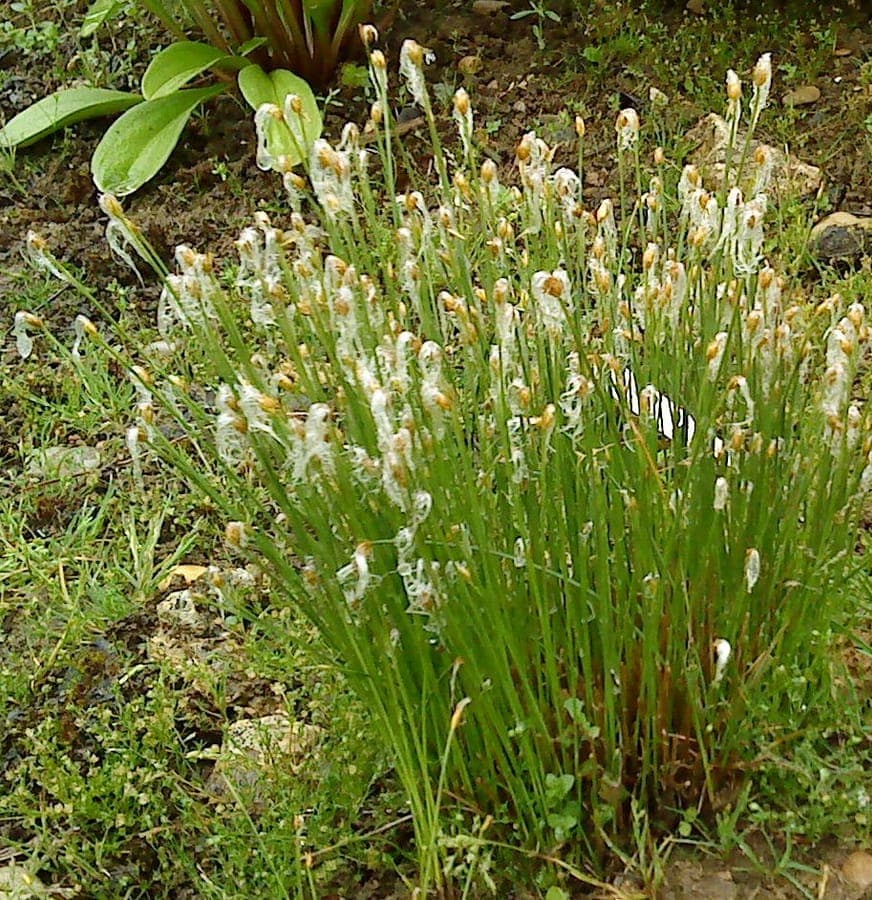
Römert / CC BY-SA 3.0, via Wikimedia Commons
Alpine bulrush: complete guide
Trichophorum alpinum
¿Quieres ver Alpine bulrush: complete guide en tu jardín?
1 minuto, sin tarjeta de crédito
Overview
Alpine bulrush (Trichophorum alpinum) is a delicate, diminutive graminoid plant from the sedge family (Cyperaceae). This is a true alpine species thriving in high mountain regions from the Alps through arctic areas of North America and northern Europe. In Netherlands and Belgium, it rarely grows wild, but can be cultivated in specialized alpine gardens or scree beds with dedicated care.
The plant is remarkably small, rarely exceeding 10-15 centimeters height, with threadlike stems and minimal leaves. The characteristic whitish, catkin-like inflorescences appear May-June, making it an intriguing miniature specimen for alpine plant enthusiasts.
This isn't a plant for ordinary gardens. It demands cold conditions, exceptional drainage, and considerable patience. But for those with alpine scree beds or bog simulations in cooler regions, it offers genuinely fascinating botanical form.
Appearance and bloom
Alpine bulrush forms extremely dense, compact cushions barely 5-10 centimeters diameter. Stems are genuinely threadlike, much thinner than typical grasses. Leaves are severely reduced - mostly basal sheaths, with virtually no blade surface.
The inflorescence represents the most interesting feature. Rather than typical grass plumes, this plant bears whitish to gray, catkin-like structures appearing May-July. These measure roughly 1 centimeter long and feel distinctly hairy, earning folk names like "alpine cottongrass."
Plant coloration is dull green to grayish-green, with no spectacular seasonal color-change. After flowering, the plant produces minute, wind-dispersed seeds.
Post-flowering, aerial parts don't die back - this is evergreen year-round, remaining visible even through winter.
Ideal location
Sun: Minimum 6 hours direct light. Not full shade, but semi-shade (3 hours light) is accepted. The plant naturally grows in alpine regions where sun varies with shade.
Temperature: This is critical. The plant demands cold winters. Minimum USDA zone 3-4 recommended. In warmer climates (zone 8+), it struggles or fails entirely.
Air: Alpine ventilation is essential. The plant grows on windswept mountain meadows with constant air movement. Still, warm corners are unsuitable.
Ground moisture: This is delicate. The plant grows in alpine bogs that are wet in spring/summer, dry in winter. A "seasonally alternating moisture regime" is ideal.
Location-type: Rock gardens, alpine troughs, scree beds, spring-run-off edges are perfect. Standard gardens are unsuitable.
Soil requirements
This is key to success. Alpine bulrush demands very specific soil.
Soil-type: Peaty, heavily enriched with organic material. Pure sand is insufficient - must have structure. A mixture of 50% peat moss, 30% sand, 20% stone grit is ideal.
Drainage: Paradoxically excellent - but with summer moisture retention. This means winter-dry (preventing frost damage in waterlogged conditions), but spring-summer wet. This is challenging in lowland gardens.
Acidity: Strongly acidic desired. pH 4.5-5.5 ideal. Neutral soils (pH 7+) are unsuitable.
Nutrition: Extremely lean, nutrient-poor substrates. No fertilizer, no compost. Pure peaty or moorland-like substratum.
Diseño gratis
¿Quieres ver Alpine bulrush: complete guide en tu jardín? Crea un diseño gratis ahora.
Watering
This is complex. The plant demands seasonal fluctuation.
Spring-summer (May-October): keep consistently moist. The plant grows in Alpine mountains in stream-side environments. Regular saturation, but no waterlogging.
Fall-winter (October-April): drastically drier. In actual alpine habitats, the plant survives in semi-dry conditions in winter. This is vital to avoid frost damage.
Water-type: Soft water (rainwater) is ideal. Hard tapwater with high calcification can cause problems in acidic soils.
Misting: In warmer growing seasons, elevated humidity is beneficial. Overhead misting helps simulate alpine mist.
Pruning
Pruning isn't needed. This plant experiences no winter dieback above ground.
Maintenance:
- Dead leaves: if appearing (which is rare), remove manually.
- Cushion expansion: When cushions exceed 30cm, they can be carefully divided.
- Soil topping: Every few years, lightly replenish peaty substratum around the plant aids acidification.
Maintenance calendar
May-June: Growth resumes. Inflorescence emerges. Regular watering.
July-August: Full bloom and seed formation. Plant at peak growth.
September: Seeds mature and disperse. Plant begins slowing.
October: Plant enters dormancy. Drastically reduce moisture.
November-March: Winter rest. Plant appears dull. Minimal watering (only rain). Monitor for frost damage.
April: Growth restarts. Gradually increase watering.
Winter hardiness
Extreme hardiness: to USDA zone 2-3 (-40 degrees Celsius in extremes). This is a true alpine plant.
Frost damage: Risk is waterlogging in winter, not cold itself. Ensure drainage is perfect in wet winters.
Icepack: In snow regions, snow actually protects this plant through insulation. Don't remove snow directly.
Companion plantings
Alpine bulrush pairs with other alpine miniatures:
Saxifraga species (saxifrage): share same cold preference and excellent drainage requirement.
Dianthus alpinus (alpine pink): also a miniature with equal alpine requirements.
Phyteuma comosum (alpine bells): alpine flower with equal growth-zone requirements.
Dryas octopetala (mountain avens): grows together in true alpine scree.
Silene acaulis (moss campion): ultra-alpine plant with equal minimal growth-form requirements.
Caution: don't combine with vigorous, fast-growing plants - they'll overshadow and suppress this miniature.
Closing thoughts
Alpine bulrush isn't a plant for beginners or conventional gardeners. It demands very specific conditions: cold winters, seasonal moisture cycles, extremely acidic soils, and perfect drainage.
Yet for those with alpine rock gardens, scree beds, or specialized mountain biotope simulations, it offers genuinely unique botanical beauty. Its miniature architecture, whitish blooms, and hardiness make it a prize-winning miniature grass.
Want more on alpine garden design in temperate climates? Visit gardenworld.app/en. You'll find guides for alpine rock gardens and cool-climate biotopes.
Seed is available from alpine plant nurseries. Specialized suppliers (especially in Switzerland, Tirol, or Scotland) carry this plant, though it's not found in standard garden centers.
¿Quieres ver Alpine bulrush: complete guide en tu jardín? Crea un diseño gratis ahora.
Sube una foto, elige un estilo y obtén un diseño fotorrealista con lista de plantas en menos de un minuto.
Más de 10.000 jardines diseñados
Sin tarjeta de crédito


Plantas similares
Flat-stemmed club-rush: complete guide
Bolboschoenus planiculmis
Everything about Bolboschoenus planiculmis: growing conditions, watering, care, and use as a pond margin or wetland plant in garden design.
Great Plains flatsedge: complete guide
Cyperus lupulinus
Everything about Great Plains flatsedge (Cyperus lupulinus): growing conditions, care, garden uses, and ecological value. Tips for pond margins and dry sandy soils.
Golden beak sedge: complete guide
Rhynchospora corymbosa
Everything about golden beak sedge (Rhynchospora corymbosa): a dramatic tropical marginal for pond edges, bog gardens, and wet habitats.