
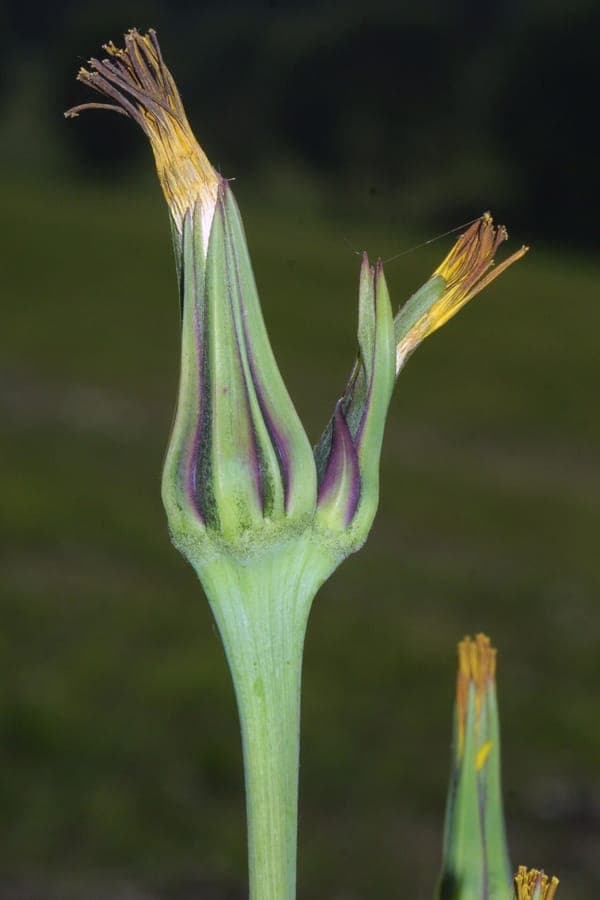
Wikimedia Commons / CC BY-SA 3.0, via Wikimedia Commons
Tragopogon pratensis: complete guide
Tragopogon pratensis
¿Quieres ver Tragopogon pratensis: complete guide en tu jardín?
1 minuto, sin tarjeta de crédito
Tragopogon pratensis: Complete Guide
Overview
Tragopogon pratensis, commonly called meadow salsify or goat's beard, is a biennial wildflower that brightens meadows and grasslands with cheerful yellow blooms. This nutritious wild plant produces impressive seed heads and offers edible roots and young leaves. Native to Europe, it naturalized readily across temperate regions worldwide.
Appearance and Bloom
Meadow salsify grows as an upright plant reaching approximately 100 centimeters with fine, grass-like green foliage. Delicate yellow flowers resemble small suns and bloom throughout spring and early summer. While individual flowers last only one day, the plant's abundant flower buds ensure weeks of continuous color. After flowering, impressive fluffy seed heads form reminiscent of giant dandelions.
Ideal Location
Meadow salsify grows best in full sun locations with abundant direct light. The plant thrives on open meadows and grasslands where maximum light reaches. Position in sunny garden areas or allow to naturalize in wild spaces.
Soil
Meadow salsify is undemanding regarding soil type and grows in nearly any soil. The plant particularly favors well-draining, sandy soil with minimal nutrients. It tolerates both acidic and neutral soils with pH between 6.0 and 7.5.
Diseño gratis
¿Quieres ver Tragopogon pratensis: complete guide en tu jardín? Crea un diseño gratis ahora.
Watering
Once established, meadow salsify is extremely drought-tolerant and requires minimal watering. Water regularly during the first growing season until plants are well-rooted. After establishment, watering is necessary only during extreme drought periods.
Pruning
No pruning is necessary for this species. Remove dead foliage for neatness if desired. Allow plants to produce seed heads if you wish seeds to naturalize. Prevent self-seeding by removing spent flower heads before seed maturation.
Maintenance Calendar
April-May: Sow seeds directly into field or prepared beds. June-July: Flowering time, minimal watering needed. August-September: Seed dispersal occurs, plants naturally decline. October-March: No activity.
Winter Hardiness
Meadow salsify is hardy to minus 20 degrees Celsius and grows in quite cold climates. The plant overwinters as a basal rosette during its first year and flowers in spring of the second year. Cold winters are well-tolerated.
Companion Plants
Meadow salsify pairs beautifully with other meadow plants such as daisies, scabiosa, and ornamental grasses. The cheerful yellow flowers bring warmth to wild plant groupings. Plant in drifts for naturalistic meadow effects.
Closing
Tragopogon pratensis is a nutritious, carefree wildflower with sunny yellow blooms and fluffy seed heads. This self-seeding plant adds spontaneous charm to meadows and wild garden corners. Sow seeds in spring or allow natural self-seeding. For more meadow gardening ideas, visit gardenworld.app/en.
¿Quieres ver Tragopogon pratensis: complete guide en tu jardín? Crea un diseño gratis ahora.
Sube una foto, elige un estilo y obtén un diseño fotorrealista con lista de plantas en menos de un minuto.
Más de 10.000 jardines diseñados
Sin tarjeta de crédito


Plantas similares
Calendula stellata: complete guide
Calendula stellata
Complete guide to Calendula stellata, the star-flowered marigold from Sicily: location, soil, watering and companion planting tips.
Korean chrysanthemum: complete guide
Chrysanthemum x rubellum
Chrysanthemum x rubellum is a hardy autumn perennial with single pink to copper flowers from August to November. Care and combinations.
Helianthus divaricatus: complete guide
Helianthus divaricatus
Helianthus divaricatus is a North American woodland sunflower with yellow summer blooms, ideal for naturalistic borders and shady edges.