
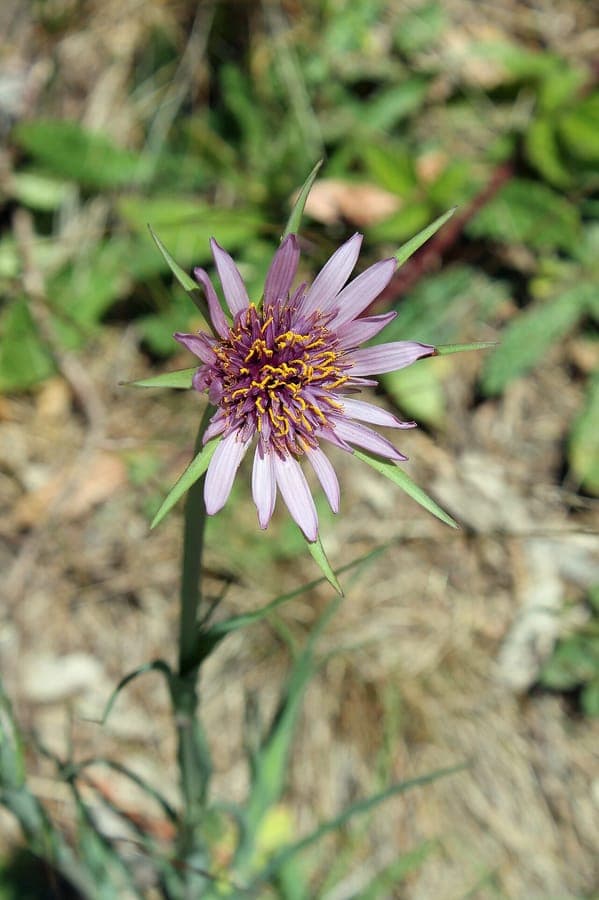
Sarah Stierch / CC BY 4.0, via Wikimedia Commons
Tragopogon porrifolius: complete guide
Tragopogon porrifolius
¿Quieres ver Tragopogon porrifolius: complete guide en tu jardín?
1 minuto, sin tarjeta de crédito
Tragopogon porrifolius: Complete Guide
Overview
Tragopogon porrifolius, commonly called salsify or oyster plant, is a biennial root vegetable prized for its nutritious, subtly flavored roots. This elegant plant produces magnificent purple to violet flowers in its second growing season. Both roots and young leaves are edible and highly nutritious, making it valuable in vegetable gardens.
Appearance and Bloom
Salsify grows as an upright plant reaching 60 to 90 centimeters tall with long, narrow, blue-green foliage. In the second year, plants produce large, conspicuous flowers in shades of purple to violet-blue. Flowers remain closed in cloudy weather and on early mornings, opening fully in afternoon sunshine. After flowering, impressive seed heads form resembling delicate fireworks.
Ideal Location
Salsify thrives in full sun locations with at least six to eight hours of direct sunlight daily. The plant tolerates partial shade but flowers less abundantly. Plant in open garden beds where maximum light reaches throughout the day.
Soil
Tragopogon porrifolius requires well-prepared, well-draining soil free of clods or stones. Deep, loose soil to at least 30 centimeters is essential for straight, unsplit roots. Incorporate compost for nutrition and soil structure. Optimal pH ranges from 6.0 to 7.5.
Diseño gratis
¿Quieres ver Tragopogon porrifolius: complete guide en tu jardín? Crea un diseño gratis ahora.
Watering
Keep soil consistently moist during the growing season, especially during dry periods. Deep watering encourages deeper, healthier root development more effectively than frequent shallow watering. Excess moisture causes root rot and must be avoided.
Pruning
No pruning is required for this plant. Remove dead foliage and spent flowers for general maintenance. Remove flowers if growing primarily for roots.
Maintenance Calendar
Spring (April-May): Sow seeds directly into prepared beds. Summer (June-August): Water regularly, thin seedlings as needed. Fall (September-October): Harvest roots as desired. Winter (November-March): Plant dormant.
Winter Hardiness
Tragopogon porrifolius is hardy to approximately minus 15 degrees Celsius. Grown as a biennial, plants overwinter as a basal rosette during their first winter. In second spring, flowering occurs. Most roots can be harvested before extreme cold.
Companion Plants
Salsify pairs well with other vegetables and herbs in productive gardens. Plant near other root vegetables such as beets, carrots, and radishes for efficient garden use. Early purple flowers add ornamental value to vegetable beds.
Closing
Tragopogon porrifolius is a fascinating plant valued for both nutrition and beauty. The nutritious roots can be prepared like other root vegetables. Sow seeds in spring and harvest in fall for a satisfying crop. Find quality seeds at your local garden center. For more gardening guidance, visit gardenworld.app/en.
¿Quieres ver Tragopogon porrifolius: complete guide en tu jardín? Crea un diseño gratis ahora.
Sube una foto, elige un estilo y obtén un diseño fotorrealista con lista de plantas en menos de un minuto.
Más de 10.000 jardines diseñados
Sin tarjeta de crédito


Plantas similares
Calendula stellata: complete guide
Calendula stellata
Complete guide to Calendula stellata, the star-flowered marigold from Sicily: location, soil, watering and companion planting tips.
Korean chrysanthemum: complete guide
Chrysanthemum x rubellum
Chrysanthemum x rubellum is a hardy autumn perennial with single pink to copper flowers from August to November. Care and combinations.
Helianthus divaricatus: complete guide
Helianthus divaricatus
Helianthus divaricatus is a North American woodland sunflower with yellow summer blooms, ideal for naturalistic borders and shady edges.