
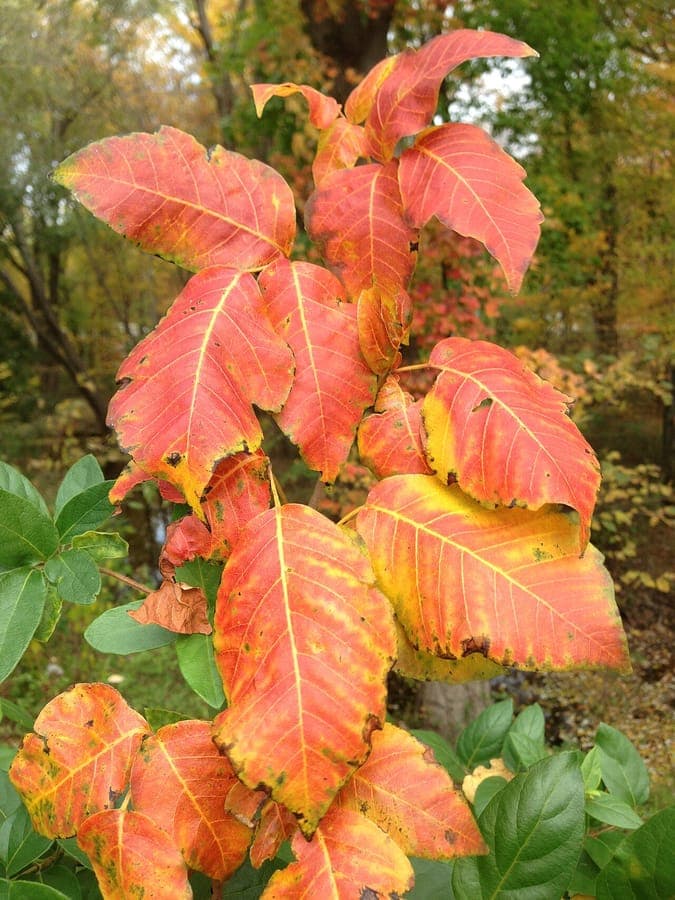
Famartin / CC BY-SA 4.0, via Wikimedia Commons
Poison Ivy: complete guide
Toxicodendron radicans
¿Quieres ver Poison Ivy: complete guide en tu jardín?
1 minuto, sin tarjeta de crédito
Overview
Poison ivy, scientifically known as Toxicodendron radicans, is one of North America's most notorious plants. Found from eastern Canada to Guatemala, this plant is notorious for causing severe allergic skin reactions in most people who touch it. The allergic reaction is caused by an oil called urushiol, which is present in all parts of the plant.
Understanding this plant is critical for anyone living or working in North America, as exposure can result in painful rashes lasting weeks.
Appearance and Bloom
Poison ivy is instantly recognizable by its distinctive three-leaflet structure. The leaflets are typically oval to lance-shaped, with smooth to slightly serrated edges. Leaves are green in summer, turning brilliant shades of red, orange, and yellow in fall. The center leaflet has a longer stem than the side leaflets.
The plant produces small, inconspicuous yellowish-green flowers in late spring. These flowers give way to white to pale blue waxy berries in late summer and fall. These berries are highly toxic and should never be eaten.
Ideal Location
Poison ivy should not be cultivated intentionally. However, if you encounter this plant in your landscape, know that it thrives in moist, shaded woodlands and can also grow in sunny areas. It spreads through underground rhizomes and can climb trees or spread along the ground.
Soil
Poison ivy is extremely adaptable to soil conditions, growing in sandy, loamy, or clay soils. It tolerates both acidic and neutral pH levels and can survive in poor, compacted soils where many other plants struggle.
Diseño gratis
¿Quieres ver Poison Ivy: complete guide en tu jardín? Crea un diseño gratis ahora.
Watering
Once established, poison ivy is drought-tolerant. However, it prefers consistently moist soil and thrives in areas with regular rainfall. In natural settings, it often colonizes riparian zones and wet woodlands.
Pruning
Pruning poison ivy is never recommended. If you absolutely must remove this plant, hire professional remediation services. All parts of the plant, including roots and dead wood, contain urushiol oil and remain toxic for years. Never burn poison ivy, as inhalation of the smoke can cause severe internal burns.
Maintenance Calendar
- Spring: Monitor new growth; do not touch
- Summer: Flowers appear; avoid contact
- Fall: Berries ripen; leaves change color
- Winter: Plant dies back in cold climates but roots survive underground
Winter Hardiness
Poison ivy is hardy in USDA zones 3 through 11. In colder regions, the above-ground growth dies back, but the root system survives, allowing the plant to regenerate each spring.
Companion Plants
No companion planting is recommended. Keep all plants away from poison ivy to prevent cross-contamination with urushiol oil.
Closing
Poison ivy is a plant to be avoided, not cultivated. Recognition and prevention are your best defenses. If you find poison ivy on your property, contact a professional removal service. If exposed, immediately rinse the affected skin with soap and water and seek medical advice if a rash develops.
For safe, professional garden design and plant recommendations, visit gardenworld.app/en.
¿Quieres ver Poison Ivy: complete guide en tu jardín? Crea un diseño gratis ahora.
Sube una foto, elige un estilo y obtén un diseño fotorrealista con lista de plantas en menos de un minuto.
Más de 10.000 jardines diseñados
Sin tarjeta de crédito


Plantas similares
Skunkbush sumac: complete guide
Rhus trilobata
Everything about Rhus trilobata: siting, soil, autumn colour, pruning, and how this tough ornamental shrub earns a place in any garden.
Winged sumac: complete guide
Rhus copallinum
Everything about Rhus copallinum, the winged sumac with spectacular autumn colour. Location, pruning and garden value in full detail.
Aromatic sumac: complete guide
Rhus aromatica
Full guide to aromatic sumac (Rhus aromatica): planting, soil, care, pruning and companion plants for dry, sunny gardens and slope stabilisation.