
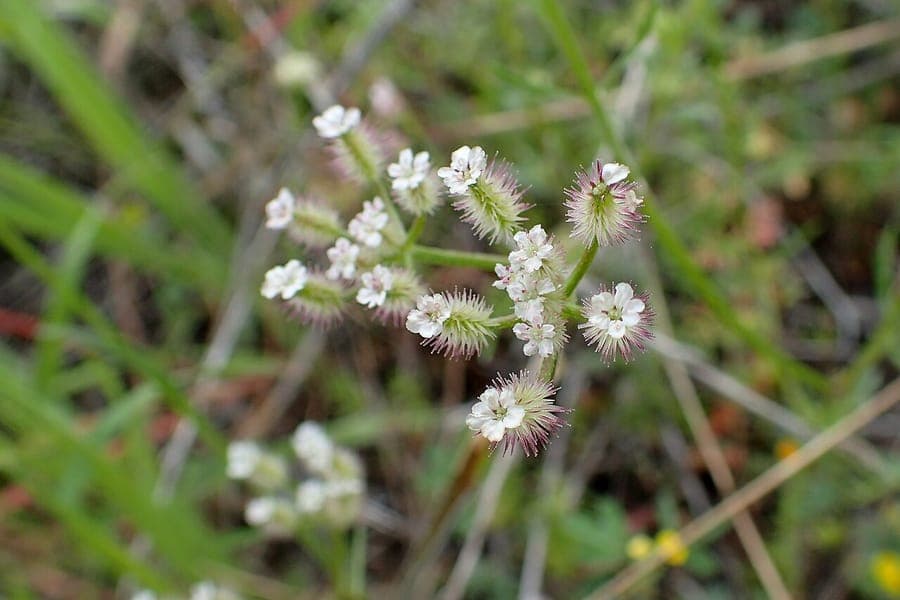
Krzysztof Ziarnek, Kenraiz / CC BY-SA 4.0, via Wikimedia Commons
Torilis leptophylla: complete guide
Torilis leptophylla
¿Quieres ver Torilis leptophylla: complete guide en tu jardín?
1 minuto, sin tarjeta de crédito
Overview
Torilis leptophylla, better known as Bristlefruit Hedgeparsley or Fine-leaved Torilis, is an elegant white flower from the Apiaceae family. This plant grows 30-60 centimeters high and blooms from May to July with numerous small white flowers. It is an annual plant from the Mediterranean and Asia that adapts perfectly to various growing conditions. The plant is highly suitable for pollinator-friendly gardens due to its nutritious flowers.
Appearance and Bloom
Torilis leptophylla has extremely finely cut leaves that appear very elegant and almost filigree-like. The stems are elegantly branched and bear numerous small white flowers in flat clusters, typical of the Apiaceae family. The flowers are very small but appear in large numbers, creating a beautiful, cloud-like effect. The plant becomes wider as it matures and forms a sort of fountain of white flowers. The blooming period is May to July, with sometimes recurrence if the plant is not completely stressed.
Ideal Location
This plant grows best in full sun to partial shade locations. Seven to eight hours of sunlight daily is ideal, but the plant can manage with six hours. The plant does not prefer too hot, windy locations, so a sheltered spot is better than full southern exposure. This makes it suitable for garden sections where other plants provide some protection.
Soil
Torilis leptophylla grows on well-draining, moist soils. Unlike many Mediterranean plants, this plant prefers somewhat moister soils. Clay-rich soils with organic material are suitable. pH between 6 and 7.5 is ideal. Addition of compost improves performance. Proper drainage is still essential to prevent waterlogging.
Diseño gratis
¿Quieres ver Torilis leptophylla: complete guide en tu jardín? Crea un diseño gratis ahora.
Watering
This plant has moderate water requirements. Water regularly during the growing season, especially in dry periods. Avoid waterlogging. Once the plant has fully developed its foliage, watering needs can be reduced. Regular moisture maintenance during blooming leads to more and better flowers.
Pruning
Minimal pruning is needed. Remove spent flower heads to encourage blooming. After the first flowering period, you can gently prune the plant back to stimulate a second bloom. Use sharp scissors to prevent damage. Dead leaves can be gently removed.
Maintenance Calendar
April-May: Sow seeds outdoors or plant seedlings. May-July: Blooming period, water regularly, deadhead. August-September: Plant dies off in warm climates or becomes less vigorous. October-November: May regrow or drop seeds for next year.
Winter Hardiness
Torilis leptophylla is not winter hardy in cold climates. It is an annual plant that only grows in warm seasons. In frost-free winter regions (zones 8-11), it can overwinter. In cold areas, grow as summer annual. The plant is resistant to about -2 degrees Celsius.
Companion Plants
Combine Torilis leptophylla with other white flowers and summer bloomers. Good companions are Cosmos, Alchemilla, Salvia, and other light plants. These combinations create airy, romantic flower displays. Plant in groups of at least three to five for maximum effect.
Conclusion
Torilis leptophylla is an elegant white flower combining ease and beauty. With its fine foliage and numerous white blooms, it adds subtlety to summer gardens. The plant is highly suitable for wild or natural garden styles. For seeds and plant selection, visit local nurseries or gardenworld.app.
¿Quieres ver Torilis leptophylla: complete guide en tu jardín? Crea un diseño gratis ahora.
Sube una foto, elige un estilo y obtén un diseño fotorrealista con lista de plantas en menos de un minuto.
Más de 10.000 jardines diseñados
Sin tarjeta de crédito


Plantas similares
Whorled carrot: complete guide
Daucus involucratus
Daucus involucratus is a Mediterranean umbellifer with white flower heads framed by lacy bracts. Growing this gravel garden gem.
Daucus muricatus: complete guide
Daucus muricatus
Daucus muricatus, the spiny wild carrot, grows wild on Mediterranean coasts. Discover sowing, June-July bloom, and wildflower meadow use.
Daucus pumilus: complete guide
Daucus pumilus
Daucus pumilus is a dwarf wild carrot relative with white lacy umbels, thriving on dunes and coastal rock in poor, fast-draining soil.