
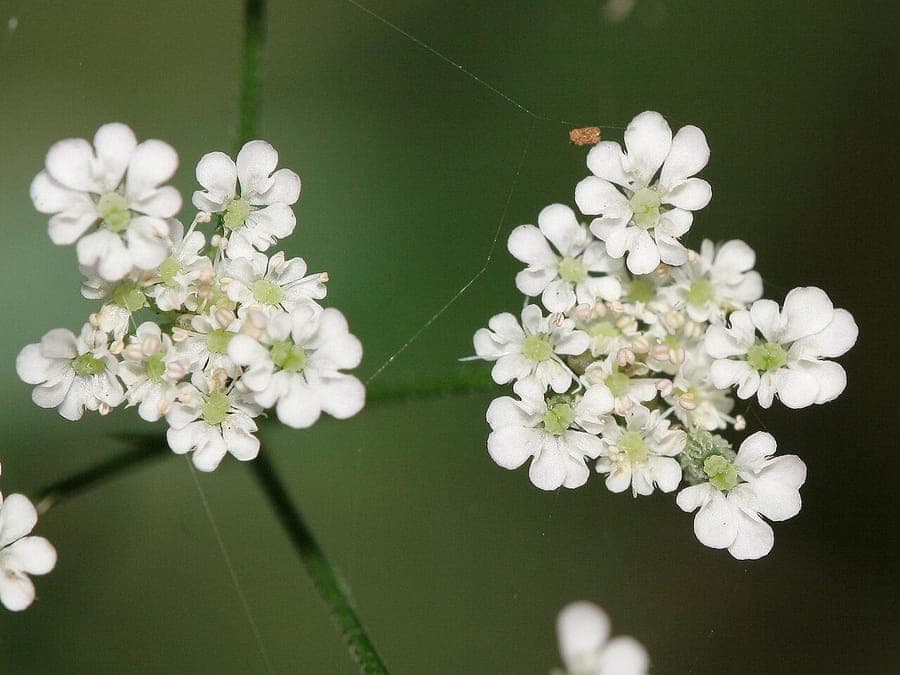
Kristian Peters -- Fabelfroh 07:58, 14 September 2007 (UTC) / CC BY-SA 3.0, via Wikimedia Commons
Torilis japonica: complete guide
Torilis japonica
¿Quieres ver Torilis japonica: complete guide en tu jardín?
1 minuto, sin tarjeta de crédito
Overview
Torilis japonica, commonly known as upright hedge-parsley or common cleavers, is an annual or biennial plant native to temperate Asia to North Indo-China. This graceful plant belongs to the Apiaceae family and is valued for its fine, delicate structure and characteristic spiny fruits. In natural gardens and woodland edges, it adds an airy beauty.
Appearance and bloom
Torilis japonica reaches 50-100 cm in height and forms an upright, well-branching plant. The plant has two to three-times pinnately divided leaves with fine, lance-shaped leaflets. From June to September, small pink to white flowers appear in loose umbrella-like clusters. After flowering, characteristic prickly fruits covered with fine spiny hairs form.
Ideal location
Torilis japonica grows best in part shade to full sun. Ensure well-drained, moist to normal soils. This plant is ideal for woodland edges, natural gardens, hedgerows and shaded borders.
Soil
Torilis japonica thrives in diverse soil types but prefers well-drained, moderately fertile soils. The plant can adapt to both acidic and neutral pH. When grown in pots, use standard potting soil.
Diseño gratis
¿Quieres ver Torilis japonica: complete guide en tu jardín? Crea un diseño gratis ahora.
Watering
Once established, Torilis japonica is moderately drought-tolerant but grows best with regular moisture. Water during dry spells. In normal weather, rainfall is usually sufficient.
Pruning
Deadheading can stimulate prolonged flowering. Leave some seed clusters for natural self-sowing.
Maintenance calendar
- Spring (March-May): Sow seeds directly in open ground or start indoors. Minimal care.
- Summer (June-September): Flowering occurs. Water during dry spells.
- Autumn (October-November): Seed ripens. Plant slowly dies off.
- Winter (December-February): No maintenance. Plant is dead.
Winter hardiness
Torilis japonica is not hardy in very cold climates. Treat as annual in USDA zones 5-6 and colder. The plant usually self-seeds for next seasons. In temperate zones it grows as biennial.
Companion plants
Torilis japonica grows well in woodland-edge plant communities with other Asian wild plants and shade-tolerant species.
Closing thoughts
Torilis japonica offers delicate beauty to woodland edges and natural gardens. With part shade, good drainage and regular moisture, this plant will continuously self-seed. For inspiration, visit gardenworld.app and gardenworld.app.
¿Quieres ver Torilis japonica: complete guide en tu jardín? Crea un diseño gratis ahora.
Sube una foto, elige un estilo y obtén un diseño fotorrealista con lista de plantas en menos de un minuto.
Más de 10.000 jardines diseñados
Sin tarjeta de crédito


Plantas similares
Whorled carrot: complete guide
Daucus involucratus
Daucus involucratus is a Mediterranean umbellifer with white flower heads framed by lacy bracts. Growing this gravel garden gem.
Daucus muricatus: complete guide
Daucus muricatus
Daucus muricatus, the spiny wild carrot, grows wild on Mediterranean coasts. Discover sowing, June-July bloom, and wildflower meadow use.
Daucus pumilus: complete guide
Daucus pumilus
Daucus pumilus is a dwarf wild carrot relative with white lacy umbels, thriving on dunes and coastal rock in poor, fast-draining soil.