
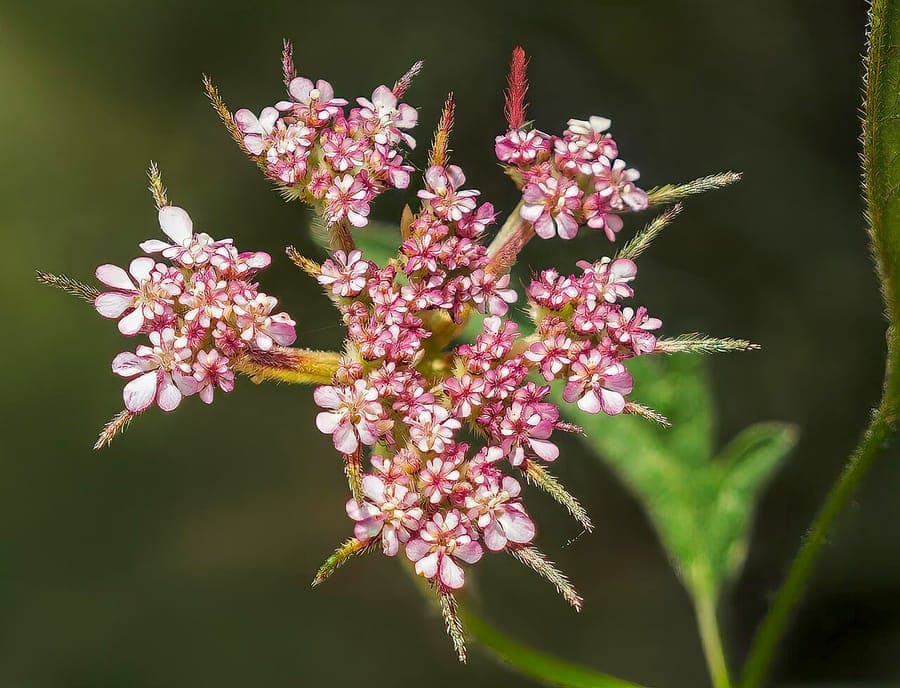
Didier Descouens / CC BY-SA 4.0, via Wikimedia Commons
Tordylium maximum: complete guide
Tordylium maximum
¿Quieres ver Tordylium maximum: complete guide en tu jardín?
1 minuto, sin tarjeta de crédito
Overview
Tordylium maximum, commonly known as hartwort, is an annual to biennial plant native to Eastern and Southern Europe to Northern Iran. This interesting plant belongs to the Apiaceae family (carrot/parsnip family) and is noted for its delicate white flowers and characteristic fruit structure. While not as common in gardens, it is a fascinating plant for gardeners wanting to experiment with lesser-known European species.
Appearance and bloom
Tordylium maximum reaches 40-90 cm in height and forms an upright, branching shrub. The plant has fine, two to three-times pinnately divided leaves with linear leaflets. From May to August, small white flowers appear in composite umbrella-like clusters, each approximately 2-3 cm across. After flowering, distinctive flat, broad fruits with toothed edges form.
Ideal location
Tordylium maximum grows best in full sun with at least 6-8 hours of direct sunlight daily. Ensure well-drained soil site. This plant is ideal for wild and naturalistic gardens, dry climates, gravel and stone border gardens.
Soil
Tordylium maximum prefers well-draining, sandy soils and thrives in poor to moderately fertile soils. The plant can adapt to neutral to slightly acidic pH levels. When grown in pots, use standard potting soil mixed with sand or perlite.
Diseño gratis
¿Quieres ver Tordylium maximum: complete guide en tu jardín? Crea un diseño gratis ahora.
Watering
Once established, Tordylium maximum is moderately drought-tolerant. Water moderately during the growing period, especially in dry spells. In rainy areas, supplemental water is normally not needed.
Pruning
Deadheading is not essential but can stimulate prolonged flowering. Leave some seed clusters for self-sowing in subsequent years.
Maintenance calendar
- Spring (March-May): Sow seeds directly in prepared soil. Minimal feeding required.
- Summer (June-August): Flowering occurs. Water moderately in dry spells.
- Autumn (September-November): Let seed mature and fall. Plant dies off.
- Winter (December-February): No maintenance. Plant is dead.
Winter hardiness
Tordylium maximum is not hardy in cold climates. Treat as annual in USDA zones 7-8 and colder. The plant is suitable for USDA zones 8-10 as biennial. It thrives best in warmer Mediterranean climates.
Companion plants
Tordylium maximum combines well in wild gardens with other drought-tolerant European plants such as Centaurea, Verbascum and other Apiaceae species.
Closing thoughts
Tordylium maximum is an interesting choice for gardeners wanting to grow lesser-known European plants. With full sun and good drainage, this plant will provide its delicate white flowers. For seeds, visit specialized nurseries or seed companies. For inspiration, visit gardenworld.app and gardenworld.app.
¿Quieres ver Tordylium maximum: complete guide en tu jardín? Crea un diseño gratis ahora.
Sube una foto, elige un estilo y obtén un diseño fotorrealista con lista de plantas en menos de un minuto.
Más de 10.000 jardines diseñados
Sin tarjeta de crédito


Plantas similares
Whorled carrot: complete guide
Daucus involucratus
Daucus involucratus is a Mediterranean umbellifer with white flower heads framed by lacy bracts. Growing this gravel garden gem.
Daucus muricatus: complete guide
Daucus muricatus
Daucus muricatus, the spiny wild carrot, grows wild on Mediterranean coasts. Discover sowing, June-July bloom, and wildflower meadow use.
Daucus pumilus: complete guide
Daucus pumilus
Daucus pumilus is a dwarf wild carrot relative with white lacy umbels, thriving on dunes and coastal rock in poor, fast-draining soil.