
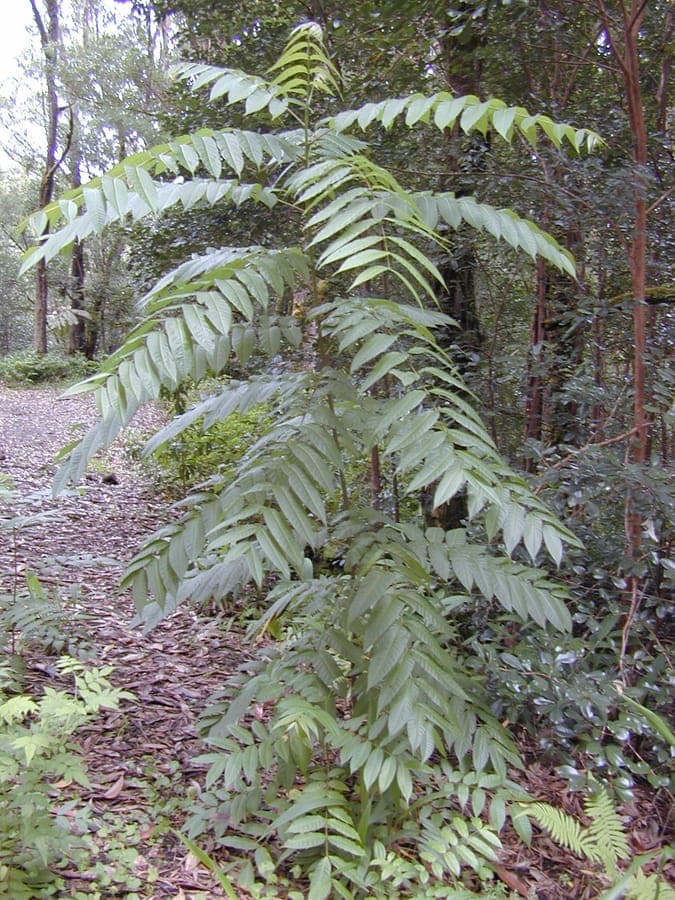
Forest & Kim Starr / CC BY 3.0, via Wikimedia Commons
Red cedar (Toona ciliata): complete guide
Toona ciliata
¿Quieres ver Red cedar (Toona ciliata): complete guide en tu jardín?
1 minuto, sin tarjeta de crédito
Overview
Toona ciliata, commonly called red cedar or Indian cedar, is an impressive deciduous tree native to tropical and subtropical Asia. This fast-growing tree readily reaches significant heights and provides excellent shade and shelter in the garden. The name "ciliata" refers to the ciliated hairs along the leaf stalks. The tree is particularly valued for its delicate, glossy green foliage and gracefully elegant appearance.
The red cedar grows naturally from southern China to tropical Asia. In temperate climates, it is possible to grow this tree as a container plant or summer specimen, especially in areas with long growing seasons. The tree forms a full, dense crown that is perfectly suited for gardens where shade is desired.
Appearance and Bloom
Toona ciliata is characterized by its long, feathered leaflets arranged alternately along the main leaf rachis, creating a light and elegant appearance. The leaves are distinctly glossy green and finely textured. In spring, the tree may produce small, inconspicuous yellowish-white flowers in loose panicles, followed by small winged fruits.
The trunk has a characteristic bark that peels in plates as the tree matures, giving it interesting texture. The crown becomes broad and dense, resulting in a beautiful shadow-casting canopy.
Ideal Location
Toona ciliata thrives in full sun to partial shade. In warm climates, the tree benefits from some afternoon shade to prevent excessive drying. Position the tree where it has some wind protection, as its branches are relatively brittle in strong winds.
The tree works well as a specimen on a lawn, or planted in groups for greater shelter. In smaller gardens, it can be used as a screening plant or background against a wall.
Soil
Toona ciliata is not particularly fussy about soil but grows best in well-draining soil. The tree prefers slightly fertile soil with organic matter. Add plenty of compost or peat moss when planting to improve moisture retention, especially in dry climates.
Ensure the pH is neutral to slightly acidic (pH 5.5-7.5). The tree is relatively salt-tolerant, making it suitable for coastal areas.
Diseño gratis
¿Quieres ver Red cedar (Toona ciliata): complete guide en tu jardín? Crea un diseño gratis ahora.
Watering
During the first growing season, water Toona ciliata regularly to establish a deep root system. A well-watered tree is better able to withstand drought. Water deeply but less frequently than shallow daily watering.
At the beginning of the growing season, a thin layer of mulch (5-10 cm) around the base of the trunk helps retain soil moisture. Avoid waterlogging, especially in winter.
Pruning
Toona ciliata grows quickly and can become quite large. Prune in late winter or early spring before new growth starts. Remove dead, diseased, or crossing branches. The tree can also be pruned to better control its form and stimulate a fuller silhouette.
If you want to keep the tree smaller, more aggressive pruning can be applied. However, this will disturb the natural form.
Maintenance Calendar
- Spring: Remove pruning debris, apply feeding
- Summer: Regular watering, especially during dry periods
- Fall: Check for diseases, remove dead wood
- Winter: Protect against extreme frost (outside temperate zones)
Winter Hardiness
Toona ciliata cannot tolerate severe frost and is best suited for USDA zones 9-11. In temperate climates, the tree can be grown in containers and brought indoors for winter. If you live in a colder region, you can protect it with burlap wrapping around the trunk and lower part of the crown.
In alpine or very cold areas, it is better to grow the tree as an annual or houseplant.
Companion Plants
Toona ciliata works well with other shade-tolerant plants. Underplanting with shade plants such as hostas, hellebores, or Japanese anemones creates effective layered garden effects. Privet, euonymus, and bamboo varieties can also serve as understory plants.
In warmer climates, vines such as clematis or passion flower can grow around the tree for additional flowering results.
Closing
Toona ciliata is a beautiful choice for anyone wanting a fast-growing, elegant shade tree with graceful foliage and useful shelter. Whether you live in a warm climate or grow this tree as a container plant, it will surely enhance your garden. With proper care and location, you can enjoy the quiet beauty of this Asian cedar for years to come.
Perfect for gardenworld.app users seeking green shade and sustainable planting. Discover more inspiration on gardenworld.app for your garden design!
¿Quieres ver Red cedar (Toona ciliata): complete guide en tu jardín? Crea un diseño gratis ahora.
Sube una foto, elige un estilo y obtén un diseño fotorrealista con lista de plantas en menos de un minuto.
Más de 10.000 jardines diseñados
Sin tarjeta de crédito


Plantas similares
Muskwood: complete guide
Guarea guidonia
Everything about muskwood (Guarea guidonia): tropical origins, appearance, cultivation in conservatories and warm gardens, care and companions.
Trichilia dregeana: complete guide
Trichilia dregeana
Trichilia dregeana is an African tree with beautiful foliage and striking flowers. Learn how to care for this exotic plant in your garden.
Swietenia macrophylla: complete guide
Swietenia macrophylla
Discover Honduran mahogany - a tropical timber tree with architectural beauty. Growing requirements, care guide and sustainability for warm climates.