
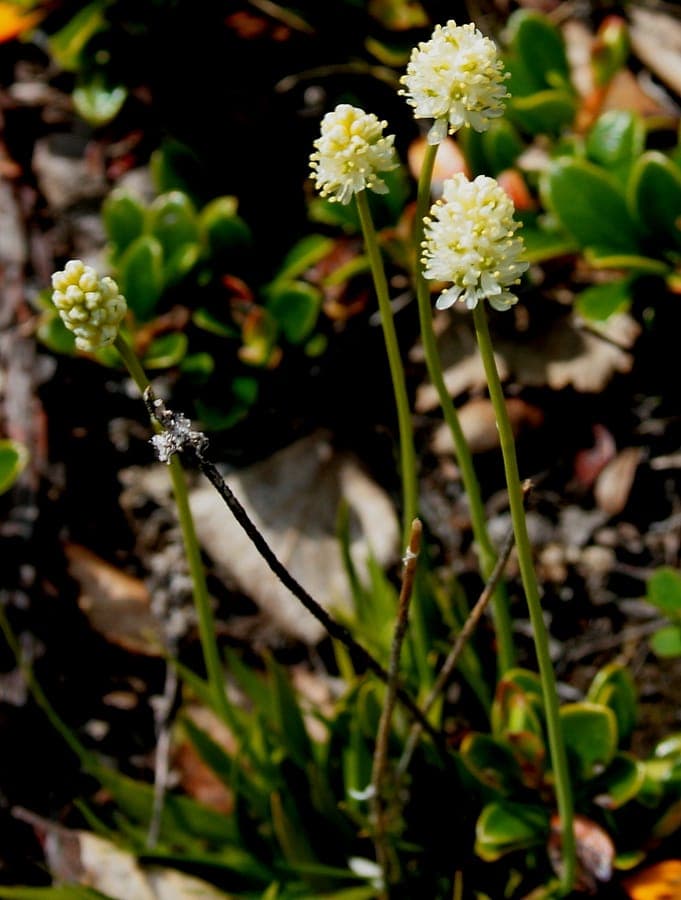
Hedwig Storch / CC BY-SA 3.0, via Wikimedia Commons
Tofieldia pusilla: complete guide
Tofieldia pusilla
¿Quieres ver Tofieldia pusilla: complete guide en tu jardín?
1 minuto, sin tarjeta de crédito
Overview
Tofieldia pusilla, commonly known as Scottish false asphodel or small false asphodel, is a tiny alpine plant native to the coldest regions of the Northern Hemisphere. This graceful plant, with its fine texture and white flowers, grows naturally in damp, mountainous habitats from Alaska to Japan. With a preference for cool climates and wet soils, it's an excellent choice for gardeners wanting to create alpine and wetland gardens.
Appearance and bloom
Tofieldia pusilla reaches only 10-20 cm in height, making it perfect for rock gardens and alpine troughs. The plant forms compact rosettes of linear, grass-like leaves that grow low to the ground. In summer (July to August), thin stems emerge with small, five-petalled white flowers arranged in loose, graceful racemes. The flowers feature yellow stamens and are extremely attractive to pollinators.
Ideal location
Tofieldia pusilla thrives in full sun to part shade. In warmer climates, part shade is better as it protects the plant from drying out. Ensure good air circulation to prevent fungal diseases. This plant is ideal for rock gardens, alpine troughs, damp meadows and shaded woodland gardens.
Soil
Adaptation to well-draining, nutrient-poor soils is essential for Tofieldia pusilla. The plant prefers acidic to neutral pH levels (pH 6.5-7.5) and grows best in peaty, wet soils offering excellent drainage. Add sand, gravel and peat or leaf mould to regular garden soil to create ideal growing conditions. In pots, use a mixture of peat and sand in equal parts.
Watering
Keep the soil of Tofieldia pusilla moister than normal, especially during the growing season (spring and summer). This plant doesn't thrive in dry conditions. Frost-free watering in winter is important, however. Ensure pots have good drainage to prevent waterlogging.
Diseño gratis
¿Quieres ver Tofieldia pusilla: complete guide en tu jardín? Crea un diseño gratis ahora.
Pruning
Tofieldia pusilla requires minimal pruning maintenance. Remove faded flower clusters and foliage to maintain a neat appearance. Preventing seed production can limit next year's flowering, so prune after flowering.
Maintenance calendar
- Spring (March-May): Begin light feeding with diluted alpine plant fertiliser. Increase watering as the growing season begins.
- Summer (June-August): Ensure adequate water, especially during dry periods. Flowering occurs during this period. Deadhead spent flowers.
- Autumn (September-November): Reduce nutrient and water application. Remove dying foliage.
- Winter (December-February): Minimal care needed. Protect from severe frost and waterlogging.
Winter hardiness
Tofieldia pusilla is extremely hardy and can tolerate temperatures down to -20 degrees Celsius. It is suitable for USDA zones 2-6 and grows best in climates with cold winters. In warm-winter areas, waterlogging and fungal diseases may be problematic; ensure excellent drainage.
Companion plants
Tofieldia pusilla grows well alongside other alpine and wetland plants such as Drosera (sundews), Pinguicula (butterworts) and other small Carex species. These combinations create natural, beautiful alpine meadows.
Closing thoughts
Tofieldia pusilla is a frost-hardy beauty that adds an elegant touch to alpine gardens. With the right growing conditions (moist, well-draining soil and cool conditions), this plant will flourish for years. Visit gardenworld.app and gardenworld.app for inspiration and guidance on creating alpine gardens.
¿Quieres ver Tofieldia pusilla: complete guide en tu jardín? Crea un diseño gratis ahora.
Sube una foto, elige un estilo y obtén un diseño fotorrealista con lista de plantas en menos de un minuto.
Más de 10.000 jardines diseñados
Sin tarjeta de crédito


Plantas similares
Acer pycnanthum: complete guide
Acer pycnanthum
Acer pycnanthum, the Japanese swamp maple, is a fast-growing tree with early red flowers and brilliant autumn color, ideal for damp garden settings.
Freeman maple: complete guide
Acer × freemanii
Everything about the Freeman maple (Acer x freemanii): a fast-growing shade tree with spectacular autumn colour for large gardens.
Silver vine: complete guide
Actinidia polygama
Discover silver vine (Actinidia polygama): a hardy climbing plant with silvery foliage, loved by gardeners and cats alike.