
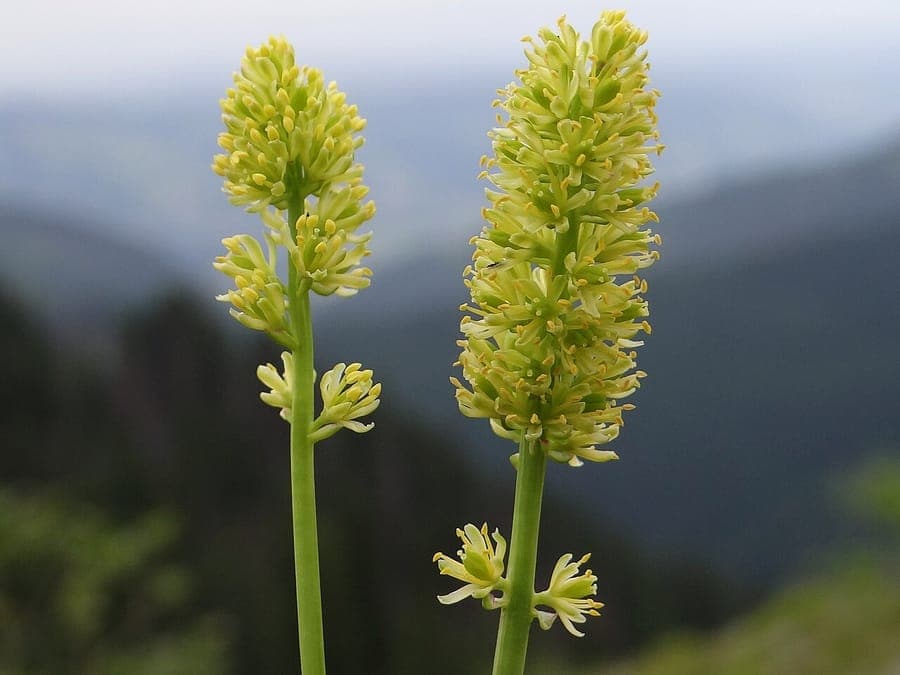
Jerzy Opioła / CC BY-SA 4.0, via Wikimedia Commons
German-asphodel: complete guide
Tofieldia calyculata
¿Quieres ver German-asphodel: complete guide en tu jardín?
1 minuto, sin tarjeta de crédito
Overview
Tofieldia calyculata, commonly known as German-asphodel or alpine-asphodel, is a unique bog plant from the Tofieldiaceae family. This elegant plant is native to mountain meadows and bogs from Gotland to the Pyrenees. It is a specialized plant for moist habitats and feels at home in bog gardens.
German-asphodel offers gardeners an opportunity to incorporate true bog plants into their gardens. With the right growing conditions, this plant can transform wet zones into attractive viewing points. It is an excellent choice for gardeners with wet soils or bog ponds.
Appearance and bloom
Tofieldia calyculata is a compact plant, usually 10-30 cm tall. The plant grows in densely clustered rosette-like clusters of narrow, green leaves. The foliage has a grass-like appearance.
Flowers appear from June to August in stiff, upright racemes. Flowers are small, yellow or greenish-yellow, with fine stamens. Although individually small, together they create a pleasant effect.
Fruits are small capsules appearing in August-September.
Ideal location
German-asphodel thrives best in locations with consistently moist to wet soils. At least partial shade is preferred, although full sun is tolerated in cooler climates. The plant loves moist soils.
This plant is ideal for bog ponds, edges of water garden elements, and moist groundcover vegetation. It works well in bog or rainwater gardens where moisture management is beneficial.
Soil
German-asphodel requires moist to wet soils. Heavy clay soils are ideal. The plant grows better in organically rich soils.
Improve very poor soils with plenty of peat or compost. The plant tolerates acidic to neutral soils (pH 5.5-7.0).
Diseño gratis
¿Quieres ver German-asphodel: complete guide en tu jardín? Crea un diseño gratis ahora.
Watering
German-asphodel requires consistently moist to wet growing conditions. In normal conditions, provide consistent moisture. The plant feels at home along water surface edges or in bog conditions.
During dry periods, provide supplemental water to maintain moisture levels. The plant does not thrive in very dry conditions.
Pruning
German-asphodel requires no formal pruning. Carefully remove dead leaves or flower spikes in early spring. The plant naturally maintains its compact form.
Maintenance calendar
Spring: Check moisture levels. Add compost to poor soils. Summer: Maintain consistent moisture. Flowers appear. Autumn: Leave seed heads for interest. Check water levels. Winter: Minimal maintenance. Protect from extreme ice.
Winter hardiness
Tofieldia calyculata is hardy in USDA zones 3-6. The plant tolerates European mountain winters well. Protection from winter drying can be beneficial in continental climates.
Companion plants
This unique plant combines well with:
- Caltha palustris
- Iris sibirica
- Primula veris
- Carex species
- Osmunda species
- Drosera species
- Sphagnum mosses
For bog plant materials, visit your local garden center. More information is available at gardenworld.app/en.
Closing
Tofieldia calyculata offers gardeners an opportunity to incorporate authentic bog plants into their gardens. With proper moisture management and growing conditions, this plant will thrive and add valuable biodiversity. The delicate flowers and grass-like appearance make it an interesting part of bog or rainwater gardens.
For bog pond and moist garden tips, visit gardenworld.app/en.
¿Quieres ver German-asphodel: complete guide en tu jardín? Crea un diseño gratis ahora.
Sube una foto, elige un estilo y obtén un diseño fotorrealista con lista de plantas en menos de un minuto.
Sin tarjeta de crédito


Plantas similares
Acer pycnanthum: complete guide
Acer pycnanthum
Acer pycnanthum, the Japanese swamp maple, is a fast-growing tree with early red flowers and brilliant autumn color, ideal for damp garden settings.
Freeman maple: complete guide
Acer × freemanii
Everything about the Freeman maple (Acer x freemanii): a fast-growing shade tree with spectacular autumn colour for large gardens.
Silver vine: complete guide
Actinidia polygama
Discover silver vine (Actinidia polygama): a hardy climbing plant with silvery foliage, loved by gardeners and cats alike.