
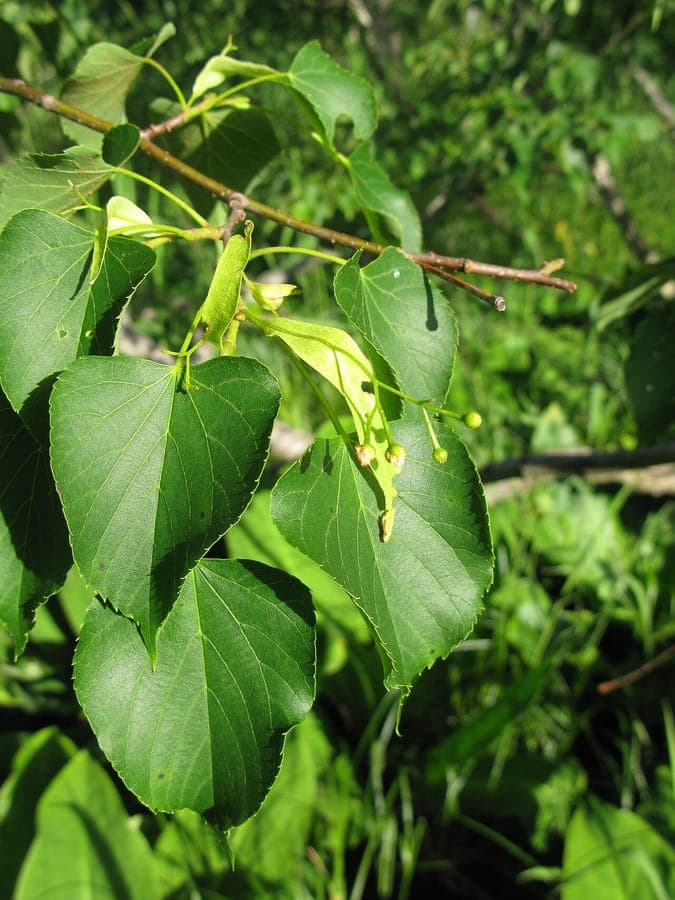
Qwert1234 / CC BY-SA 3.0, via Wikimedia Commons
Japanese Linden: complete guide
Tilia japonica
¿Quieres ver Japanese Linden: complete guide en tu jardín?
1 minuto, sin tarjeta de crédito
Overview
The Japanese linden (Tilia japonica) is a graceful tree native to eastern China and Japan. Belonging to the Malvaceae family, it is prized for its attractive leaf shapes, pleasantly scented flowers, and elegant growth habit. In landscape gardens, the tree serves as both a shade provider and important structural element.
Appearance and bloom
The Japanese linden grows into a medium to large tree with a broad, rounded crown. The leaves are small to medium-sized, finely toothed, and provide an elegant appearance throughout the season. In June-July, pale yellow to cream-colored flowers appear in hanging clusters, visible from a distance and releasing a characteristic honey-like fragrance. These flowers attract numerous bees and bumblebees.
Ideal location
Place the Japanese linden in a sunny to partially shaded position. The tree thrives best here and flowers most abundantly. Ensure it is not directly exposed to strong sea wind or very dry conditions. As a structural plant, it works well in parks, large gardens, and wide avenues.
Soil
This tree grows in virtually all soil types, provided they drain well. Heavy clay soils can be improved by incorporating sand and compost. The ideal pH ranges from 6.5 to 7.5. Avoid strongly acidic soils; add lime if needed.
Diseño gratis
¿Quieres ver Japanese Linden: complete guide en tu jardín? Crea un diseño gratis ahora.
Watering
During dry periods, especially in the first and second growing season, water regularly. Once established, the tree tolerates drought reasonably well. During heat waves, supplementary watering prevents premature leaf fall.
Pruning
Minimal pruning is needed. Remove dead or damaged branches in early spring (February-March). Branch collar wounds can form with heavy cuts, so avoid severe pruning. The natural form is usually most beautiful.
Maintenance calendar
February-March: Pruning, disease monitoring April-May: Growth monitoring, mulching with leaf debris June-July: Enjoy blooms, observe pollinators August-October: Allow seed set, appreciate autumn foliage November-December: Winter preparation, leaf composting
Winter hardiness
Extremely hardy, suitable for zone 4 (-30 degrees Celsius). The Japanese linden tolerates snow, frost fluctuations, and strong winds well.
Companion plants
Combine the linden with understory plantings of Hedera (ivy), Vinca minor, or Geranium. The tree forms a stunning backdrop for perennials and low shrubs.
Closing remarks
The Japanese linden is a durable, reliable tree for large-scale plantings. At gardenworld.app, integrate this type of tree into your garden design. Also available at major garden centers. Invest in this tree for generations of pleasant dappled shade and flowers.
Want more trees like this in your garden? Discuss the design on gardenworld.app and discover more plant suggestions from our experts.
¿Quieres ver Japanese Linden: complete guide en tu jardín? Crea un diseño gratis ahora.
Sube una foto, elige un estilo y obtén un diseño fotorrealista con lista de plantas en menos de un minuto.
Más de 10.000 jardines diseñados
Sin tarjeta de crédito


Plantas similares
Crimean linden: complete guide
Tilia × euchlora
Crimean linden is an elegant, fast-growing shade tree ideal for large gardens. Discover cultivars, spacing, maintenance tips and winter hardiness.
California flannelbush: complete guide
Fremontodendron californicum
Everything about California flannelbush (Fremontodendron californicum): sunny placement, drainage, pruning and care for this spectacular yellow-flowering shrub.
Hairy rose mallow: complete guide
Hibiscus moscheutos subsp. lasiocarpos
Full growing guide for hairy rose mallow (Hibiscus moscheutos subsp. lasiocarpos): location, soil, watering, winter hardiness and garden design tips.