
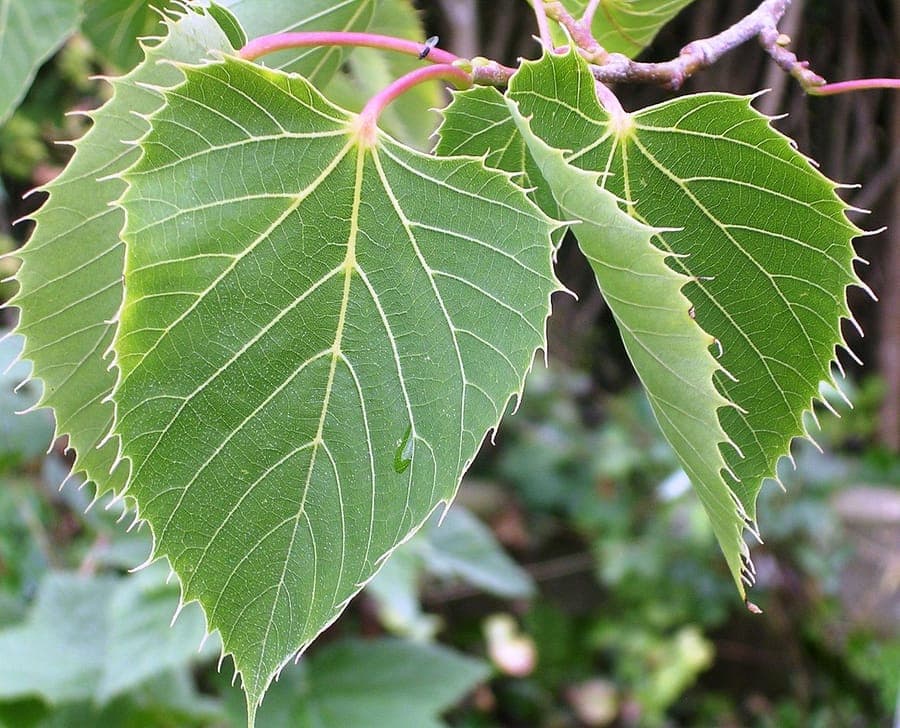
Ptelea (talk) 15:26, 23 June 2008 (UTC) / Public domain, via Wikimedia Commons
Tilia henryana: complete guide
Tilia henryana
¿Quieres ver Tilia henryana: complete guide en tu jardín?
1 minuto, sin tarjeta de crédito
Overview
Tilia henryana, known as Henry's Lime, Oliver's Lime or simply Linden, is an elegant, medium-sized tree from the Malvaceae family, originating from mountainous regions of central and southeastern China. This tree is renowned for its fine, delicate leaves, fragrant flowers and lush growth pattern.
Although far less known than European Lindens (Tilia cordata, Tilia platyphyllos), Tilia henryana deserves much greater recognition in landscape architecture and garden design. The tree provides shade, fragrance, insect food and botanical beauty - essentially everything a good shade tree should offer.
In European gardens, Tilia henryana grows excellently in temperate climates where it adds incomparable charm to parklands, garden groves and large borders.
Appearance and bloom
Tilia henryana grows as a medium-sized, elegantly formed tree, typically 10 to 15 meters tall with similar width. The crown is oval to broad-pyramidal in youth, becoming less compact as the tree matures.
Leaves are small to medium, approximately 5 to 12 cm long, heart-shaped with pointed tip, finely toothed margin and very soft to touch. Upper surface is dark green, lower surface lighter with visible veining. In autumn, leaves turn yellow to golden-brown before falling.
Flowers appear in June through July in beautiful, pendant clusters. They are extremely small, approximately 1 cm across, very numerous, yellow in color and incredibly fragrant - the scent spreads far throughout the garden. These flowers are an absolute treat for bees and other pollinators.
Following bloom, the tree produces small, nut-like fruits approximately 1 cm large that hang in beautifully decorative clusters.
Ideal location
Tilia henryana performs best in full sun to light shade, with at least four to six hours of direct light being ideal. In very warm regions, light afternoon shade proves beneficial.
The tree prefers moderate temperatures and thrives better in cold winters than very warm summers. Plant where it is wind-protected, as strong winds can break branches.
The tree fits well in large gardens, parklands and woodland situations where it can develop fully. It is less suitable for small city gardens due to its eventual size.
Soil requirements
Tilia henryana performs best in nutrient-rich, well-draining soil with high organic content. Add compost, peat silt and other organic material at planting time.
The tree tolerates both neutral and slightly acidic soil (pH 6 to 7.5). In very alkaline soils, chlorosis symptoms may develop. Add ferrous sulfate if needed.
Excellent drainage is essential, especially for young trees. Stagnant water damages roots. Plant on elevated ground or hilly terrain where water can drain away.
Diseño gratis
¿Quieres ver Tilia henryana: complete guide en tu jardín? Crea un diseño gratis ahora.
Watering
Young trees (first 2-3 years) require regular watering until the root system fully establishes. Water deeply and regularly, especially during dry summer periods.
Established trees tolerate drought reasonably well but growth and bloom improve with adequate moisture control. During very dry periods, water once weekly.
Water preferably at the tree's base, not on foliage. Mulch around the tree with 5-8 cm of organic material to maintain soil moisture.
Pruning
Tilia henryana requires minimal pruning after establishment. In winter (December-February), you can remove dead, damaged or crossing branches. Avoid heavy pruning that diminishes tree form.
Young trees may undergo some formative pruning during their early years to develop beautiful crown structure. Avoid pruning during the growing season due to sap loss.
Remove water sprouts (shoots from the trunk) as soon as they appear.
Maintenance calendar
Spring (March-May): New leaf growth. Water young trees regularly. Check for winter weather damage. Apply fertilizer for young trees.
Summer (June-August): Full bloom in June-July. Water regularly. Monitor for pests though rare. Maintain mulch.
Autumn (September-October): Leaf color changes to gold. Full drought tolerance. No specific maintenance required.
Winter (December-February): Tree dormant. Structural pruning possible in late winter. Check trunks for damage.
Winter hardiness
Tilia henryana is highly frost-hardy and tolerates temperatures to approximately -20 degrees Celsius without protection. In alpine regions and northeastern areas it grows without issues.
The tree is much hardier than many Asian trees. However, young trees may undergo frost damage to tender shoots in very severe winters. Protect young trees in their first winter with loose mulch around the base.
Companion plants
Tilia henryana combines beautifully with other large trees and supporting plants. Good companions include:
- Acer (maple) - other ornamental trees
- Quercus (oak) - native large trees
- Ulmus (elm) - other classic shade trees
- Cornus - supporting flowering shrubs
- Rhododendron - large shrubs beneath trees
- Hosta - foliage plants for shade
In parklands, plant with grassland and woodland understory.
Conclusion
Tilia henryana is no minor tree but an often forgotten jewel in gardens and parklands. With its elegant growth, enchanting flowers, delightful fragrance and robustness in temperate climates, it deserves much greater attention.
The tree grows excellently in European gardens, especially where space for large, shady trees is available. Source young trees from specialized tree nurseries. Seed is difficult to germinate, so begin with nursery-grown plant material.
Perfect for landscape architecture, parkway gardens, natural gardens and quiet corners. Visit gardenworld.app for more inspiration on ornamental shade trees and Asian botany.
¿Quieres ver Tilia henryana: complete guide en tu jardín? Crea un diseño gratis ahora.
Sube una foto, elige un estilo y obtén un diseño fotorrealista con lista de plantas en menos de un minuto.
Más de 10.000 jardines diseñados
Sin tarjeta de crédito


Plantas similares
Crimean linden: complete guide
Tilia × euchlora
Crimean linden is an elegant, fast-growing shade tree ideal for large gardens. Discover cultivars, spacing, maintenance tips and winter hardiness.
California flannelbush: complete guide
Fremontodendron californicum
Everything about California flannelbush (Fremontodendron californicum): sunny placement, drainage, pruning and care for this spectacular yellow-flowering shrub.
Hairy rose mallow: complete guide
Hibiscus moscheutos subsp. lasiocarpos
Full growing guide for hairy rose mallow (Hibiscus moscheutos subsp. lasiocarpos): location, soil, watering, winter hardiness and garden design tips.