
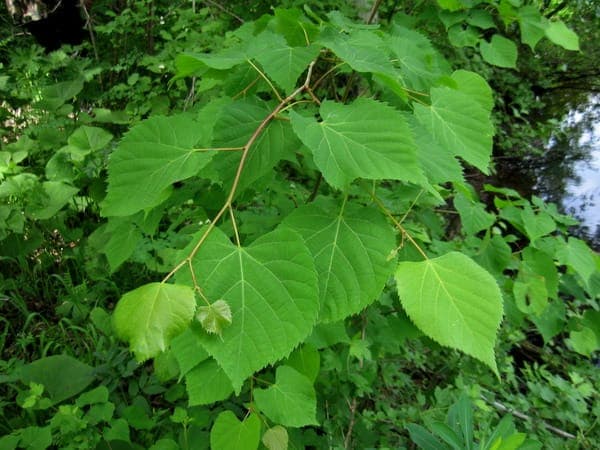
Николай Степанов / CC BY-SA 3.0, via Wikimedia Commons
Amur Lime: complete guide
Tilia amurensis
¿Quieres ver Amur Lime: complete guide en tu jardín?
1 minuto, sin tarjeta de crédito
Overview
The Amur Lime (Tilia amurensis) is an elegant deciduous tree native to the Russian Far East, Korea, and Manchuria. This species belongs to the linden family (Malvaceae) and is renowned for its graceful form, fragrant summer flowers, and reliable hardiness. With moderate growth rate, the Amur Lime reaches an impressive height of 50-80 feet in suitable climates, making it perfect for large gardens, parks, and landscape design.
The tree offers not only aesthetic value but also practical benefits: its dense canopy provides excellent shade, its flowers attract pollinators, and its soft texture brings beauty through all seasons.
Appearance & Bloom
The Amur Lime grows into a robust tree with a regular, ovate to columnar crown. The leaves are heart-shaped to somewhat irregular rhomboid, smooth and glossy dark green in summer. At 2-4 inches long, they create an elegant effect during the growing season and color beautifully gold to deep yellow in October.
Flowers appear in June-July in small, intensely fragrant blooms arranged in drooping clusters. They are pale yellow to creamy white and attract massive numbers of bees and other pollinators. This aroma is truly intoxicating on warm summer evenings. After flowering, small inconspicuous nutlets develop, remaining discrete until late in the year.
Ideal Location
The Amur Lime thrives in full sun to light dappled shade. Ensure at least 4-5 hours of direct sunlight daily for optimal growth and flowering. The tree needs adequate space: plan for a distance of at least 16-23 feet from other large trees and structures.
This is an extremely cold-hardy species performing well across Europe, including northern regions. It tolerates windy sites reasonably well, though it prefers more shelter.
Soil
The Amur Lime is not particularly fussy about soil type, but grows best in fertile, well-draining soil. An ideal pH ranges from 5.5 to 7.0 (neutral to slightly acidic). Heavy clay should be improved with sand and compost. Add organic material when planting (compost, leaf mold) to improve water retention.
Ensure the soil is not waterlogged; the tree prefers moderate moisture. In poor soils, growth is slower, so regular feeding during the growing season is beneficial.
Diseño gratis
¿Quieres ver Amur Lime: complete guide en tu jardín? Crea un diseño gratis ahora.
Watering
Although the Amur Lime is fairly drought-tolerant once established, regular watering is essential in the first growing year. Water deeply 1-2 times weekly, depending on rainfall and temperature. Much depends on local conditions and soil type.
Established trees require less frequent watering except during drought periods. Keep the root zone lightly moist but never waterlogged. In high-rainfall areas, you can reduce watering.
Pruning
The Amur Lime grows naturally into a pleasing form and requires minimal pruning. In early years, remove dead, damaged, or crossing branches. On mature trees, light pruning in winter can open the canopy and improve structure.
Avoid heavy pruning that creates large wounds; this can cause gumming (sap congestion). Small cut surfaces heal quickly. Prune between November and March when the tree is dormant.
Maintenance Calendar
- March: Inspect for winter damage; remove dead branches
- April-May: Growing season begins; check for pests
- June-July: Enjoy fragrant flowers
- August: Water during dry periods
- September-October: Observe fall color change
- November-March: Pruning season; winter dormancy
Winter Hardiness
The Amur Lime is extremely cold-hardy to -22F (-30C) or colder, depending on seedling origin. This makes it suitable for all temperate climates in Europe. Even young trees tolerate frost well, though they may suffer frost damage in their first winter during extreme cold.
A thick mulch layer around the root zone helps young trees survive hard winters.
Companion Plants
The Amur Lime works well with:
- Understory: Small shade-tolerant woodland plants
- Nearby shrubs: Viburnum, Skimmia, Pieris
- Climbers: Ivy (Hedera helix) beneath the tree provides green ground cover
- Flower beds: Hosta, Sedge, Snowdrop
Avoid heavy competition from other large trees in its immediate vicinity.
Conclusion
The Amur Lime is a beautiful, reliable choice for large gardens and parks across Europe. With its graceful form, fragrant flowers, and winter hardiness, it offers value for decades. Once established, it is relatively low-maintenance and you can enjoy it with minimal effort. Grow this elegant tree and transform your outdoor space into a place where fragrance, beauty, and nature converge.
¿Quieres ver Amur Lime: complete guide en tu jardín? Crea un diseño gratis ahora.
Sube una foto, elige un estilo y obtén un diseño fotorrealista con lista de plantas en menos de un minuto.
Más de 10.000 jardines diseñados
Sin tarjeta de crédito


Plantas similares
Crimean linden: complete guide
Tilia × euchlora
Crimean linden is an elegant, fast-growing shade tree ideal for large gardens. Discover cultivars, spacing, maintenance tips and winter hardiness.
California flannelbush: complete guide
Fremontodendron californicum
Everything about California flannelbush (Fremontodendron californicum): sunny placement, drainage, pruning and care for this spectacular yellow-flowering shrub.
Hairy rose mallow: complete guide
Hibiscus moscheutos subsp. lasiocarpos
Full growing guide for hairy rose mallow (Hibiscus moscheutos subsp. lasiocarpos): location, soil, watering, winter hardiness and garden design tips.