
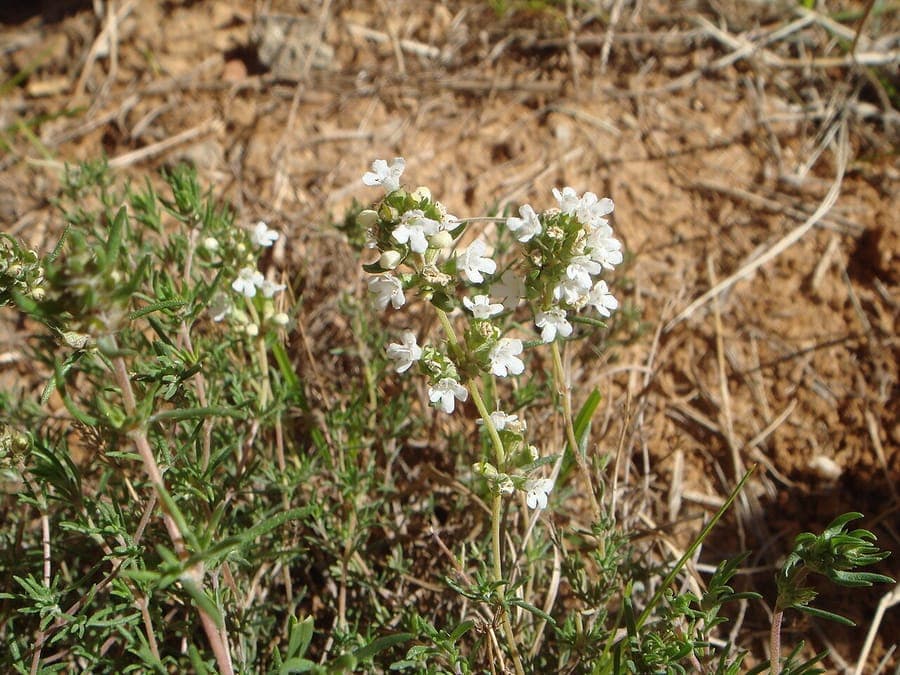
Ximenex / CC BY-SA 2.1 es, via Wikimedia Commons
White thyme: complete guide
Thymus zygis
¿Quieres ver White thyme: complete guide en tu jardín?
1 minuto, sin tarjeta de crédito
Overview
Thymus zygis, commonly known as White thyme or Spanish thyme, is a charming aromatic herb from the Mediterranean region. This compact plant belongs to the Lamiaceae family, the same family as mint, oregano, and lavender. Thymus zygis originates from the western Mediterranean, particularly Spain, Portugal, Morocco, and Algeria, where it naturally grows on dry, rocky slopes.
The plant is highly valued in gardens for three reasons: its fine, aromatic foliage, abundant white flower production, and exceptional drought tolerance. Thymus zygis is a perfect choice for sunny gardens with dry soil and minimal maintenance requirements. It works beautifully in herb gardens, Mediterranean landscapes, and even xeriscape designs.
Appearance & bloom cycle
Thymus zygis grows as a compact, distinctly bushy subshrub reaching only 30 cm maximum in height. The stems are thin, reddish-purple, and notably angular. The leaves are extremely small, delicate, linear to lance-shaped, merely 1-2 mm wide, with deep green colour and a glossy appearance. When gently rubbed, the leaves release a delightful thyme-like aroma.
Flowering occurs from May through August in temperate climates. The flowers are tiny, approximately 5 mm, typically white to pale pink, growing in dense flower spikes at the stem tips. This floral display attracts abundant bees, butterflies, and beneficial insects. The entire plant appears remarkably attractive, especially when in full bloom.
Ideal location
Thymus zygis flourishes in locations with full sun - at least 6-8 hours of direct sunlight daily. This is essential for maximum flower production and optimal aromatic intensity. The plant tolerates partial shade but becomes less compact and produces fewer flowers.
This is an extremely strong drought-loving plant requiring virtually no water after the first two seasons once established. It tolerates wind and salty conditions, making it ideal for coastal gardens. In temperate regions, it grows excellently against warm walls and in gardens with full sun exposure.
Soil requirements
Thymus zygis demands well-draining, very light soil. Heavy, water-retaining soils must be substantially improved with coarse sand, gravel, or perlite. A mixture of equal parts garden soil and sand works perfectly. For pot cultivation, use very well-draining potting mix, such as cactus soil mixed with extra sand.
The plant tolerates chalky soil better than acidic soil. Nutrients are not critical - in fact, excessive feeding can make the plant loose and less floriferous. Add compost only if the soil is extremely poor.
Watering
Once established, Thymus zygis is extremely drought-tolerant and requires almost no watering. During the first growing season, water regularly to establish strong roots. After the second year, water only during extreme droughts.
In containers, check regularly and water when the top 1 cm of potting soil feels dry. Overwatering is the greatest threat - this plant tolerates dry periods much better than wet feet.
Pruning
Light annual pruning after flowering (August-September) keeps the plant compact and bushy. Remove the flowering tops and a few centimetres of branches. This encourages lateral branching and a more compact form for the next season.
Avoid heavy pruning into dead wood - always cut into green, living wood. Very old specimens can be substantially rejuvenated in spring.
Diseño gratis
¿Quieres ver White thyme: complete guide en tu jardín? Crea un diseño gratis ahora.
Maintenance calendar
Spring (March-May): Plant in April-May, or prune existing plants. No feeding required.
Summer (June-August): Enjoy the blooms. Do not water unless extremely dry. Lightly trim after flowering.
Autumn (September-October): Plant continues building reserves for next year. No feeding.
Winter: Underground parts remain alive. Plant doesn't die back. Possibly minor frost damage in severe winters.
Winter hardiness
Thymus zygis is reasonably frost-hardy to about -10 to -15°C, so it can overwinter outdoors in most temperate regions. In very severe winters or exposed locations, leaf tips may freeze. Plant in sheltered positions for extra protection.
Companion plants
White thyme pairs spectacularly with other Mediterranean plants: lavender, rosemary, santolina, cistus, and ajuga. Also excellent with sedums, phlox, and geraniums. In herb gardens, it works beautifully with oregano, marjoram, and savory.
Harvesting and use
For fruit-bearing species, harvest when fully ripe and gently detach from the plant. For herbs, snip the top 5-10 cm of branches for fresh use. For flowers, gather just before they fully open for maximum colour and fragrance. Many species can be dried for winter use. Store dried material in airtight containers away from direct sunlight for best preservation.
Traditionelle Nutzungen
In der mediterranen Kuche wird Thymus zygis zum Wrzen von Fleischgerichten, Eintopfen und Suppen verwendet. Die getrockneten Blatter haben eine intensivere Aroma als frische. In der Volksheilkunde wurde es traditionell fur Atemwegserkrankungen und zur Verdauungsforderung verwendet. Heute wird es auch in der Kosmetik und Aromatherapie verwendet. Die atherischen Ole sind antiox idativ und antimikrobiell.
Usage ideas
The fine, aromatic leaves are ideal for the "Herbes de Provence" herb blend and work beautifully with lamb, grilled fish and soups. Fresh or dried, this herb adds a subtle, warm flavour. The flowers are edible and make a beautiful garnish for salads. Make herbal tea by steeping a few sprigs in hot water for a classic Mediterranean infusion. The strong oils can also be used in homemade soaps and cosmetics for their antimicrobial properties. Growing this thyme means having a constantly available source of culinary and medicinal value.
The plant can be regularly trimmed during the growing season to harvest fresh sprigs for herbal tea, cooking or herbal infusions. This also stimulates more lateral branching and a more compact form. Dried leaves retain their aroma far longer than fresh cutting allows. For the best flavour, harvest before flowering when oils are most concentrated. Store dried material in airtight glass jars away from light.
Three-season interest: Thymus zygis provides interesting visual elements throughout the growing season. In early summer the white flowers are spectacular. During summer months the compact, green foliage is pleasant. In autumn and early winter some leaves can turn slightly reddish, adding extra interest. This means this plant offers value in every season, making it an excellent investment.
Closing
Thymus zygis is a precious addition to any sunny garden with well-draining soil. The plant requires minimal maintenance, provides years of flowers and aroma, and is exceptionally drought-tolerant. Use the aromatic leaves fresh in cooking, tea preparation, and potpourris. Find plants at quality garden centres or propagate from cuttings of established plants. For more garden designs with Mediterranean herbs, visit gardenworld.app. Add this elegant thyme species to your garden and enjoy years of effortless growth and blooming!
Visit gardenworld.app for complete garden designs featuring Mediterranean and drought-loving plants.
¿Quieres ver White thyme: complete guide en tu jardín? Crea un diseño gratis ahora.
Sube una foto, elige un estilo y obtén un diseño fotorrealista con lista de plantas en menos de un minuto.
Más de 10.000 jardines diseñados
Sin tarjeta de crédito


Plantas similares
Apple mint (Mentha x villosa): complete guide
Mentha x villosa
Meet apple mint (Mentha x villosa): a fruity-scented kitchen herb with woolly leaves, perfect for tea and mojitos.
Salvia peyronii: complete guide
Salvia peyronii
Discover Salvia peyronii, a rare Lebanese mountain sage. Growing tips, hardiness, and companion planting for a Mediterranean gravel garden.
Bigleaf mint (Mentha x rotundifolia): complete guide
Mentha x rotundifolia
Discover bigleaf mint: cultivation, care tips, and garden uses. Learn how to grow this aromatic herb with soft, hairy leaves.